

The Fruit Tree You Should Propagate Indoors This Winter For A Head Start On Spring
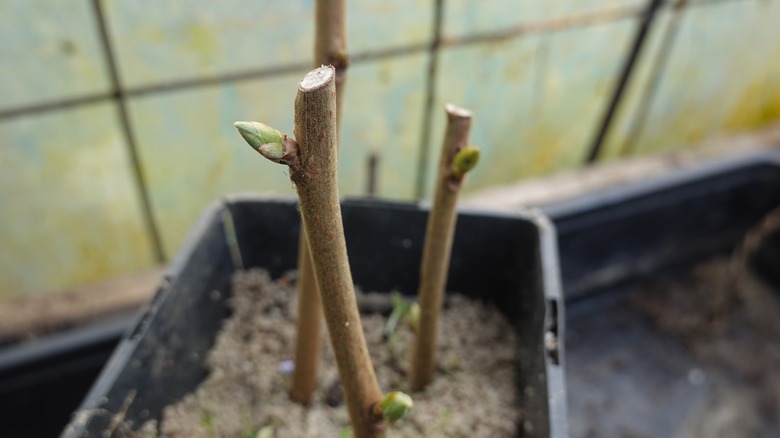
Believe it or not, wintertime is the perfect opportunity to prepare for the growing season. There are plenty of tasks to accomplish around the garden ahead of spring. It's a great time to propagate new plants indoors which you can transplant outside once the weather warms up. There are a surprising amount of fruit trees and shrubs you can grow from cuttings. The best way to propagate these plants will vary from species to species. Some fruit trees are best to propagate in the winter when the mother tree is dormant. Common fig trees (Ficus carica) are one example of a fruit tree you should harvest cuttings from in the winter. In fact, it's actually one of the best fruit trees to propagate from a cutting.
Known for their edible fruits, common fig trees are a member of the mulberry tree family, originating from the Mediterranean and West Asia. Its fruit serves as a food staple in these regions. The common fig typically grows anywhere from 10 to 30 feet tall, although it can also grow in the form of a smaller shrub. Their leaves feature a unique, lobed shape, and its non-showy flowers transform into distinct fig fruits in the spring. This woody, deciduous tree is suitable to grow in USDA hardiness zones 7 to 10. They are considered easy to grow and maintain. If you're eager to propagate your fig tree leading up to spring, follow these simple steps.
How to propagate a fig tree indoors
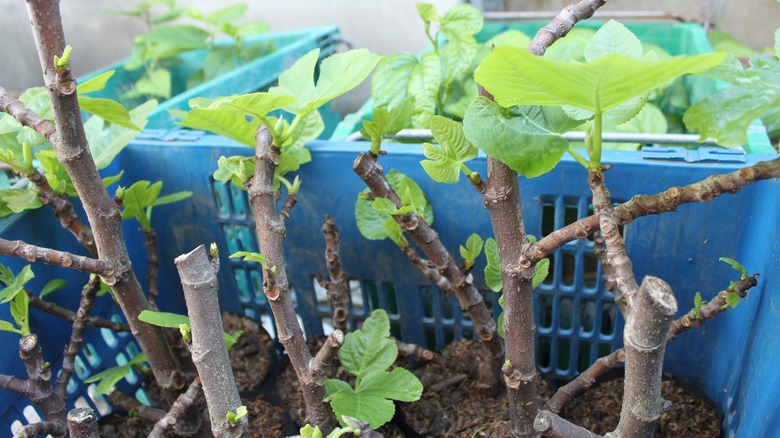
Your fig tree will be ready to propagate during its winter dormancy. Be sure the tree is at least 2 to 4 years old. You're looking for pencil-width, dormant branches called hardwood cuttings. Cut a young, healthy branch at a 45-degree angle. Your cutting should be about 16 inches long. Chop off the top of the branch leaving a few buds. Now simply place your cutting in a pot with well-drained soil. You can use rooting hormones if you'd like. In order to successfully root, your cutting needs to remain moist but not damp to prevent rot. It should also remain at a minimum temperature of 70 degrees Fahrenheit. Heat mats can help you achieve this. There's no need to provide the bare branch with sunlight until it starts to form leaves.
Once spring rolls around, your cutting should be rooted with leaves. At this point, you can transplant your fig tree sapling in your garden. Be sure to brush up on everything you should know before planting. Choose a location with full sun where it can soak up 6 to 8 hours of direct light a day. Give it plenty of room — these plants can spread very wide. Some varieties can gain 3 to 4 feet of growth and might even sprout a handful of juvenile, unripened figs in the first year. However, in most cases, you won't see fruit until your plant's second or third growing season.
Growing your fig tree in a container
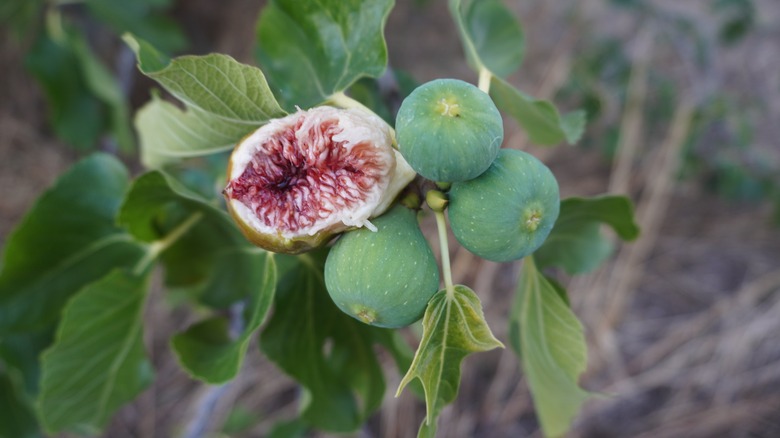
Fig trees do exceptionally well in containers. Some fig tree varieties that are easy to grow in a container are Brown Turkey Figs and Chicago Hardy Figs. These varieties amongst others can produce a generous amount of fruit once they're big enough for a 5-gallon pot. The larger the container, the higher your yield potential. If you choose to propagate your fig tree, consider planting your rooted cutting in a container to grow a portable, space efficient tree. Just keep in mind that potted fig trees do require a bit more TLC to thrive.
For the healthiest container fig tree, you'll need to give it proper soil. Opt for well-drained soil to prevent excess moisture. If you prefer mixing your own, create a 50/50 mix of rich materials such as compost or worm castings with lightweight soil amendments like vermiculite or shredded bark chips. Once you establish your fig tree in its container, apply a slow-release fertilizer to kick off the growing season or a quick-release fertilizer throughout the growing season. Keep your potted fig moist but not sopping. Bring your plant inside to overwinter. Size up your plant into bigger containers as it grows. If you keep all of this in mind, you should have a beautiful potted fig tree!