

The Durable Cabinet Material To Consider For An Affordable Kitchen Upgrade
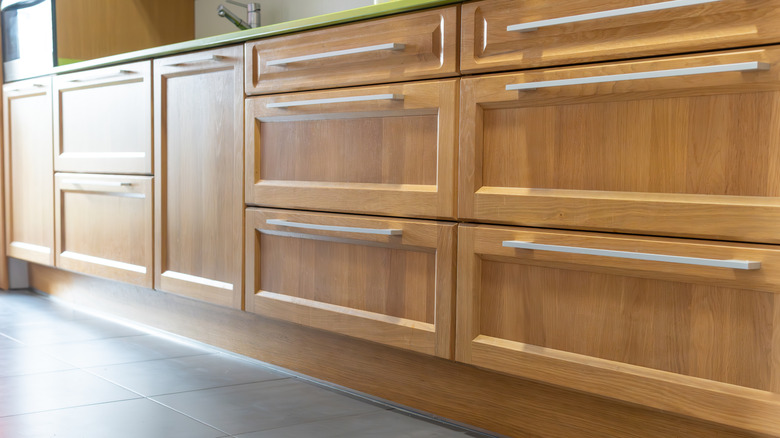
When establishing the design aesthetic of a kitchen, the choice of cabinetry is one of the most prominent decisions to make. Rather than focusing solely on color, what material should be chosen is equally as important. Solid hardwood constructions have become the go-to for kitchen cabinetry. But what's the best wood option for your kitchen cabinets? A new type of hardwood has emerged as a top contender for gorgeous cabinetry that doesn't break the bank. Underrated mango wood could be the ideal material for making your kitchen cabinets shine.
Mango wood is exactly what it sounds like: lumber from mango trees. Wood is typically taken from the tree once it stops producing fruit. These types of trees grow fairly quickly and are easy to replace as they age, which in turn keeps down the cost of the wood. They take between 10 to 15 years to fully mature, far less than it takes white oak trees to reach full height, making mango wood a lower-priced alternative to popular white oak cabinets.
Mango wood is resistant to water, making it an excellent choice for busy kitchens that are frequently used. It offers a timeless appearance that is rich with character and authenticity while still blending in well with other kitchen designs, whether they be modern or traditional.
Mango wood cabinets add naturalistic beauty to the kitchen
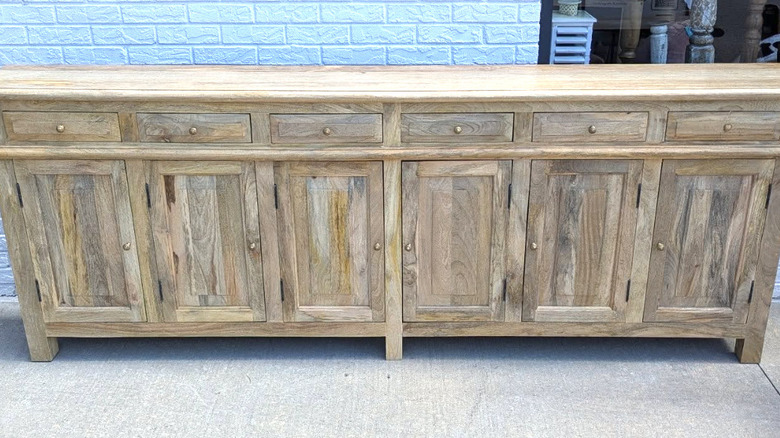
Mango wood is increasingly being used to create tasteful fixtures for interiors, whether as a chic organic coffee table or as a functional dresser for storage. Since it is a type of wood that is easy to build with, it is less expensive than more high-end, rarer hardwood species. For example, the Lyncott 6 Drawer Dresser available for purchase from Ashley Furniture is made with a mango wood veneer and costs $749.99. This is hundreds of dollars less than the TOV Furniture Marlow 6 Dresser Drawer which is smaller in height and width, but costs $1,104.99 and is made with an ash veneer.
The most noteworthy quality of mango wood is that it has an abundantly rich, very distinct grain pattern that feels smooth and is balanced to show all that hardwood has to offer. Much like the fruit whose name it bears, this type of hardwood is on the lighter side, with golden coloration that contrasts deep streaks of graining. It is capable of being stained for those looking for a darker tone, so tips and tricks that make staining wood cabinets a breeze can be utilized to achieve the desired color. The grain pattern is distinct, which establishes character to bring a homey, lived-in feel to the kitchen. Since the look of mango wood is so dimensional, the color will not fade, but rather settle in to mature uniquely and superbly in the space.