

The Renovation Red Flag HGTV's Mike Holmes Is Warning Homeowners About

If you're currently house hunting, you've likely seen plenty of renovations or new construction that may seem like green flags. But just because it's new doesn't mean it's all been done well; in fact, there are some red flags to keep an eye out for to prevent major issues in the future, even with new projects. And according to HGTV's Mike Holmes of "Holmes on Homes," there's one spot in the house that may contain the most concerning red flag of them all: the bathroom. The red flag in question? Improper ventilation and exhaust.
Holmes writes on his blog, "Bathrooms are one of the most common places we find serious problems hiding behind nice-looking tile." The lack of ventilation in bathrooms, for example, can cause moisture to build up quickly, making walls susceptible to long-term damage. He emphasizes that excess moisture in bathrooms can be a silent killer, leading to mold and mildew issues as well as structural problems down the road. On top of that, quick fixes that don't take the time or resources to ensure proper ventilation are yet another major red flag. So, whether you're shopping for a new home or you're renovating your current one, be sure the contractor is actually tackling the issue at hand, not just putting a quick band-aid on a humid bathroom.
Why improper ventilation is a red flag
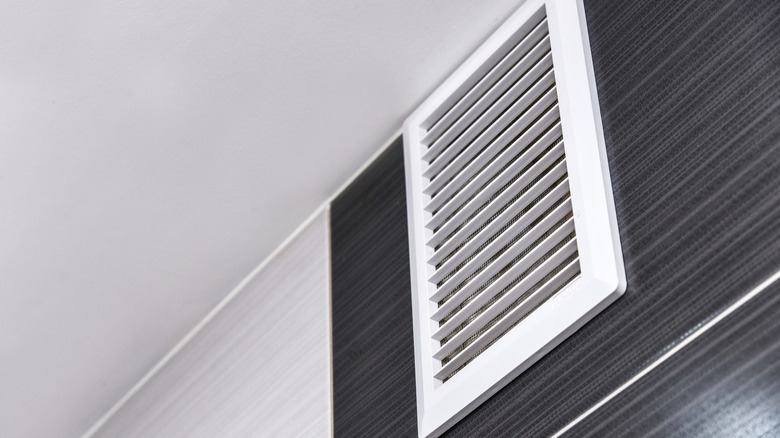
Mike Holmes' golden rule for bathrooms is simple: Moisture needs to be able to escape so that it doesn't slowly deteriorate the space over time. An exhaust fan is the best way to vent a bathroom to keep the space mold-free, and Holmes recommends a fan that vents directly outdoors. And while you may think easy solutions, like opening the window, are enough to facilitate proper airflow and prevent rotting issues, Holmes warns that "opening a window isn't enough." In the winter, for example, you're not going to leave the window open long enough to clear out the moisture, and even in the summer, exterior humidity will make its way inside the bathroom, thus not addressing the core issue. While other remedies, such as dehumidifiers for bathrooms that don't have a vent, may work in the short term, to truly take care of the space, an exhaust fan is crucial.
If you're currently renovating, consider it a red flag if the contractor suggests you don't need an exhaust fan. Without the proper ventilation system, every hot shower pumps massive amounts of humidity and moisture around the room. That moisture doesn't just fade — it can settle on your paint, compromising its integrity, soak into your grout, and even travel into the wall cavity, becoming a mold breeding ground in the bathroom.
Issues to look out for with your exhaust fan
Just having a fan isn't enough to prevent issues, either. Mike Holmes warns homeowners that living with a system that isn't right for the space basically makes it useless. A major red flag is a fan that's undersized for the room it serves. To determine the proper size, you'll have to refer to the fan's cubic feet per minute (CFM) rating; the bigger the room, the higher the CFM rating needs to be to properly ventilate the room and move the air around. Multiply the area of your bathroom by about 13%, and the result is your optimal CFM rating. If your contractor installs a cheap, low-powered fan, it opens the door to future issues, since it really isn't moving enough of the moisture out.
Another red flag to look out for even if a fan is present is where the vent duct leads. If you find that the duct ends in your attic instead of outside, for example, then that moisture is merely traveling there from the bathroom and getting trapped. This may indicate improper installation during the construction or renovation. Blocked vents and ducts are another issue; it simply defeats the purpose and creates the illusion of ventilation without the proper moisture mitigation benefits.
The lesson here? Bathrooms are used extensively every day, pumping moisture and humidity all around the space. If you don't invest in proper ventilation to allow the room to breathe, you'll end up paying for it in spades later. As Holmes reminds us: "Doing it twice costs a lot more than doing it right."