

Bark Beetles: What Are They And How You Can Protect Your Tree
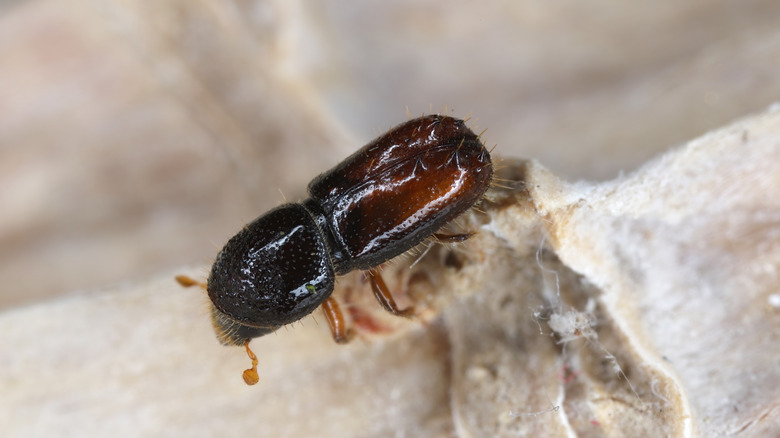
Bark beetles are dark flying insects about the size of a grain of rice that leave tiny holes in the bark and branches of trees. Their very small grubs feed voraciously on the inner bark of trees that are already weak, girdling the tree so extensively that it dies. Both native and invasive species attack a variety of trees, from cedar to oak and pine. Unfortunately, it's almost impossible to treat infected trees with pesticides because beetles live and do their damage under the bark, where they're out of reach of poisonous sprays. Instead, these destructive insects are best controlled through healthy tree management practices.
If you peel back the bark of a tree infested with bark beetles, you'll find mazes of tunnels that the grubs have created. You may also see small piles of sawdust, the result of their chewing. Only a few species of bark beetles are the single cause of a tree's death; the rest speed up the death of weak trees that may have otherwise died prematurely of other causes. Historically, all bark beetles in the United States attacked these weak trees, but newer invasive species may attack healthy trees. The insects can also kill trees by spreading lethal pathogens like Dutch elm disease.
Generally, bark beetles are red, black, or brown cylindrical insects with short antennae and strong jaws. As they chew their way out from under the outer bark once they're mature, they create the holes you see in infested trees. Bark beetles are usually less than ⅓ inch in length.
Bark beetle mitigation and prevention
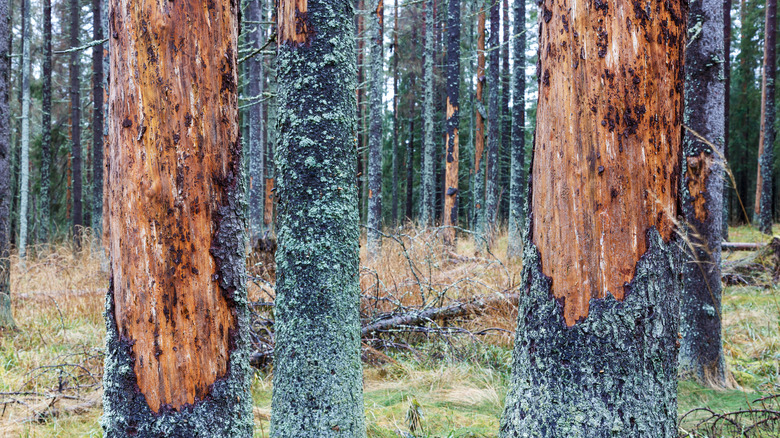
Pesticides containing bifenthrin, carbaryl, or permethrin that are specifically labeled for use against bark beetles can be effective if they're used at the right time, before the beetles emerge for the season. This is typically in spring or early summer. In the case of mountain pine beetles (Dendroctonus ponderosae), a common species on the West Coast, pesticides should be applied in May. The bark of the tree must be thoroughly wetted so that the pesticide gets into all of the crevices in the bark; when bark beetles try to chew their way through the bark, the pesticide will kill them. If you're unsure about what type of bark beetles are common in your area, contact your local extension service for help.
Once the tree is infected, pesticides are not effective. If you find that a tree or trees are suffering from bark beetle damage, and the damage is limited to the branches, prune the infested branches and dispose of them properly. If the trunk of the tree is damaged, you'll have to cut it down to prevent the spread of bark beetles to other trees in the landscape and to prevent damage from falling dead trees and branches. The wood you've cut down doesn't provide any food for beetles once it has dried out. Cut it into smaller pieces to speed up drying and use it for firewood, haul it away, or bury it. Don't store the firewood indoors until you're certain the beetles are gone.
The best defense against bark beetles is healthy tree management. Water your trees deeply as needed, properly prune them, and remove vines and other competing plants. Extend mulch around trees to the dripline, and avoid harming the tree trunk with the lawnmower or line trimmer. Attracting insect-eating birds also helps keep the beetle population low.