

The Fruit You Can Grab From Your Kitchen That Doubles As The Perfect Hanging Planter
We may receive a commission on purchases made from links.
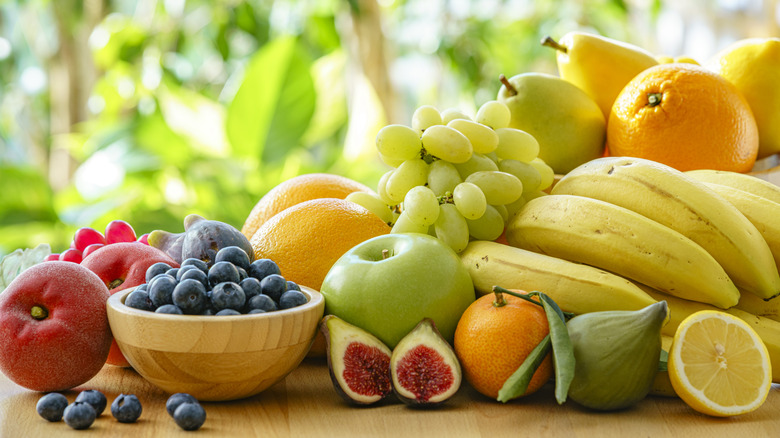
Repurposing fruit from your kitchen may sound a bit odd on the surface, but when you think about it, reusing food waste is an eco-friendly practice used in households every day. From using orange peels in potpourri to composting bananas in your garden, fruit has countless uses beyond nutrition in your home and garden. But the coconut is one fruit in particular that is filled with hidden potential.
There are plenty of ingenious ways to repurpose coconut shells in your home or garden, and hanging planters are one of the most practical. If you've been around gardening for a while, you've probably heard that coconut coir makes a good DIY soil mix for container vegetable gardening because of how it retains moisture. Coconut coir is also commonly used in hanging baskets for the same reason. But did you know that coconut shells can work just as well? Repurposed coconut shell hanging baskets are lightweight and an environmentally-friendly alternative to plastic ones. If you keep the husks to line the inside, they can also improve drainage and moisture retention.
How to crack open and clean a coconut shell for a hanging planter DIY
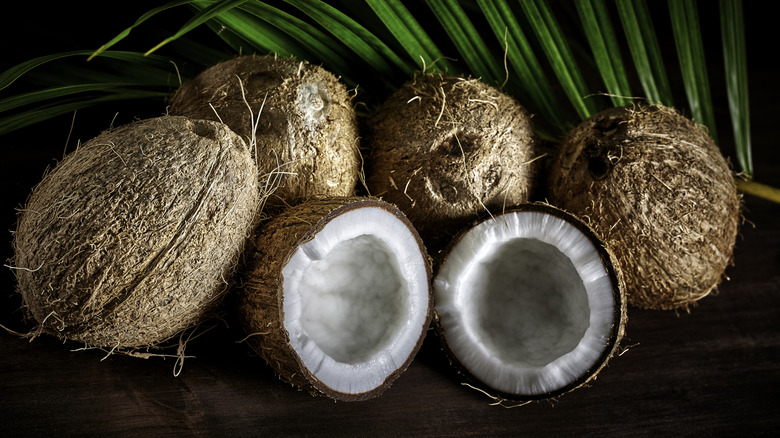
If you want to make hanging baskets from your coconut shells, you're going to need to make sure you crack them open evenly, without damaging them. Before cracking open the coconut, you need to remove the water inside. This keeps your work area mess-free. Plus, you can save the water for drinking or using in recipes. You can even try a simple coconut water hack to help your plants grow. Using something like a Zhuohai coconut opener tool or a clean screwdriver, create holes in the "eyes" of the coconut (the three indents). These will become drainage holes for your basket, so try not to make them too big. Drain the water into a clean container.
In the center of the coconut on the opposite axis from the holes, gently tap the shell with a hammer in a circle until it fully cracks open. This should leave you with two relatively equal halves. Use your favorite method for removing the coconut meat for your own use. Then, you'll want to clean the shells to prevent mold from developing before you finish your DIY. You can just wash them with soapy water. Finish your preparation by sanding the inside and the outside of the coconut shells. You can save the coconut dust to mix into your potting soil. You can also paint the coconuts for a unique look. Store them in a clean, dry location until you are ready to assemble your hanging baskets.
Unique coconut shell hanging planter ideas
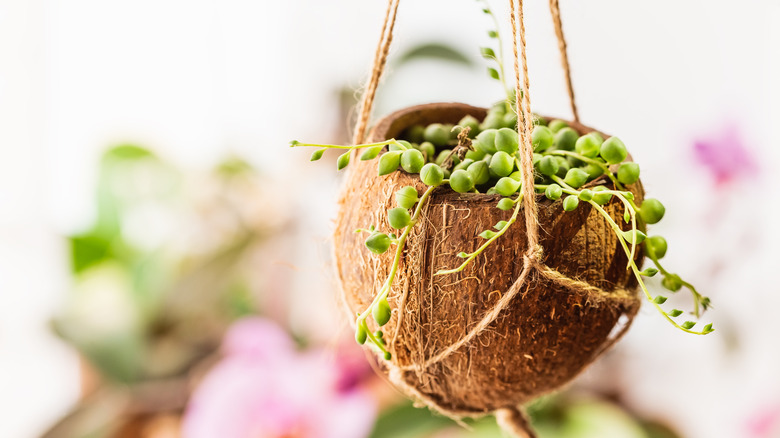
Once your coconut shells are cleaned and prepared, you can start assembling your hanging baskets. This is the fun part! Ultimately, there are no limits to how you can style your hanging baskets aside from your own imagination and maybe the growing conditions for your chosen plants. No matter which style you choose, make sure each coconut has drainage holes in the bottom. Three holes should be enough. Before filling with soil, you can add coconut husk to the bottom to prevent soil from falling through the holes and improve drainage for your plants.
To make the hanging basket, you can either drill holes around the rim to attach wire, twine, or string, or make a macrame holder. Using these methods, you can make a wide range of hanging baskets. Single baskets are popular because coconut shells are small. However, for vertical gardening in small spaces, you can create tiered baskets by hanging them underneath each other.
Alternatively, coconut shells are a great medium to make upside-down baskets filled with Kokedama moss balls that hold the plants in place. This process involves filling the coconut with tightly packed soil and trailing plants first. Then, pack soaked moss over it until it creates a tight ball held together inside the coconut shell and secured by a grid of thin wire. The result is a gorgeous upside-down planter with plants spilling out of the Kokedama moss ball.