

The Correct Way To Arrange Lamps In The Living Room
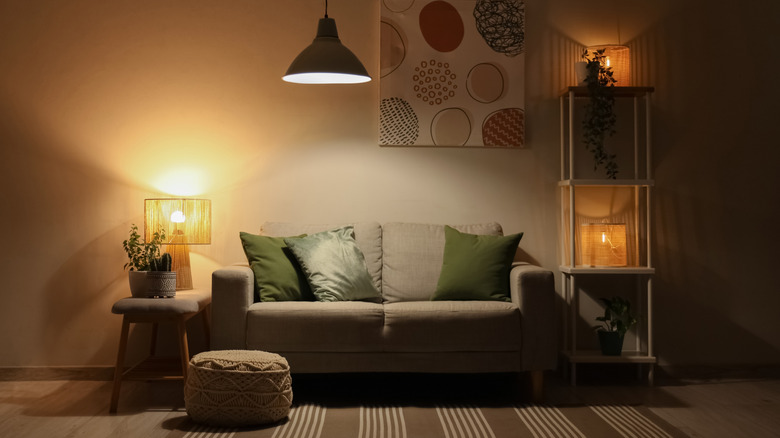
We all know that lighting is necessary for a home. Only some people understand that the right lighting can be transformative. How can you make your living room feel extra cozy? Depending on how lights are arranged in a room, they can create a specific mood, highlight textures, and enhance layouts. A fixture has the power to shape emotional and visual experiences in a home. This is especially true in living rooms, which are arguably one of the most important spaces in your house. From wall sconces and pendant lights to recessed pucks and chandeliers, modern living rooms rely on a mix of lighting styles. When it comes to flexibility, however, nothing beats lamps. They're an affordable, portable lighting solution that can instantly enhance your interior design. In the living room, aim for a mix of three floor, table, wall-mounted, or clip-on lamps arranged at different heights and suited to specific tasks.
No matter the size of your living room, finding the best placement for your pick of lamps starts with observation. You need to take a step back and review the room's layout and purpose. Living rooms are typically hubs of activity. How is the space actually used? Is it dominated by a TV screen, arranged around reading nooks, or split into zones catering to the hobbies of different family members? You should have three types of lights in every room, according to interior designers: accent, task, and ambient. There isn't an exact formula for lamp placement — unlike the formula for total illuminance (lux), which tells you how many lights you need in a room. Most living rooms need a handful of strategically arranged floor and table lamps to enhance built-in fixtures, create ambiance, and aid functionality.
Discover more tips for the correct placement of lamps in your living room
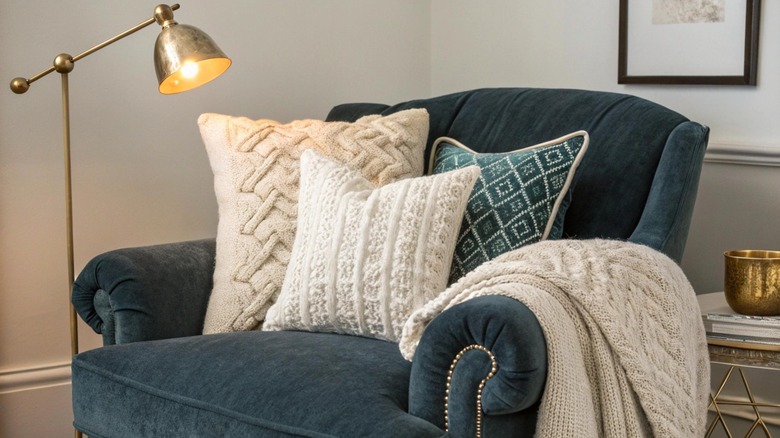
Where the lamps go and what type of lamps you choose correlates to your daily living room activities. Let's take a closer look at the earlier reading nook example. It usually consists of a comfy armchair in a corner of the room near a bookshelf. You'll need lighting focused on the seating. It's where you'll be curled up reading, after all. That means either an ornate lamp on a side table, a task light clipped to a shelf, or a flexible floor lamp beside the chair.
Floor lamps, which are used in living rooms for both decoration and a source of ambient lighting, are available in a wide range of heights and styles. It's because of their innate versatility that they work equally as well for watching movies as they do for chatting with friends over coffee. In both cases, you need soft, not bright, illumination. One common approach is to use two floor lamps on either side of the television. This gently lights the area without causing screen glare and creating visual balance. This trick also works to highlight a fireplace.
Consider the horizontal and vertical placement of your living room lamps, too. Avoid clustering them together and vary their height. In fact, it's a simple formula to follow for balanced lighting in any room. Decorative lighting can add to the ambiance, but it's primarily aesthetic. Consider it last, after you've worked out your practical lighting layout. For example, if you and your family hang out on a large, long L-sectional in the living room, place matching table lamps at either end of the couch. Then add a statement floor lamp behind the central corner. This creates individual task zones while looking visually cohesive.