

The Watering Error That's Causing Your Amaryllis Plant To Struggle
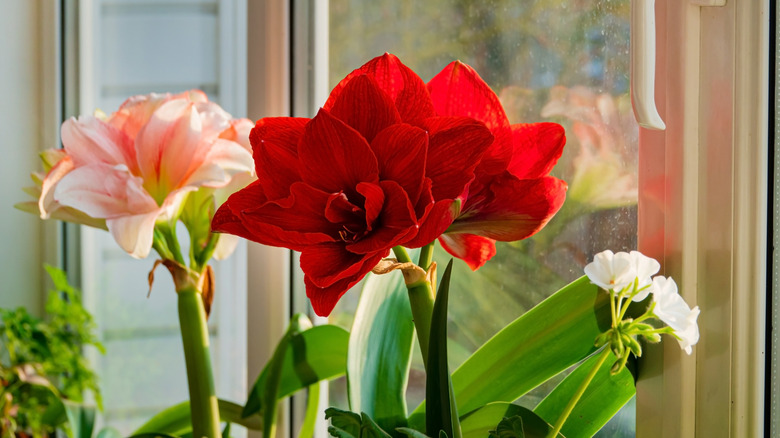
Amaryllis (Hippeastrum spp.) are ornamental perennials that are prized for their ability to bloom indoors. They're particularly popular around the holiday season. There are so many unique kinds of amaryllis you can grow for beautiful blooms in your home — the breadth of colors and patterns is incredible. The showy flowers of these tropical houseplants range from a diminutive four inches wide to an incredible 10 inches wide. With proper care, these beautiful bulbs will keep flowering for years. However, overwatering the soil and the bulb is a common mistake that can jeopardize the health of your amaryllis plant and dramatically reduce its lifespan.
In order to grow amaryllis bulbs indoors the mess-free way, you need to learn to water them correctly. Give them too much water, even accidentally, or allow the bulb to sit in sopping wet soil for too long, and you risk problems. A bulb in standing water can rot, grow mold, harbor diseases (like fungal infections), and attract pests, such as fungus gnats. If your leafed-out or flowering plant is wilting or the foliage is yellowing prematurely, it's another sign that you're watering too much. You might be able to salvage the bulb, though this takes effort. But if you don't act fast, or you leave the bulb sitting in a boggy pot for a long time, your amaryllis may not recover.
The basics of watering an amaryllis correctly
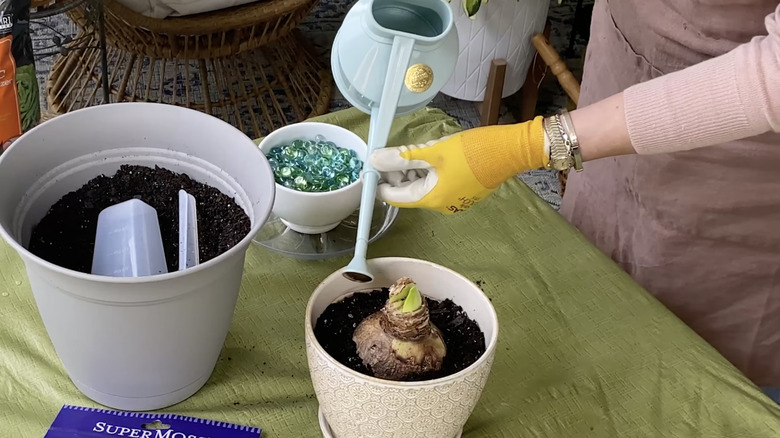
While amaryllis are widely regarded as the one indoor plant even novices can impress with, getting watering right guarantees success. You need to consider moisture content before you've even bought your plant home. You can buy amaryllis bulbs bare or planted in pots. Either way, make sure the bulb is dry and firm and free from signs of disease or damage. Look for a large bulb that's already sprouting new growth — it's likely to produce more stalks and flowers. Once you've made your selection, pick out a tall, narrow pot with ample drainage holes and a mouth that's 1 inch wider than the thickest part of the bulb.
Opt for a growing medium that's high in organic material and — most importantly, where watering is concerned — very well-draining. Plant your bulb in the pot you purchased, leaving a third to a half of the top of the bulb exposed to the air. Immediately water your plant until the soil is moist all the way through. It helps to do this in the sink so you can leave it to drain completely. Continue this practice throughout the sprouting and flowering stages. However, only water your amaryllis when the top 2 inches of soil feel dry to the touch. If you notice any overwatering red flags, gently remove the bulb from its pot and throw out the soil. Cut off any dark, squishy, or moldy spots. Treat the bulb with fungicide or diluted hydrogen peroxide and let it dry out completely. Repot the bulb in fresh soil and monitor it closely as it recovers.