

The Stunning Vintage Pottery Brand You'd Be Lucky To Find At The Thrift Store
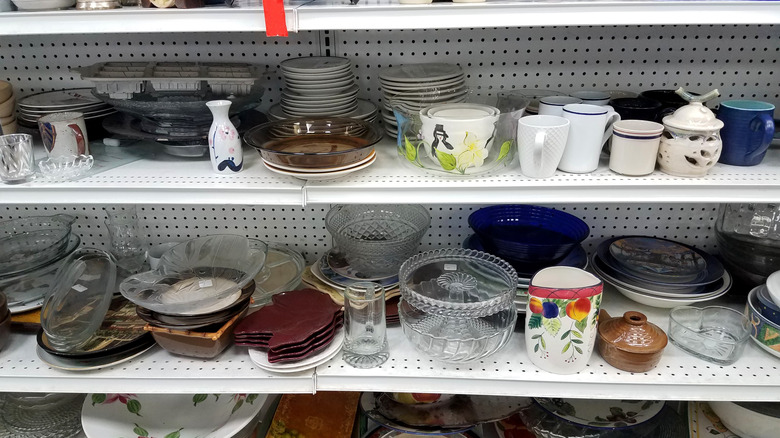
It's possible to spot valuable, high-end items at thrift stores — at wallet-friendly prices — if you know what to look for. In particular, ceramic pieces are vintage décor you should never leave behind, least of all if you spot stunning Roseville Pottery. The Roseville, Ohio, company made some of the most recognizable wares from the turn of the 20th century to its closure in 1954. It was particularly known for colorful, floral, matte-glazed stoneware pieces, which became the brand's signature. Their designs embraced the patterns of the American Arts and Crafts Movement. However, as the years moved on and imported ceramics became more accessible and affordable, Roseville's popularity waned.
Today, in the 21st century, this homegrown pottery has had a resurgence of interest, with values holding and even increasing alongside the renewed interest. As collectibles, Roseville wares range from the low hundreds well into the thousands of dollars. Prices depend on the condition of the item and the line it comes from — the line being the pattern name and its year of release. Because the company produced millions of pieces, rarity is also one of the biggest drivers of price. For example, while Roseville Sunflower vases have declined in value over the past couple of decades, they can still fetch hundreds of dollars. Vessels adorned with coveted patterns, like Roseville Tourist, can go for thousands of dollars.
A brief history of Roseville Pottery
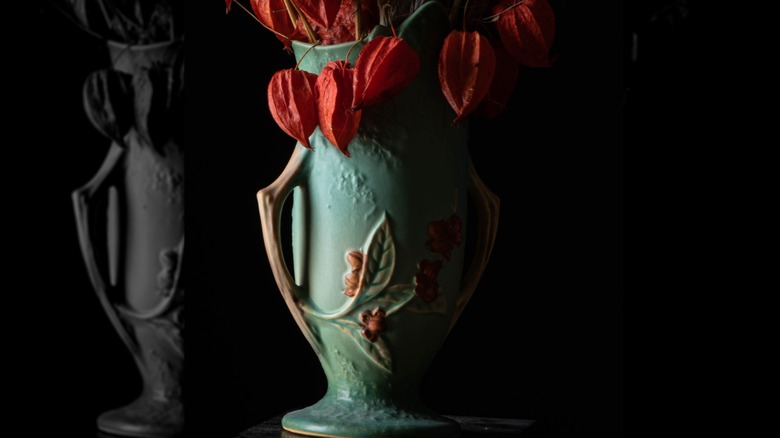
Incorporated in 1892 in Roseville, Ohio, Roseville Pottery began by producing utilitarian items for home use. However, the company's path shifted in the early 1900s when it moved into factories in neighboring Zanesville, an area rich with high-quality clay. It began competing in the fine pottery arts market. Under the creative leadership of design director Frank Ferrell, Roseville transitioned from simple earthenware to elaborate, hand-decorated, replicable lines. The brand became famous for its glazes in rich hues and floral designs, which interpreted the Arts and Crafts aesthetic in a uniquely American way.
By the 1920s and 1930s, Roseville entered its golden age, producing pieces with authentic artistic value at an industrialized pace. The company transitioned to more mass-produced, but still beautifully embossed, designs, selling them at prices the average American family could afford. This period saw the launch of the iconic Pine Cone line, one of the most popular patterns in the company's history. It may have helped the company survive the economic downturns of the era, including the Great Depression.
During the brand's final years, the post-war era of the 1940s to the 1950s, the designs became arguably more streamlined. Roseville introduced brighter glaze colors and sleeker shapes. However, despite the attempts to modernize their offerings, the company struggled to compete with cheap, mass-produced ceramic imports from abroad. The pottery company was forced to close its doors in 1954, transforming authentic Roseville pottery into a unique type of vintage décor that is becoming more and more valuable.
How to spot Roseville Pottery while thrifting
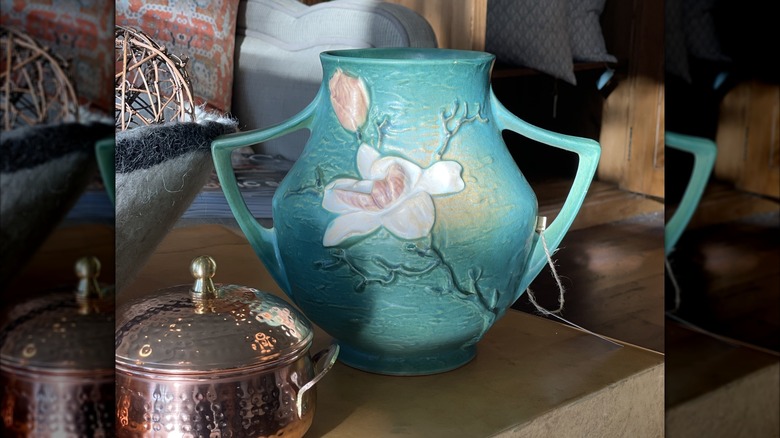
Since Roseville produced so many different designs, colors, and patterns, spotting one of the company's creations while thrifting requires knowledge. Since Roseville changed its branding and marks over the decades it was active, identification can be a bit of a puzzle. The first thing you need to do if you suspect you've found a Roseville piece is to turn it over. Early pieces typically have marks on the base, including the letters "RPCo," the words "Roseville Pottery Company," or the word "Rozane." In the 1920s, the company stuck a triangular black paper label on some pieces, changing to foil labels a decade later. Throughout the mid-1930s, they added in-mold marks to the wares. All of these relief marks included the acronym "USA," and lines were identified with a shape and size number.
Buyer beware, though. Starting in the 1980s, a wave of Chinese reproductions hit the market, mudding the waters for Roseville buyers for more than three decades. Though these pieces mimic Roseville's signature look, they're far from exact replicas, especially concerning clay, glaze, and form. They're also usually missing the "USA" mark — and sometimes the other hallmarks. However, in 2017, an arts dealer purchased the Roseville trademark to prevent foreign counterfeits. They even reopened production on American soil, though in very limited quantities. All of these recent changes make finding authentic vintage Roseville pottery at a thrift store challenging, but these pieces of American history are still out there. If you examine prospects carefully for the correct marks and hold the piece in your hand to judge its weight, you might get lucky.