

The Little-Known Tip That Will Help Pepper Plants Thrive
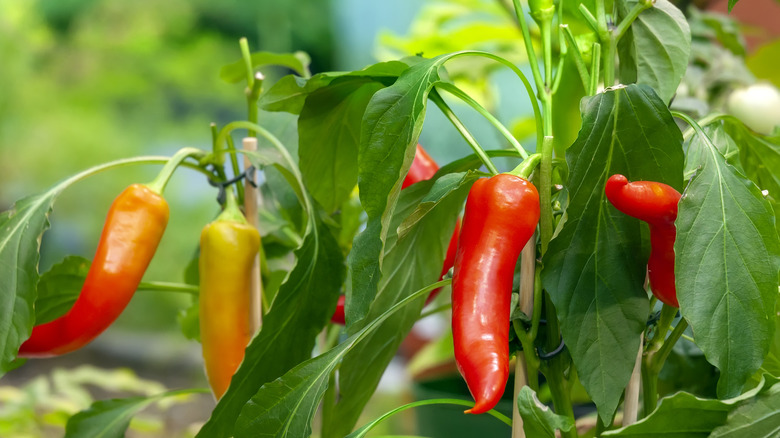
If you could perform a stunningly simple act that would give your pepper plants better air circulation, help prevent weeds, and protect them from sun, wind, and storm damage, would you do it? What if we told you this tiny chore can even result in bushier plants and more peppers? The process is called topping, and while it must be well-timed and isn't right for all pepper-growing situations, it can significantly benefit your pepper plants. Topping is included in TikTok's gardening community's top advice for growing peppers.
The principle behind topping is that cutting off the growing tip of the plant enables it to divert its energy into lateral branches bearing flowers and later fruits. Topping also results in a stronger, thicker main stem. Increasing lateral branching shades lower branches, which protects the plant from sunscald. The branches also shade the ground, discouraging weeds. Air flows more freely through the bushier plant, which can help it fight off fungal disease. The plant's bushy shape and stronger stem help to keep it from toppling over in windy or stormy weather.
Top off your pepper plants for bushier growth and more peppers
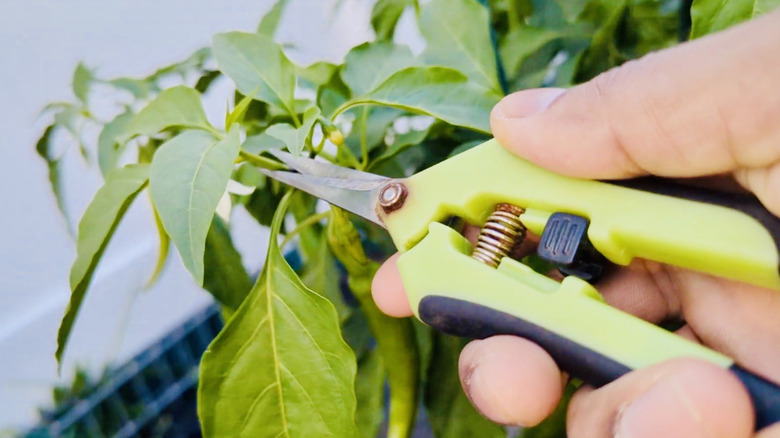
To top off a pepper plant, use sanitized scissors or small pruning shears. In many areas, peppers are long-season plants, so you should start sowing indoors in January. The ideal time for topping is shortly after you've transferred your indoor pepper seedlings into your garden and when they have six to eight sets of leaves, an indicator of strong roots. Identify the plant's main stem and choose the point at which you'd like the plant to branch out, usually ¼ inch to ½ inch above a leaf node, and cut. You should start seeing serious budding not long after topping, as new nodes develop.
You'll want to know mistakes to avoid when topping your pepper plants — and a major one is doing it at the wrong time. Don't top seedlings too early, before they have their true leaves. You can top the plants later than the early season, but fruiting may be delayed, and the plant may not reach its full bushiness potential. Avoid topping a stressed or unhealthy pepper plant, or one that is flowering or fruiting.
Topping works best on smaller peppers and is not especially effective for bell or banana peppers. The process is also more effective in warm climates, since the cold-climate growing season is often too short for plants to benefit. If you're unsure whether topping will benefit your pepper plants, consider experimenting with topping some and comparing their performance with those left untouched.