

8 Creative Thrift Flips You Can Use For Plant Display
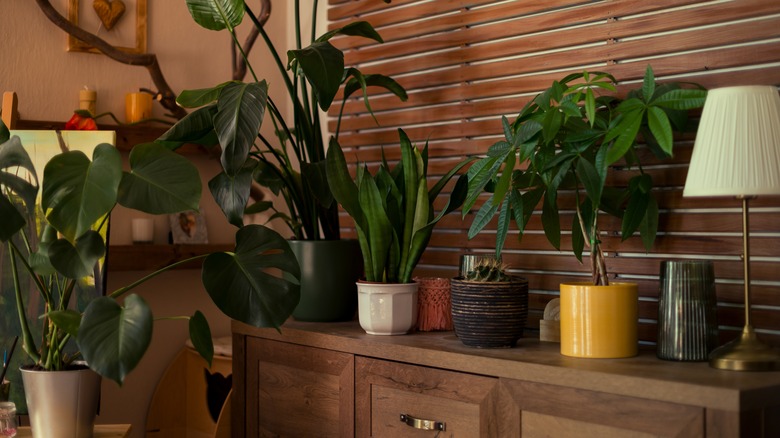
As much as we love shopping for brand-new plant accessories at our local nurseries and home improvement stores, sometimes the prices aren't always the most accessible. A store-bought planter can often go for at least $10 a piece or more, and that's for the cheap kind. Instead of spending over $100 on a couple of new plant display options for your indoor and outdoor greenery, you can turn to your local secondhand store to find new-to-you accessories. Plus, you don't always have to look for used planters specifically. There are numerous household items you can easily flip into a DIY plant display — items that are often under $5 a piece at a thrift store. For example, side tables, serving bowls, jewelry holders, and decorative carts can all become cute homes for your plants.
While some of these items, like a serving bowl or a side table, may not take a lot of fixing up, others may require a bit of DIY work before they can confidently display your plants. If you want a planter, any item without proper drainage, like a teacup or a bowl, will require drilling to create holes in the bottom to protect your plant from root rot. Others, like used colanders, come with built-in drainage. Pieces you want to hang from the wall may require installing brackets. No matter what size space you have, you can create a makeshift, adorable plant display using inexpensive items from the thrift store.
Build a planter out of a side or coffee table
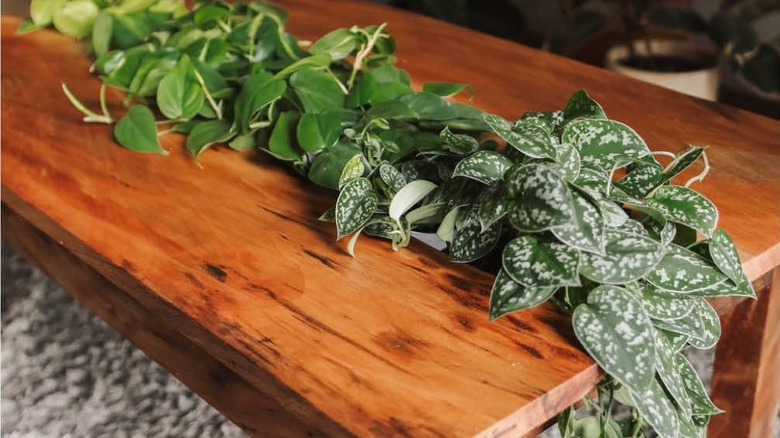
There are a ton of ways you can upcycle an old side table into a chic plant display. Depending on the shape and size of the table, you can either cut planter-sized holes into the tabletop or cut out a giant section in the middle to display a spread of your favorite plants. One DIYer, Farmer Nick on TikTok, even turned an old coffee table into a large outdoor planter by splitting the center and inserting a sunken planter box.
Drape plants over unique jewelry holders
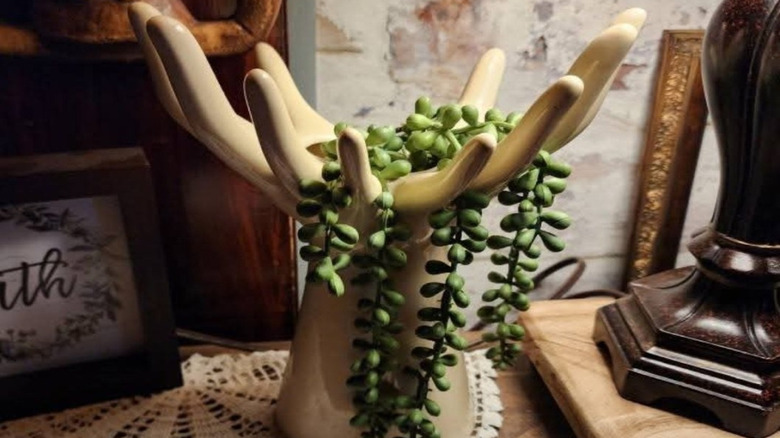
Jewelry holders are another great, affordable option for a DIY plant display indoors. If they have jewelry hooks, you can either remove them or use them to hang the piece from the wall. (You could also use those hooks to hang small planter baskets.) Facebook user Trina Dee turned a stunning hand-shaped jewelry holder into a home for her vining succulent, using the palm as the planter. Another DIYer scored a dress-shaped wire jewelry hanger and planted succulents inside instead. You could even add a plant to a jewelry box.
Plant succulents in teacups
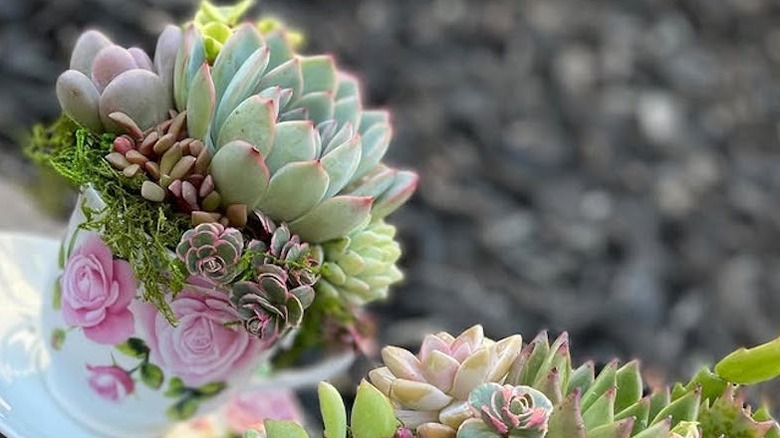
Teacups and mugs are some of the most plentiful items at thrift stores; you can find a myriad of sizes, colors, and patterns, usually under $10 a piece. These items can make for perfect miniature plant displays on your windowsill, office desk, balcony, or coffee table. Before you add your soil and plant, you will typically want to drill a hole in the bottom for proper drainage. If, however, you plan on planting succulents, you won't need to add the hole, as these beauties do not require frequent watering.
Add drainage to vintage or antique cookie jars
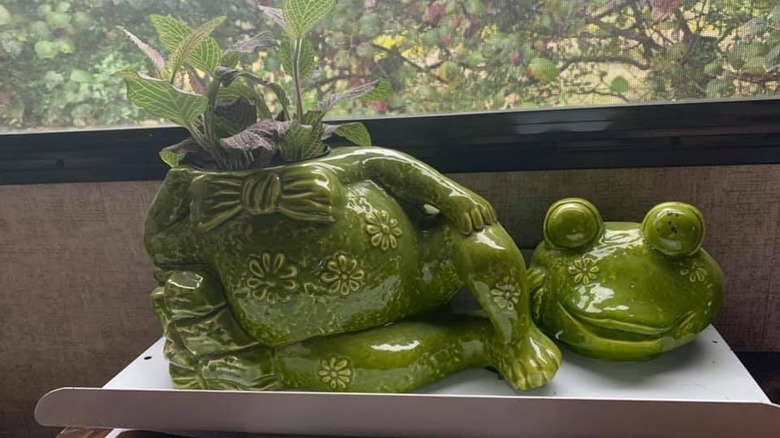
If you want a fun and quirky addition to your home, you can reuse vintage cookie jars for unique home decor your plants will love. Cookie jars come in all shapes and sizes and are popular at secondhand stores, typically costing up to $25 apiece, depending on the size and age. These items are often quite sturdy and make for excellent makeshift planters. The most difficult part is drilling a hole in the bottom for drainage. After that, all you need to do is add your soil and your plant of choice.
Use tote and canvas bags as planters
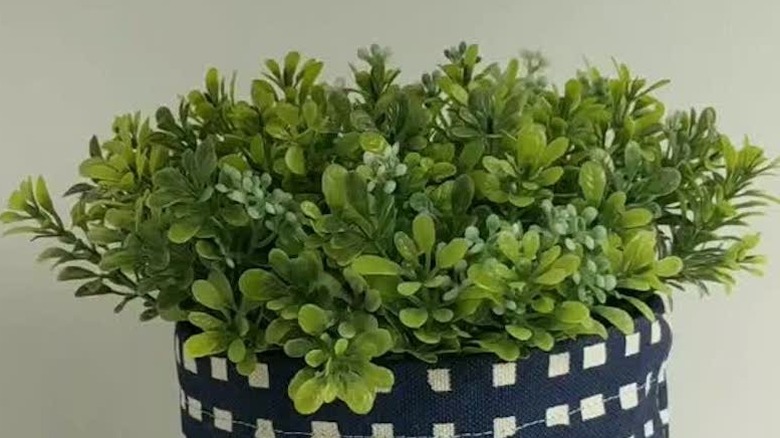
Tote bags, usually only a few dollars at your local thrift store (or even free in Buy Nothing groups on Facebook), can make excellent, unique planters for your home and garden. For woven totes or canvas tote bags, cut a few holes in the bottom for drainage. Before you add your soil and plant, it's best to insert a plastic bag inside to line the tote for protection. You can either stand the bag up on its own or hang it from your wall or fence.
Turn any lamp base into a planter
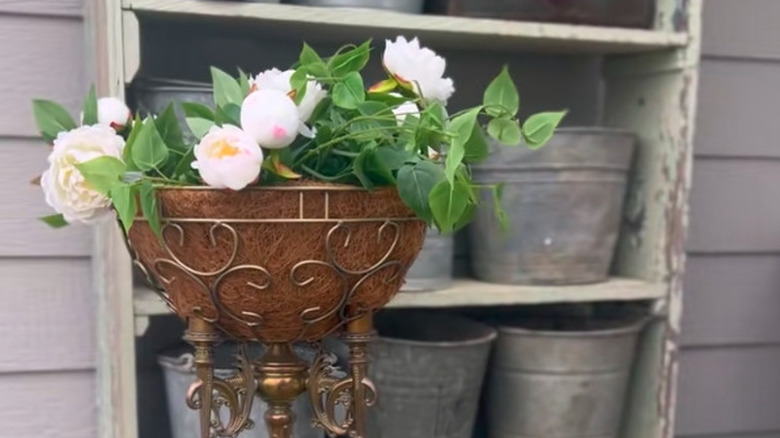
If you're a regular thrift store explorer, chances are you've seen shelves full of lamp parts, from lampshades to oil lamp bases. While these may seem like impossible DIY supplies at first, they can actually make for excellent planters, as long as you prep them correctly and remove any remnants of fuel. Once you've removed any screws and excess pieces, you should be left with an empty base. Add your plant directly to the base with soil.
Add plants to a wicker basket
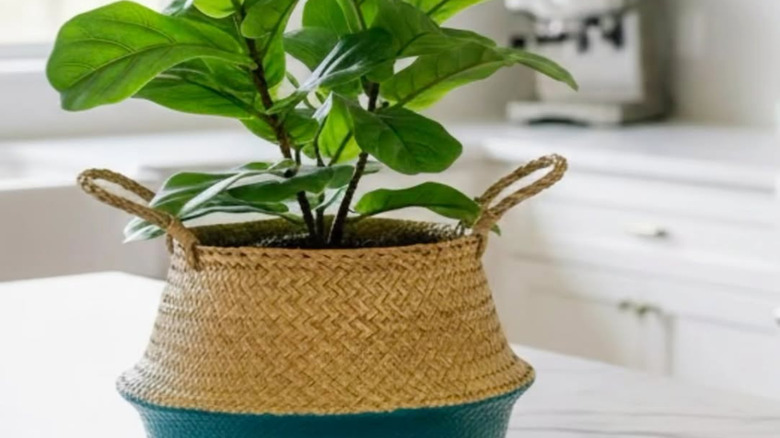
If you want a cute yet unique planter for your patio, garden, or even inside your home, get on the wicker garden trend by DIYing your own planter. Wicker baskets can usually be stored outside, and you can spray them with a waterproof seal spray for extra protection. You will need burlap cut to fit inside the basket to keep dirt from spilling through the gaps. Next, add a garbage bag to maintain moisture in the soil. Don't forget to cut holes in the garbage bag for drainage. Finally, you can add your soil and plant on top.
Display plants on a step ladder
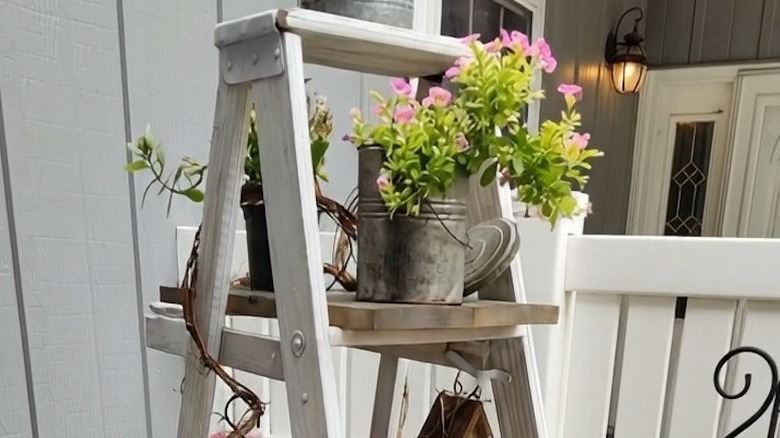
If you spot a step ladder at your local thrift store, you may want to bring it home. Whether you open the ladder to its A-frame or lean it against a wall, a ladder DIY creates the perfect place to put potted or hanging plants. For even more space, you can lay wooden planks across each step to create shelving. Make sure to secure the wood pieces down so the plants have a sturdy base. If you decide to lean the ladder against a wall, secure it in place to keep it from falling over.