

Turn An Old Vintage Thrift Store Find Into Clever Shoe Storage That Doubles As Decor
We may receive a commission on purchases made from links.
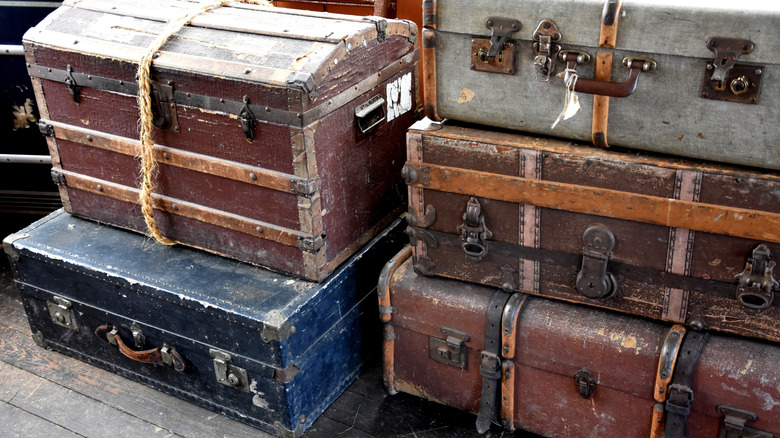
The antique steamer trunk stood for world travel at its finest. Now, it is more of a relic of a bygone era of steamship travel now saved in our memory in movies like "Titanic." Some of them, like those made by Louis Vuitton, were made for specific functions, like holding 36 pairs of shoes for opera singer Lily Pons. That they now are used mostly for decorative purposes instead of luxury travel is a testament to how beautifully and sturdily they were made. These days, people find them at their local thrift stores and often decorate steamer trunks, using them to augment schemes, like industrial design, country, and even steampunk décor styles. And given the particulars of their construction, we wouldn't rule out taking them back to their opera roots and using them for shoe storage.
The flat-topped chest, circa 1850, was the grandpappy of steamer trunks. Its style was a perfectly rectangular box with a hinged lid that opened, much like a giant jewelry box. Inside, there were smaller fitted box compartments. Travelers would remove the compartments when they needed to access items that were stored underneath. These design features are the reason why so many home decorators can turn them into coffee or antique side tables with hidden storage today. It's also why they'd make genius shoe storage, particularly if you place a small shoe rack on one end of the closed trunk, like this SNTD Expandable Shoe Organizer. If you leave the other side of the trunk's top empty, you can sit on it when putting on your shoes.
How to prepare steamer trunks for decorative shoe storage
If you're like most modern trunk owners, you might have noticed that the ravages of time have taken their toll on the interiors of your vintage luggage. You probably opened one, releasing that unpleasant mildew scent that has been trapped inside for who knows how many years. These boxes, or drawers, are made of paper, fabric, glue, and thin wood that break down over time. This can create an odor. As such, you'll want to air your trunk-turned-shoe-storage unit out before storing anything in it. Otherwise, your shoes (or whatever else you keep inside) could take on that musty smell.
To work around this issue, some may remove the linings and restore their trunks' interior with cedar. Others place the trunk outside in the sun for a day, with the chest open, leaving the drawers or removable compartments exposed to the fresh air. You may also lock up crinkled newspapers in the trunk as this will help soak up the scent. Afterward, place newspapers inside that have been soaked in baking soda. This ensures that all the offending odors are gone.
Considerations when using one for decorating and storage purposes
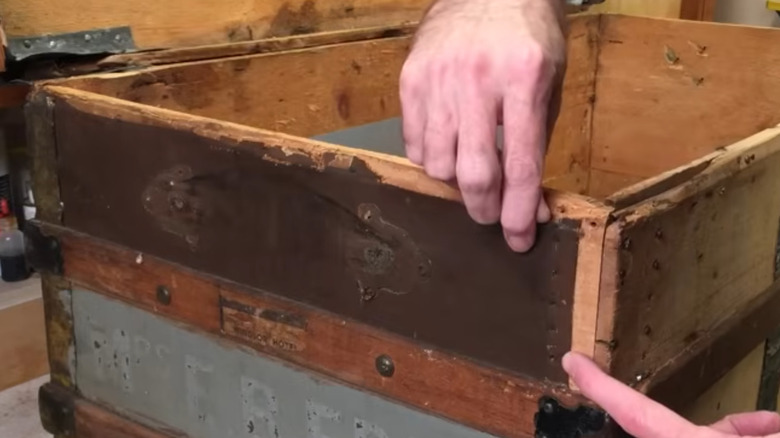
Steamer trunks were made to be tough. Otherwise, they wouldn't have survived tumbling down the steamships' stairs on their trip across the Atlantic. But even with the solid exterior, your thrifted antique trunk has probably gotten beat up quite a few times in its 100 plus years of existence. As a result, some of the material may be broken or chipped. You'll need to determine whether the damage is surface-level or if there is a structural issue. Fix structural problems. Otherwise, you won't have a sturdy container for your shoes.
If the damage is minor, you could leave the dings in the exterior because they tell part of the piece's story. This makes it more interesting to look at. Many of these old trunks still have travel stickers, boasting all the places it has been to during its lifetime. Between the minor dings, the old travel stickers, and the possible bespoke designs peculiar to your trunk, you'll have a truly unique backdrop for your shoe collection.
It should be noted that the interior drawers or compartments are flimsy compared to the chests' tough exteriors. To prevent damage to the trunk and your footwear, make sure your shoes are completely dry before storing them. Keep smaller shoes in the drawers or compartments. In flat-top trunks, boots can lay down on their sides in the area underneath the compartments. Or if you have a later model that stands up on one end, keep your boots upright on the side of the trunk without drawers.