

Tell-Tale Signs That Your Tile Grout May Be Harboring Mold
Though it might look tough, tile grout is porous, which makes it one of the most vulnerable materials making up your home. Grout acts like a sponge for moisture, and over time, this permeability can make it the perfect breeding ground for mold. Fortunately, there are a variety of signs that could tip you off about a mold infestation. If you see some discoloration on your grout, you might think it's just dirt from daily use; however, any persistent stains could be the first signs of mold. This could range from small black or dark green dots on your grout to the pink or orange bacteria buildup (Serratia marcescens) that grows alongside mold in damp places.
Beyond colors, you should also note textures. Healthy grout should feel even and relatively smooth. If the lines feel slimy, woolly, or powdery to the touch, you're likely dealing with an active mold colony. Your nose is also a good tool for mold detection. A bathroom should smell fresh after a quick cleaning. If a damp or musty odor lingers, mold could be hiding nearby and growing deep within your grout or even behind the tiles where you cannot see it.
Mold often clusters in corners, like those where the walls meet the floor. These tight spots trap extra humidity and usually lack decent airflow. If these areas look darker than the rest of the grout, give them a close inspection immediately. Addressing these sensory cues early on and following tips to make cleaning your bathroom easier can save you from a much larger renovation project down the road.
Compromised tile grout signals a bigger problem
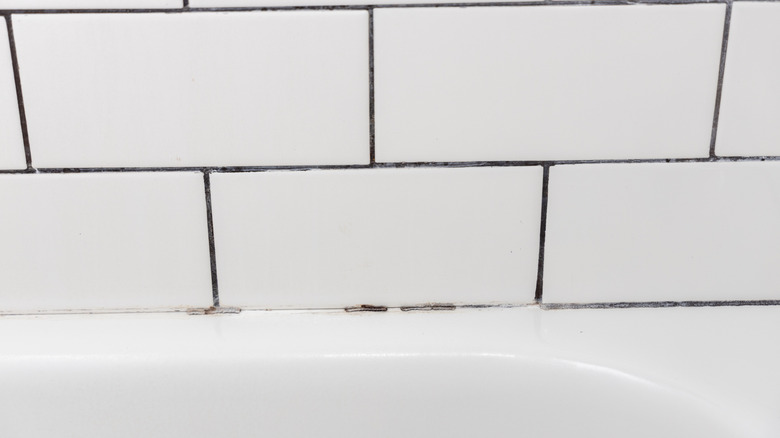
Physical damage to the grout is a major warning sign, so look closely for any cracks or crumbling bits in your grout lines. Why? Because when grout becomes brittle due to wear, it's no longer water resistant. Moisture seeps through tiny openings there and then gets trapped against the wall or subfloor. This, in turn, creates a dark and wet spot for mold to thrive out of sight. You can test questionable grout areas by splashing a few drops of water on them. If that water soaks in and darkens the grout, your sealant has failed. If you're not regularly recaulking your shower, you're more likely to have these vulnerabilities.
Check the areas surrounding the problem spots, too. Sometimes, mold in the grout can migrate to nearby surfaces. Look for bubbling wall paint, crumbling surrounding grout, soft drywall nearby, or any warping along your baseboards. And the news gets worse: the mold infestation can lead to costly repairs if it reaches the wooden studs behind your shower wall.
Make it a habit to regularly press your shower tiles. If they feel loose or make a hollow sound, the bond is failing. This can mean mold and water have already started to rot the backing material. Catching these structural signs helps you tackle the root of the problem before it damages your home's structural elements. Once you identify these issues, take the necessary steps to clean or regrout for a healthier home. Check out this easy way to prevent shower mold and grime that'll help your bathroom stay clean.