

The Affordable Solution That Fixes Chips & Scratches In LVP Flooring
We may receive a commission on purchases made from links.
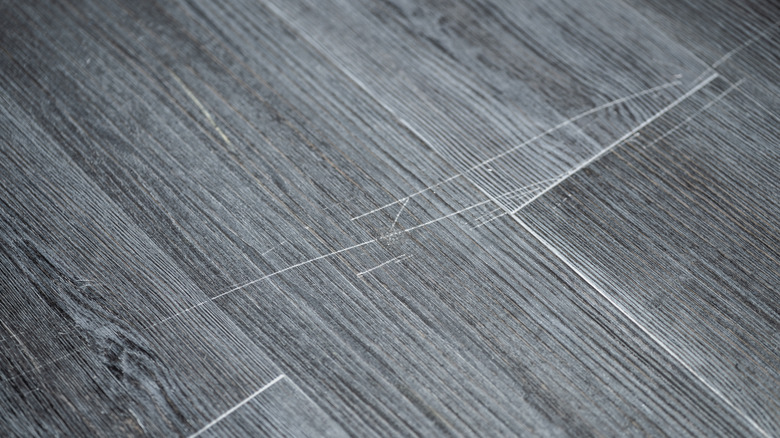
Luxury vinyl planks (LVP) are among the most common types of vinyl flooring, and for good reason. LVP perfectly mimics hardwood at a fraction of the price, but perhaps most appealing of all is its durability. You can choose between water-resistant and waterproof styles, which make cleaning quick and easy, plus they're designed to withstand high-traffic areas without showing wear and tear. That said, there are several mistakes everyone makes when cleaning vinyl plank floors (like using steel wool or a brush-roll vacuum attachment), which can cause scratches and chips.
Luckily, there is a simple way to fix these that's suited to all levels of DIYers and costs just a few dollars. As one handyman demonstrated on YouTube, ROBERTS Quick-Repair Putty works wonders for filling chips and scratches in LVP and costs just $7 on Amazon. Designed to adhere to wood, laminate, and vinyl, this putty is easy to apply and comes in a variety of shades to perfectly match your flooring. If none of the available colors are ideal, you can even mix a couple of hues together to achieve a better fit. All you need to do is squeeze a dollop of the putty into the chip or along the scratch, then use a putty knife to achieve a perfectly smooth result, removing the indentation for good.
How to quickly fix chips and scratches in LVP flooring
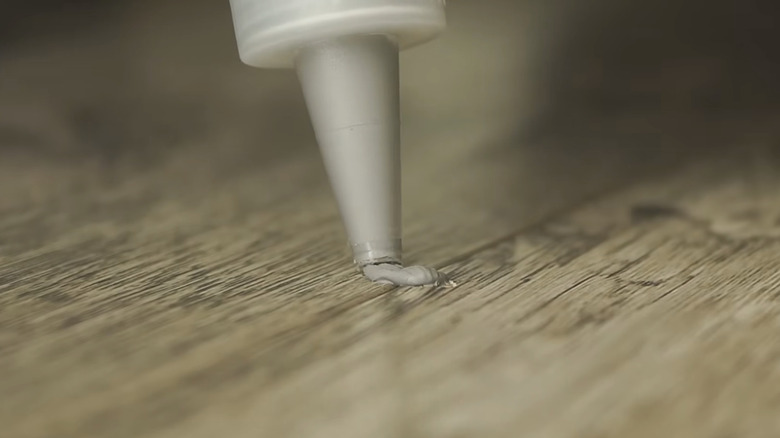
As our flooring expert told us, luxury vinyl plank is actually a better investment than engineered hardwood, which makes maintaining it all the more important. If you've spotted a nick or scratch that needs fixing, start by vacuuming around it thoroughly to remove all debris from the area. Next, squeeze out a generous dollop of ROBERTS' Quick-Repair Putty (always apply more than you need) and spread it around with the putty knife to get an even, flat coating. Wipe up the excess with a dry paper towel, being careful not to remove any of the putty from the actual scratch or chip. Run your putty knife through the floor's groove before the putty sets to maintain the split between planks, then allow the application to dry fully for about half an hour. For a deeper chip or groove, it's better to repeat this process a couple of times rather than trying to fill it in one shot. Once finished, if the filling is particularly noticeable, you can better camouflage it by recreating the plank's original grain pattern with a paint kit.
Putty isn't your only option, however. For a very small scratch that just grazes the surface, try smoothing it out by running a damp cloth or the back of a spoon over the area. Alternatively, if you're not so much bothered by the indentation as by the white line left by a scratch, you can mask it with WearMax scratch concealer, though this won't actually fix the surface the way the putty will.