

The Tropical Fruiting Indoor Plant That Thrives In High Humidity
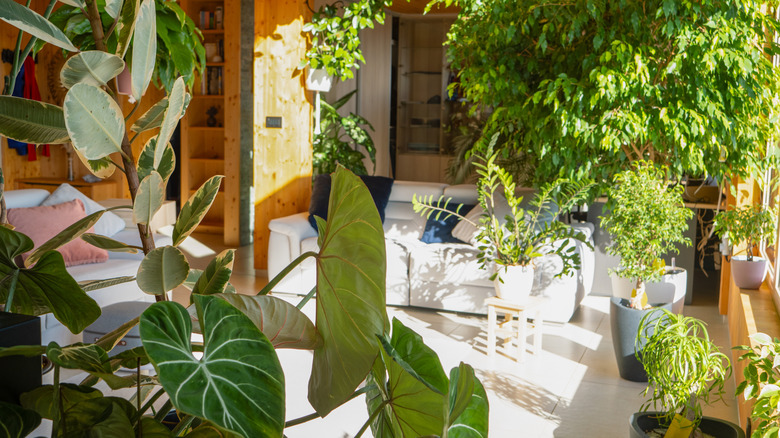
For many people, houseplants may serve as an accent, adding color and life to the sparse spaces around their homes. However, that doesn't mean your prized plants can't easily become the star of the show, and if you're looking for a large houseplant to fill up empty space, you may be interested in this tropical fruiting plant for your indoor collection.
The Dwarf Cavendish banana tree (Musa acuminata 'Dwarf Cavendish') is an eye-catching plant, offering a canopy of iconic tropical leaves and even edible fruit that you can enjoy as it matures. At a quick glance, you may not think that a banana tree belongs indoors, but thanks to this variety's smaller size (reaching a height of 6 to 8 feet tall), it can easily find a home in the more spacious areas of your house. In fact, this indoor fruiting plant has been a popular addition to homes in need of a tropical touch since the 19th century.
If you want to grow your own Dwarf Cavendish banana tree indoors, it's important to brush up on its required care. This is especially true if your goal is to elevate your space through its flowers and eventual fruit. To help your plant not just survive but thrive as an indoor plant, you'll want to pay close attention to sunlight and humidity alongside day-to-day care like watering.
How to grow Dwarf Cavendish bananas indoors
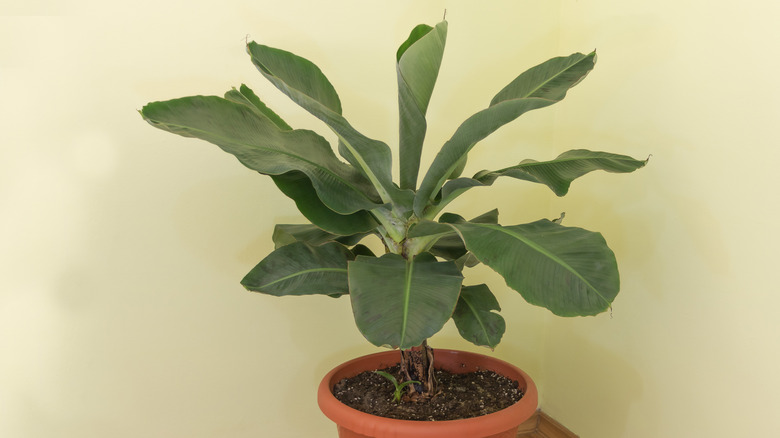
One of the most important factors to keep in mind when growing Dwarf Cavendish bananas as houseplants is humidity. These plants do best when they're exposed to high humidity conditions. As a result, this can be the perfect moisture-loving plant for your bathroom. However, as it grows, or if your bathroom doesn't sport a high enough humidity, you may need to find other ways to increase the humidity for your plant, such as regularly misting or investing in a humidifier. If your banana tree's leaves start to brown or split, this can be a sign that the humidity is too low.
Dwarf Cavendish trees also thrive when they're offered routine deep soaks that provide ample hydration without allowing them to become waterlogged. Your plant will likely need more water throughout the spring and summer, but if your banana tree lives near a heating vent during the winter, keep an eye out for dry soil conditions.
Lastly, having the right amount of sunlight for your Dwarf Cavendish banana tree can make the difference in whether or not it fruits. This tree requires full-sun conditions, which can be tricky to obtain indoors. South-facing windows will offer your banana tree the most amount of sunlight during the day. However, these windows can also be the warmest, which means you may need to pay close attention to humidity and hydration. If you're unable to accommodate full-sun conditions, it may be best to invest in a grow light as a supplement.