

Say Goodbye To Ceiling Fan Dust With A Steamy Hack
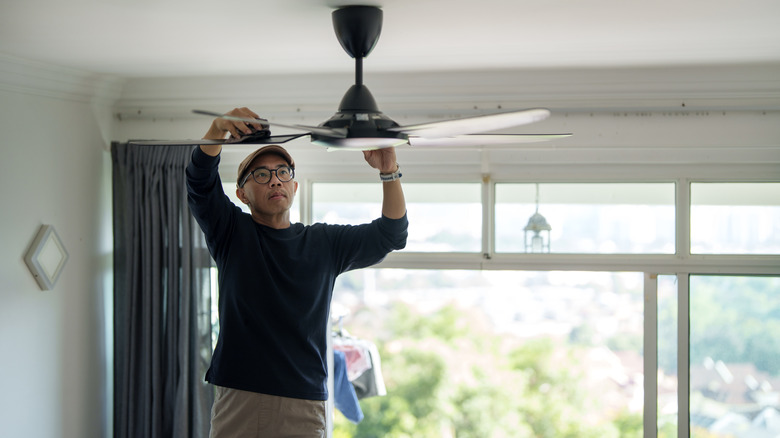
Ceiling fans are notorious magnets for that thick layer of dust that collects over time. It's not just an eyesore but a health concern: It pretty much turns the device from a convenient household feature into a centrifugal distributor for allergens and bad smells. Luckily, there's a super efficient, dust and bacteria-busting hack to keep your ceiling fan spotless and in check.
Ceiling fans may have been on your list of things you never knew you could clean with a steamer – until now. This cleaning hack is great because it requires minimal effort and it uses zero harsh chemicals. By cleaning your fan's blades with a steamer, you'll finally be able to flick the switch without the fear of creating an undesirable indoor snow effect.
If you've ever tried to clean a ceiling fan with a duster or a damp cloth, you know the struggle. Not only does half the dust end up on the furniture, on the floor, or on you, but a simple cloth won't cut through the grime that's leftover. This is particularly true in a kitchen where grease and oils find their way up onto the surface of the fan's blades, and attract more dust to, quite literally, stick around. Opt for a steamer with the right attachments, and you'll get rid of that microfilm and stop it from attracting dust — which would otherwise end up in the air around you.
Steam is the smart, safe way to clean ceiling fans without mess
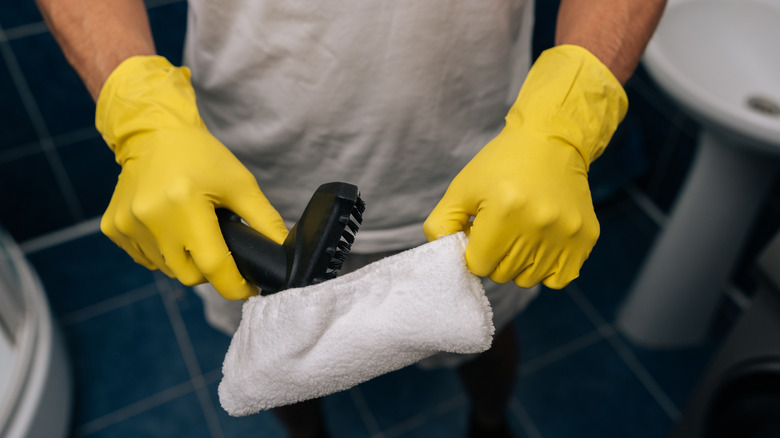
To clean your ceiling fan with both speed and safety in mind, you really only need two key steamer accessories: a microfiber pad and an extension wand. The extension wand is vital for safety, giving you the necessary reach to clean from the ground. This means you won't have to climb up on a ladder, which lowers the chance of a bad fall, particularly when you're handling tasks on your own. But the microfiber attachment is a real game-changer — it catches dust rather than simply wiping it off, thanks to the ultra-fine split fibers. They create a light static charge that helps the dust adhere. This tool can eliminate, or at least seriously reduce, the need to vacuum the floor afterward. And in between uses you'll want to keep your microfiber towels fresh using this simple storage tip.
The use of a steamer also offers a quick, chemical-free way to clean that performs just as well as traditional methods. According to a study archived in the National Library of Medicine comparing steam cleaning to a two-step method using detergent and bleach-based disinfectants, researchers found steam to be just as effective at killing harmful bacteria. Be careful though: That truth relies on the steam reaching temperatures between 175 and 212 degrees Fahrenheit, which can cause serious injury if it makes contact with skin. It can also cause damage to certain porous materials, so it's worth knowing which areas to avoid when steam cleaning your home.