

We Had No Idea How Creative People Get With Storing Their Firewood In Winter
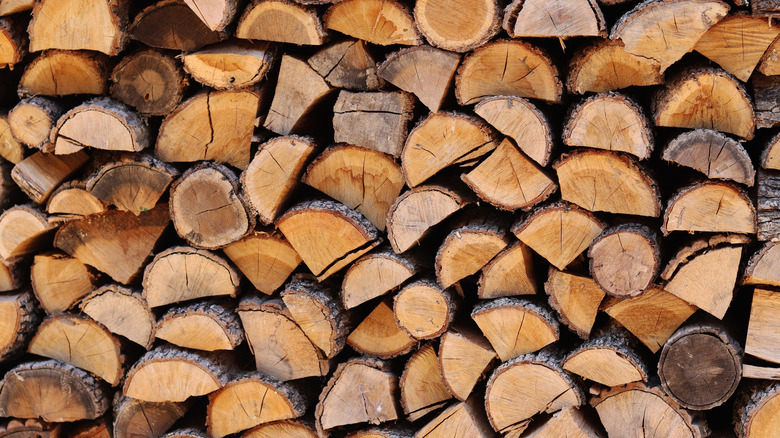
Storing firewood can be a significant undertaking if you use a lot of it. People who heat their homes with wood using a woodstove, or who burn wood outdoors for cooking or campfires, need space for storage and good practical setups to keep wood dry. But stacking and storing firewood doesn't have to be a humdrum endeavor. To help you make your firewood supply more aesthetically pleasing to look at, we gathered some inspiration from folks who stacked their firewood in various creative yet practical ways.
Stacking firewood in a structure, rather than just leaving it in a pile, has various advantages. It allows for better airflow than stacking firewood against your house or garage, which helps reduce moisture so that the wood can season properly. Stacking structures are also much more cost-effective than buying a ready-made wood shed. Using pallets protects the bottom of the stack from insects and moisture, which can cause wood to rot and turn "punky" (what my dad used to call wood that had grown fungus from dampness), which makes it unsuitable for burning indoors.
Stacked wood should also be covered to protect it from rain, snow, pests, and falling debris that absorbs moisture (like pine needles or leaves). Tarps are one option, but covers can also be artfully made. As for the wood itself, in some parts of the world, artful firewood stacking has been a custom for a long time. If firewood is an integral component of your homestead, why not make its storage look as good as possible?
Beehive or Holzhausen
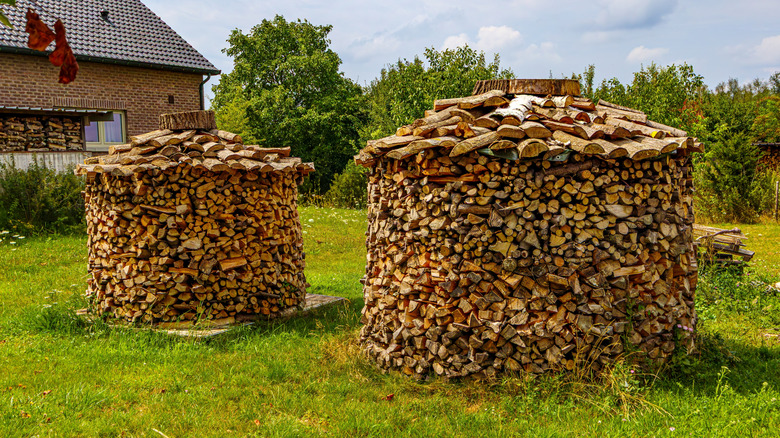
This impressive design is also quite practical, so no surprise, really, that it hails from Scandinavia. This round stack is known variously as a beehive (due to its shape), or a "Norwegian beehive," or simply the Norwegian stacking method. But many people also call it "holzhausen" ("wood houses" in German) for the rounded top that resembles a shingled roof. The structure is fairly easy to plan out and to build, and it allows for excellent airflow and good use of space, as well as providing a great-looking display.
Adding airflow with simple crosswise stacking
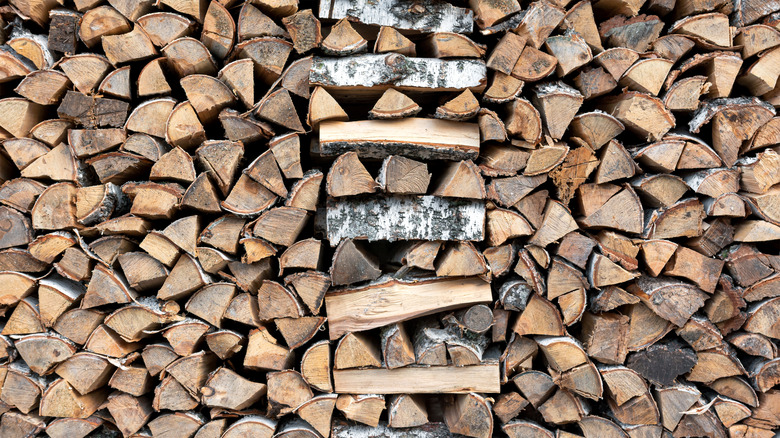
This compact, neat pile of birch logs is designed to help wood season and stay dry. The central crisscrossing stack creates a strong framework for stacking wood alongside it. These stacks can also be used to bookend the woodpile, creating a sturdy storage area and encouraging airflow to keep wood dry and lessen the proliferation of mold, fungus, and pests. Facing some logs outward with the bark visible also allows you to select specific kinds of wood as desired (fragrant cherry or apple, or heat-generating oak, for example).
Round logs of varying size
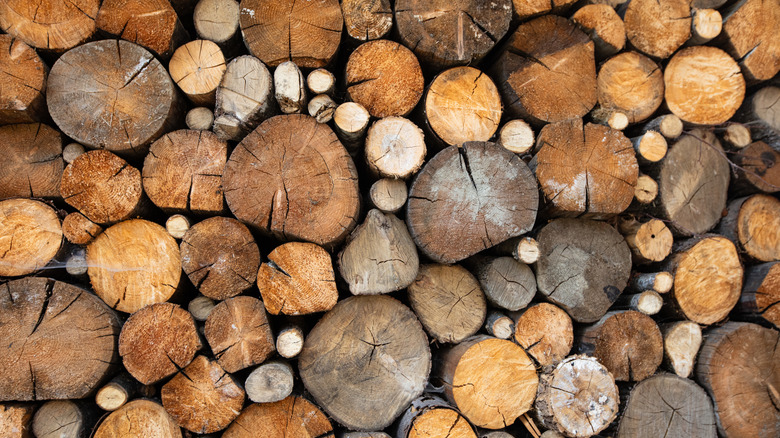
While most people use split firewood, many prefer larger round logs for outdoor use, such as bonfires or large campfires. Logs should be split while still green when the wood is softer and more workable; dried logs can still be split, but it takes more effort. Logs smaller than 8 inches in diameter need not be split and can be used as is. Stacking large round logs takes up a lot of space: Adding in smaller ones uses space efficiently and still provides airflow while creating visually appealing texture.
Create a curved quonset hut
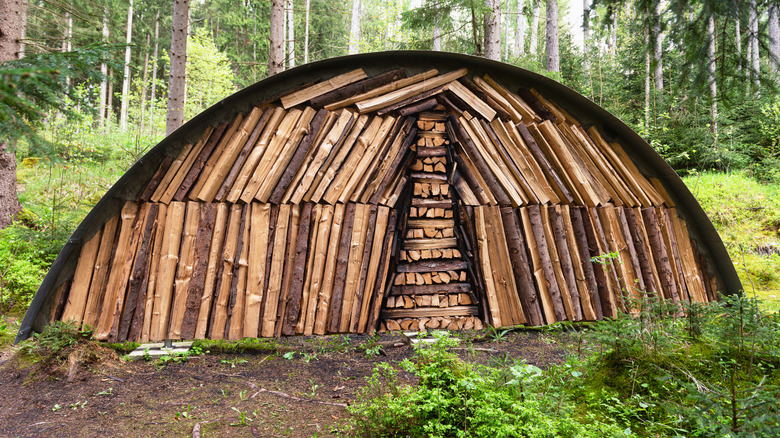
This curving wood shack located in a national forest in Germany uses a sort of Quonset hut design with an arching roof. A half-dome shape like this can be built with metal, wood, or other materials and is a good way to provide a sturdy, permanent structure for wood storage. This design offers protection from the elements and resists snow or ice buildup due to its shape.
Split logs supported by round logs
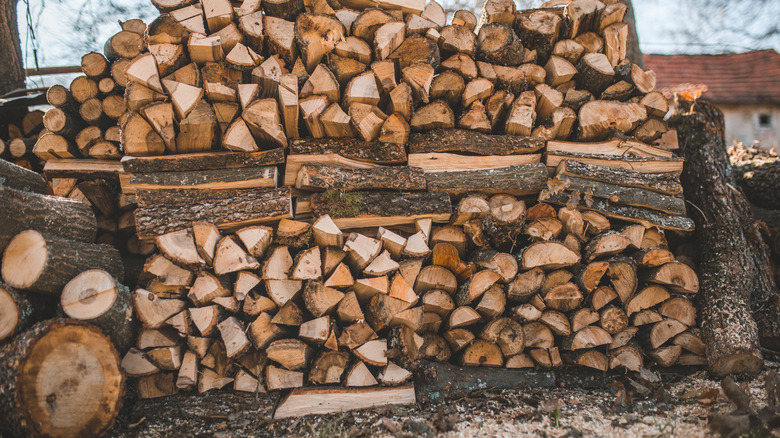
Although splitting logs while the wood is green is recommended for most types of wood, keeping a few larger logs uncut allows you to use them as part of your stacking structure. Here, longer round logs are piled around stacked split logs to hold them in place. As their bark dries and peels off, it can be used for kindling material. Alternating crosswise layers of split logs provides good air flow and stabilizes the pile.
Add freshly cut wood for color contrast
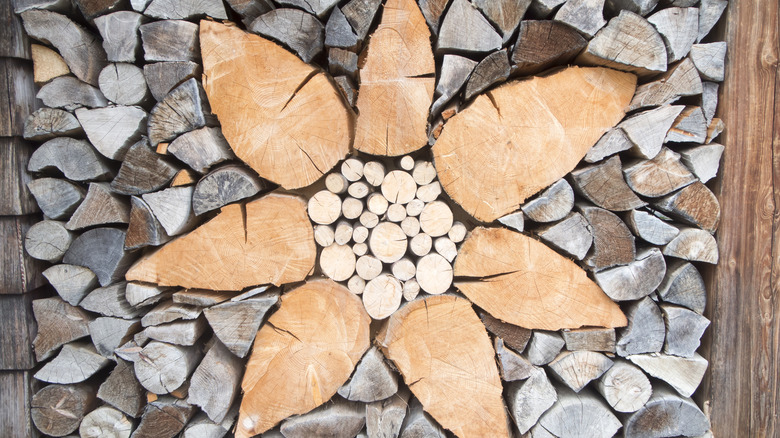
This fetching design uses seasoned split logs arranged with newly cut wood to create striking color contrasts. Cherry wood burns well and has a pleasing peachy color, making it stand out. The seasoned logs on the outer edges can be removed first without disturbing the central pattern too much. The smaller diameter logs in the center will dry out fairly quickly if there is sufficient airflow, and removing a small amount at a time then replacing them (to keep this usefully-sized log handy) won't upset the middle pattern because it's anchored in firmly by the outer split logs.
DIY stack with wooden holding walls
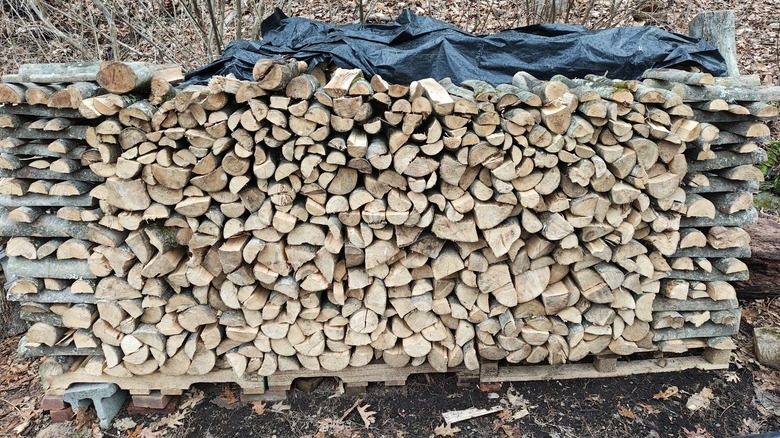
This rustic arrangement is not only neat but practical for those who burn a lot of wood for warmth. This is a photo from upstate New York, where my friend has a small house with a woodstove. In this structure, two "holders" are built using layers of split logs stacked in a crisscrossing pattern on top of wooden pallets. This symmetrical design creates stability to hold up the large amount of stacked logs in the middle. He then puts a tarp over the top layer to prevent moisture from rain or snow from collecting in the log pile.
Fire Dish Storage
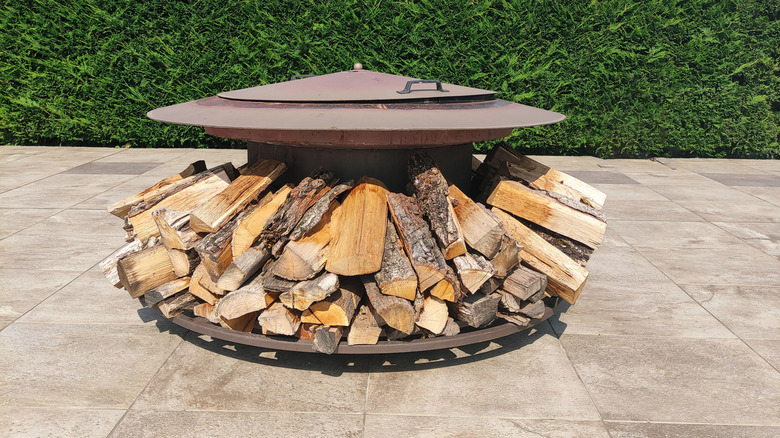
When using an outdoor fire dish, having a source of dry, seasoned wood nearby is a necessity. Damp wood can be smoky, and smoky outdoor fires aren't really conducive to fun social gatherings. This method of wood storage keeps wood dry and seasoned in two ways: The fire dish acts as an overhanging "roof" or cover in the event of rain, and the placement of the logs around the central fire chimney also allows heat from the fire to dry out the logs.
Vertical holders for indoor storage
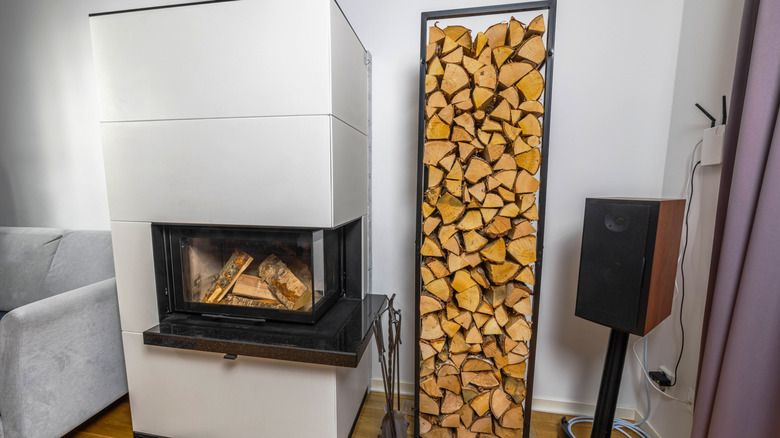
In a home heated with a woodstove, it's convenient to have a spot to store some firewood indoors. However, you should only store firewood indoors that is completely dry and seasoned. The challenge with keeping wood indoors is that it can be messy, so having a carrier to bring logs inside is useful, as is having the log holder on an easy-clean surface. This tall, narrow holder is an attractive, efficient use of space and allows plenty of air flow to keep firewood dry.
Decorative wood cover
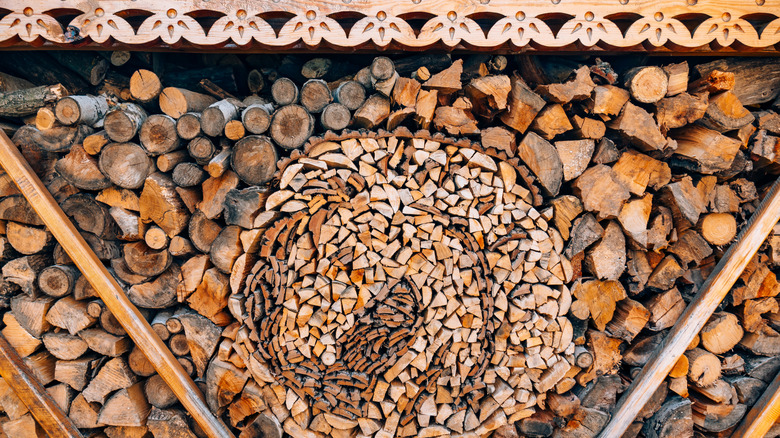
The design of this simple firewood shed is beautifully enhanced by the carved wooden piece across the top. This decorative piece of wood serves the way a lintel does on a door or window. Such a piece can be attached to the top with nails or glue, and there are many options for creating an attractive top piece for your DIY shed. This one enhances the geometric patterns and rough surfaces of the wood pile with contrasting round edges and smooth wood grain.
Small decorative patio holder.
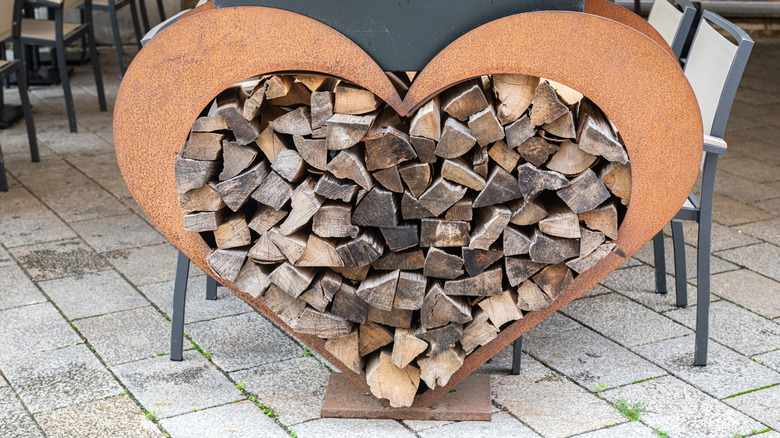
There are many artisans who use cast iron and other metals to create practical and beautiful devices for wood storage and burning. This heart-shaped design is not only pleasing to look at but is also a good size for home patios or the outdoor dining space of a restaurant. Some casual dining spots at microbreweries create cozy outdoor seating areas, and a small fire is perfect for those chilly nights under clear starry skies. This wood holder is accessible for staff or even patrons to grab a log as needed to feed the fire.
DIY wood holders
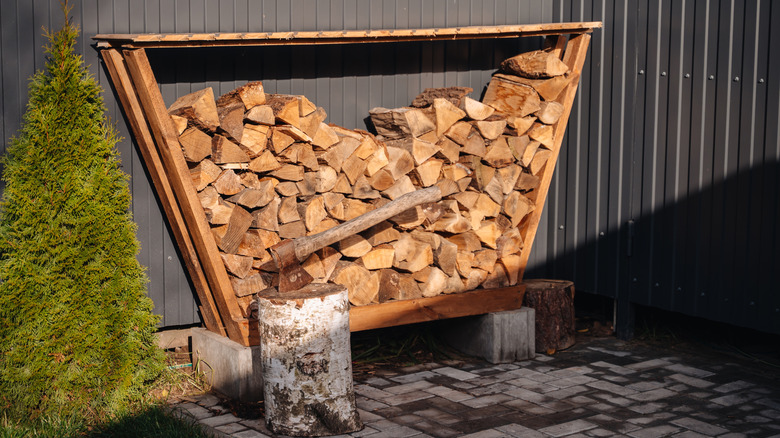
There are many ways to create effective DIY storage racks for firewood using salvaged or inexpensive materials. This one is made with a simple combination of cinderblocks, cut lumber of various sizes, and a wood lintel on top (which could be easily made from scrap wood, including pallets). This is also a space-saving design because it's narrow and leaves enough space behind it for air flow between the wood and the building.
Sunburst design
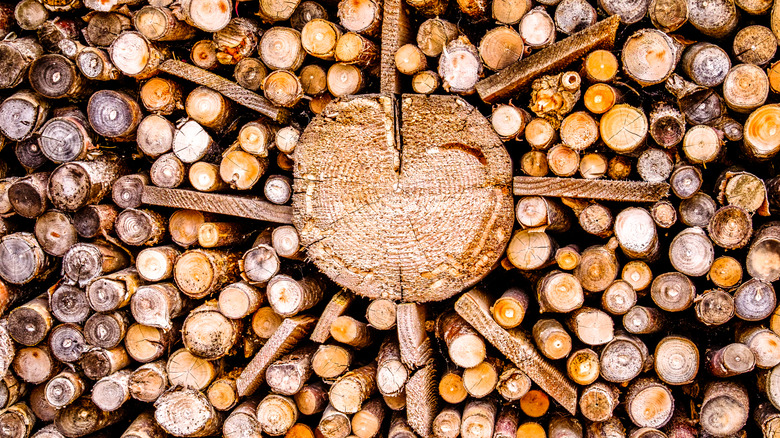
This sunburst design is striking and creates some space for air flow and easy retrieval of logs. It also makes good use of a log that may be too large for splitting and upcycles some wooden planks, which also act as inner shelves for these smaller round logs. Building such a design could prove to be slightly tricky and might be a two-person job. One person can hold the large center log and planks in place while the other fills in logs to create the design.