

Transform Old Plastic Nursery Pots Into A Hanging Feeder Birds Will Flock To
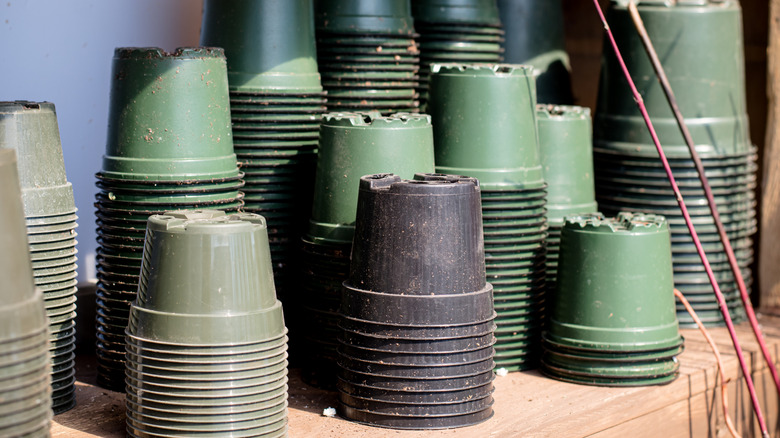
Don't throw away those old plastic nursery pots! They're perfect for making hanging feeders for hungry birds. Instead of filling up your local landfill with waste, you can reuse plastic nursery pots to attract birds and enhance your garden at the same time. This unique contraption works by dropping seeds as the birds eat them. Turning a nursery pot upside down allows gravity to pull the seeds out of the pot's drainage holes. They'll fall into the tray below, where birds can perch and snack. You don't need many materials to start, and they're all cheap to source. In fact, you may already have them in your gardening supplies.
Look for two plant trays, or saucers. Plastic ones work best, as they're easy to drill through. You'll also need a quart-size or larger plastic nursery pot with drainage holes at the bottom. Rope is the best material for tying the three parts together, though you may use metal chains or other ties. To make holes in the trays and pot, use a knife, drill, or sharp screwdriver to puncture the plastic. Wearing gloves and eyeglasses will help keep you safe during the process. The last thing to look for is bird seed. Choose a seed recipe that offers variety to the birds in your yard, as different birds prefer different seeds.
Create a hanging feeder out of old nursery pots and trays
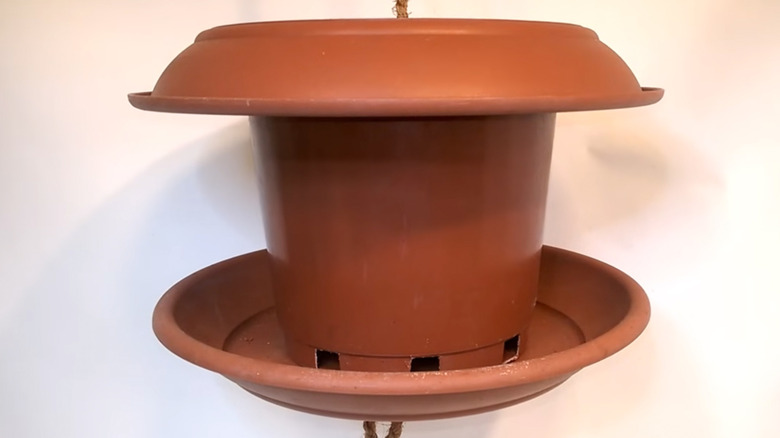
Begin by drilling or poking holes in the bottom of the trays and the pot. Place one tray upside down on top of the pot, then put the other right-side up below it. Use a rope or metal chain to string them up, and tie the items together so they stay put. Simply lift the upper tray to fill the pot with seeds, and watch as they come tumbling out of the plastic pot's drainage holes. Birds will use the tray as a perch, and they'll feast on the seeds while you watch from the window.
While most plastic nursery pots are black, a quick paint job can help them stand out in the garden. Use colors with earth-tones like browns, greens, and teals. Or, decorate them with bright colors, making a statement with sunshine-yellow or fiery orange-red. When painting, be sure to use water-based or all-natural paint that's rated for outdoor use. Indoor paints may chip off when it rains, and toxic paints cause harm to birds. Always use non-toxic alternatives to keep your local birds safe.
Finally, when it rains, water can run into the pot and wash the seeds out, and any leftover moisture can cause the remaining seeds to mold and rot. It's best to prevent water damage rather than deal with the consequences. You may choose to bring the feeder indoors when it rains, try sealing the hole in the top saucer to keep moisture away from the seeds, or cover the setup entirely.