

Not All Outdoor Furniture Is Made The Same. These Types Won't Survive Winter Weather
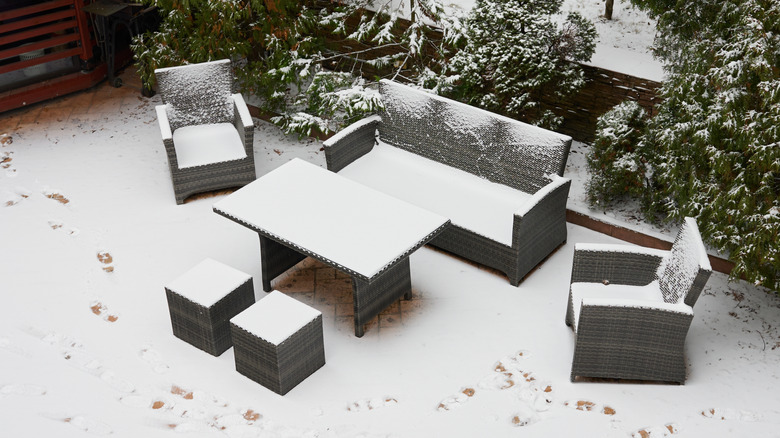
Given its intended purpose, it's fair to assume that your outdoor furniture should be able to withstand the elements. However, different materials have different levels of durability, regardless of the brand, price, or style. While this may have you rethinking wooden, wicker, or plastic furniture, the type of outdoor furniture that won't survive winter is actually anything made of iron or steel. They may sound like strong materials, but their propensity to rust makes them particularly ill-suited for harsh winter weather. So, if you have outdoor furniture made from iron or steel, it is time to learn why you should bring it inside or carefully prepare it for the winter months to avoid damage.
Wrought iron, steel, and stainless steel are among the most popular choices for outdoor furniture due to their weight and strength. They won't blow away in strong winds like plastic furniture, and the materials are durable, sturdy, strong, and resistant to corrosion. Even so, the care instructions for furniture made of these materials include bringing the furniture inside for storage during winter months to prevent corrosion and other damage. Iron and steel may seem like gorgeous, long-lasting investments for your patio, but it is important to properly care for them, especially if you live in a place with harsh winters. Luckily, if you did not know why or how to prepare your furniture for the winter, you may still be able to protect and repair it so it will be in good condition when the weather finally warms.
Why are iron and steel prone to damage in winter?
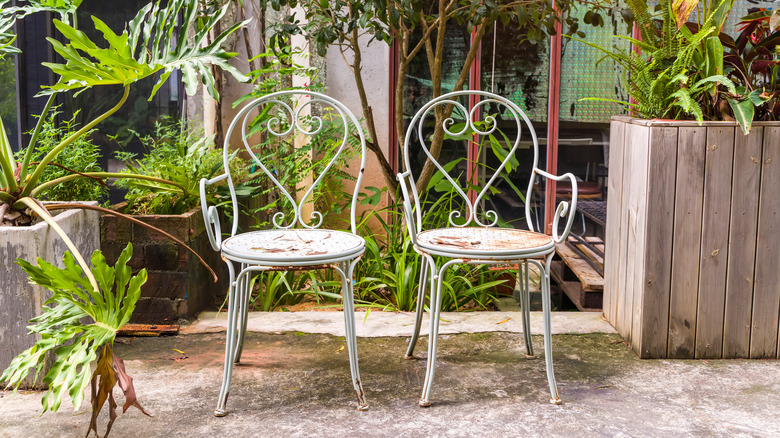
You likely already know that water and iron are not a great combination, but there are a few differences between how winter weather and rainstorms in other seasons affect your metal furniture. First, there is the snow itself. While rain will wet your furniture and run off, snow is more likely to stick to metal surfaces and trap moisture underneath. If your metal has any scratches or imperfections, then water can also seep inside and get stuck in places where it cannot easily evaporate. When temperatures fluctuate and the water starts freezing and melting repeatedly inside the metal, it can cause structural damage because it expands and contracts repeatedly. Finally, there is the added impact of salt in the water, which speeds up the formation of rust. When the snow finally melts and evaporates away, you could be left with rust-covered furniture and cracks and scratches that are larger than before.
The simplest way to prevent these issues is to bring the furniture indoors for the winter. Whether you have space in a garage, attic, basement, or shed, if the metal is not exposed to as much moisture and salt, it will last much longer. Just be sure to prepare everything using the best way to clean all your metal outdoor furniture before bringing it inside. If you don't have an indoor space that will work, there are a few other ways you can try to protect your iron and steel furniture over the winter and fix it up once spring comes around again.
Other ways to protect iron and steel patio furniture
To protect metal furniture that has to be left outdoors, you should still start by thoroughly but gently cleaning the surfaces. Then, remove any rust that is already present. Rust removal should be completed when it is at least 50 degrees Fahrenheit outside, so be sure to prepare early enough in the fall. While you can refresh your rusty patio furniture with a common medicine cabinet staple, some sanding, or a wire brush to deal with a mild case, more severely rusted furniture may require the use of a rust converter or even the replacement of some parts. When the rust is removed and the metal is completely dry, apply a protective coating to seal the metal and create a barrier between it and the snow. This could be wax, silicone spray, or spray paint with a top coat.
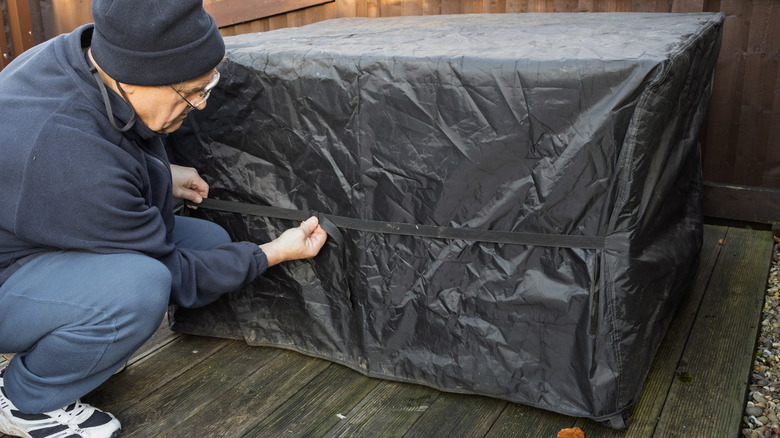
Covering your furniture can also help protect it, but make sure you know how to choose the best patio furniture covers for the winter months. You will need covers that are waterproof and wrap tightly around your furniture to prevent snow from getting in through any gaps. Covers with some ventilation can also be good because they prevent moisture from getting trapped underneath the cover. When the weather warms again, hopefully you will be able to remove the cover, clean your furniture, and treat any rust spots again. If the care and risk of iron and steel furniture in the winter is too much, other materials, such as aluminum or plastic, may be worth considering instead.