

Should You Remove A Tree Stump Before It Rots? Here's What We Know
We may receive a commission on purchases made from links.
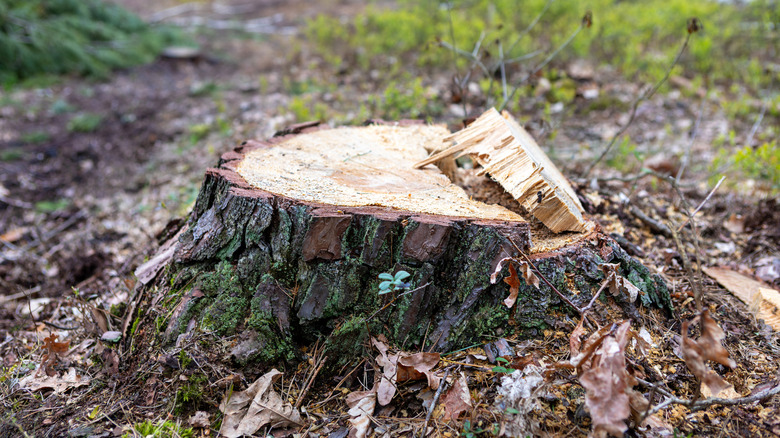
Removing a tree is a big decision. After recognizing the signs that tree removal is the right decision for your yard, you need to either hire someone, which typically costs hundreds of dollars, or safely remove the tree yourself. Once the tree is down, you still have the stump to deal with. Tree stumps can be removed in a variety of ways, including grinding, burning, digging, and chemical rotting, though not all methods remove the entire stump. Plus, some people want to leave tree stumps in-situ for aesthetic, money-saving, or time-saving reasons. Leaving a stump in the middle of your lawn may work out well in some cases, depending on your goals. However, it is generally better to remove a tree stump before it rots to avoid potential issues caused by wood decay.
Once your tree is cut down, the stump left behind will naturally begin to rot if you choose not to remove or preserve it. The process of stump decay usually involves unpleasant sour or musty smells, fungal growth, and increased pest populations. The wood of the tree also changes, becoming soft and spongy instead of hard and healthy. The soft wood is easier and cheaper to manually remove, which is why some people opt for natural or chemically accelerated rotting before stump removal. However, the rotting process, especially if you use chemical accelerants, can be risky for your yard — and your wallet — in all sorts of ways. It is important to consider your specific situation and your risk tolerance before making a decision on stump removal.
Why you might want to remove a tree stump before it rots
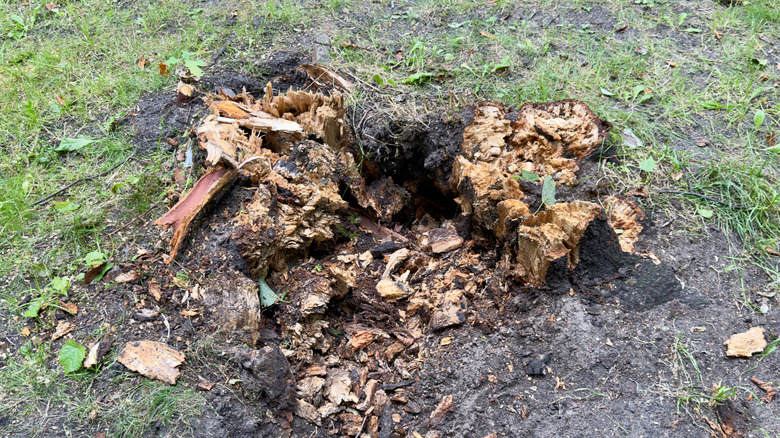
Strange smells, fungi, and more pests already sound unpleasant. Learning about the other long-term consequences of leaving a tree stump to rot in your yard will provide better insight into the risks involved. As the roots beneath the stump decay, the soil around it sags and is more susceptible to erosion. The resulting soft patches and uneven ground can disrupt the growth of nearby plants, damage landscaping, and become a trip hazard. Microbial infections, which are common in decaying stumps, can spread to the surrounding soil. As mentioned, pests can also be a problem, but which critters do you need to worry about? Rotting stumps attract termites, ants, beetles, and other wood-loving insects that can move to nearby trees or structures, including your home. Once they've taken up residence, the damage they cause can be severe.
Even if you follow the precautions you should take around your house and yard to prevent a termite infestation, you may find yourself paying for pest control, treating a yard-wide fungal infection, or trying to fill sinking patches in the ground over the three to 10 years it takes most trees to decompose. Termite treatment often costs between $200 and $900, and lawn fungus control typically costs $50 to $200 for initial treatment alone. This means that if your rotting stump faces any issues, you will be paying for professional removal, which ranges from about $150 to $300 on average — for complex jobs, that figure could rise to over $600. Plus, you'll still need to deal with peripheral problems once the stump is gone.
Why you might consider letting a tree stump rot in place
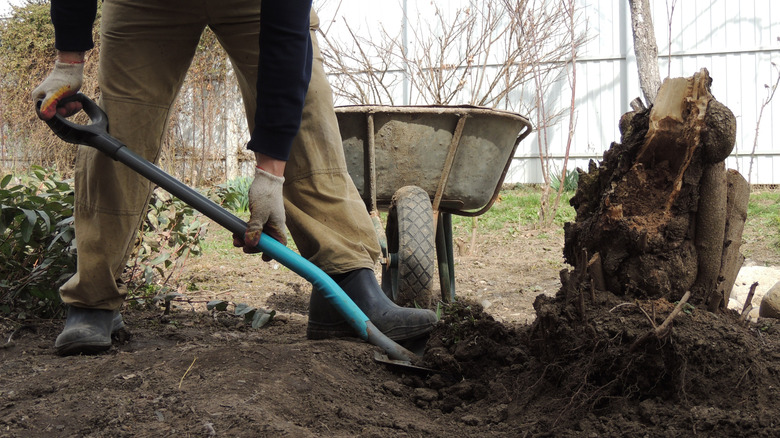
One of the main reasons to consider allowing the stump to rot in place is that the soft wood is easier — and therefore cheaper — to remove. If your local tree removal company charges by the hour for labor, they can remove decaying wood faster, saving you money. If you plan to remove the stump yourself, giving nature some time to break it down makes your job far less taxing.
Natural rotting takes years and gives problems plenty of time to arise. You can speed up the process using non-invasive methods that make removing a tree stump easier. You can apply nitrogen-rich materials or commercial accelerators (like Bonide Stump-Out Granules) to the stump, drill holes in it, or keep the stump damp and covered — all options that increase rot rates. Selling your home soon? Getting this eyesore out of your otherwise pristine lawn quickly is good for property value.
Overall, if you have a strict budget, want to avoid property damage, or simply want the tree stump gone from your yard quickly, it is best to remove the stump before it rots. If the tree stump is located far away from structures and garden beds and you are okay with a potentially unlimited remediation budget, you can leave the stump in-situ to rot naturally. You'll save a few hundred dollars and a few hours of difficult physical labor — in the short term, at least.