

Items You Should Stop Storing In A Hall Closet
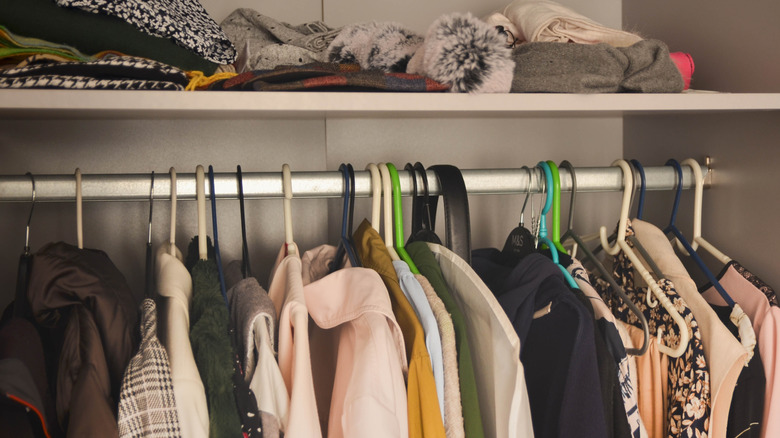
The hall closet is often the ultimate household catch-all. It's the first place we go to when we come home and turn to when we need to hide a bunch of clutter before guests arrive. But this great convenience comes at a cost. Because these closets are often placed near drafty entryways or exterior walls, they're more prone to temperature swings and humidity shifts than other areas of the home. So, storing things like delicate family photos or sentimental keepsakes here is a recipe for disaster. Over time, the lack of steady climate control can cause a range of issues for what's in it, like warping vintage photographs. Fabric heirlooms like wedding dresses and handmade quilts can even develop permanent yellowing or musty odors, as ignoring your closet's climate is a rookie mistake.
Beyond environmental damage issues, the hall closet is often a place where many homeowners store their cleaning supplies. Some store used mop buckets or heavy-duty solvents on the floor. In a small, unventilated space like a hall closet, these products can off-gas and release nasty fumes that could linger on your coats and scarves. Similarly, storing electronics like old laptops or digital cameras in these cramped quarters is risky. Dust buildup, high humidity, and extreme temperatures are the enemies of circuitry. If you want to preserve your family history and your tech, it's time to find a more stable environment for them. There are plenty of strategies for decluttering your home, but moving any delicate items to an indoor, climate-controlled locale is a great start to keeping them in good shape.
How to declutter and reclaim your entryway efficiency

Once you've moved those fragile items, it's time to address the less valuable space stealers that are cluttering your closet. Common offenders range from big things like bulk supplies to tiny bits, like screws and batteries. While buying in bulk can save money, storing several dozen paper towel rolls in a hall closet wastes valuable, high-traffic storage space. Hall closets really ought to stay reserved for high-use items (like vacuums) or essential things you'll be grabbing every day on your way out the door (like jackets and umbrellas). Moving any stuff you'll need soon but not right now to somewhere like a garage or a high shelf in your laundry room frees up that space for things you actually need in your everyday life.
Empty cardboard boxes tend to settle in the hall closet like permanent residents, as well. Many of us often keep packaging just in case we need to return a product. But if the warranty or return window has passed, that box is just taking up space. Likewise, long-ignored hobby gear (such as your violin case or tennis rackets), off-season shoes, and luggage are also culprits for hogging space in hallway closets. As a general rule, if you haven't used an item in several months, it likely doesn't belong in your home's most accessible storage area. By removing these oversized and unneeded distractions, you give yourself a far more functional closet zone that's accessible whenever you need it. A streamlined hall closet can also motivate you to tackle clutter in other problematic areas of your home, such as the kitchen.