

Hawaiians Should Kill This Tropical Invasive Pest On Sight (It Can Cause So Much Damage)
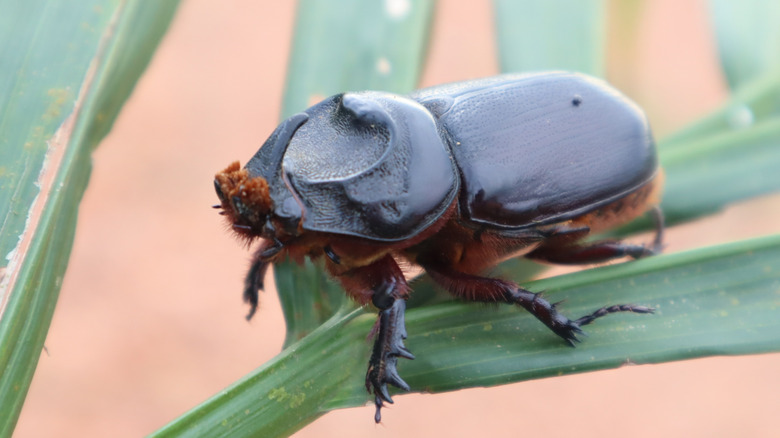
If you live in Hawaii and see a massive, dark beetle with a hooked horn on its head and a fuzzy underside near your trees, don't let it escape. This insect is the coconut rhinoceros beetle (CRB) (Oryctes rhinoceros), and it's become one of the biggest threats to Hawaii's ecosystems. Since first being spotted in Oahu in 2013, this pest has been on a relentless march across the islands, leaving a trail of dying palms in its wake.
Don't let the name fool you into thinking that these beetles only want coconuts. These insects are invasive pests you should always kill on sight; with a strong appetite, they're not picky about what they eat and will happily feast on a variety of other plants. Coconut rhinoceros beetles frequently target date palms, Chinese fan palms, and royal palms, but their menu also includes sugarcane, pineapple, taro, and banana plants. In some cases, they have even been known to attack papaya trees and hala, which are culturally significant to the Hawaiian Islands.
The danger comes from the way these beetles feed. They aren't interested in the tough outer bark or the fruit. Instead, they use their powerful front legs to burrow into the crown of the tree. This is the most vulnerable part of the palm because it contains the growing point. If the beetle destroys this tissue, the tree loses its ability to produce new growth and eventually dies. Because just one adult coconut rhinoceros beetle can fly up to 2 miles in search of a meal, leaving one alive puts every palm in the surrounding area at risk of a slow death.
How to identify coconut rhinoceros beetle damage on palm trees
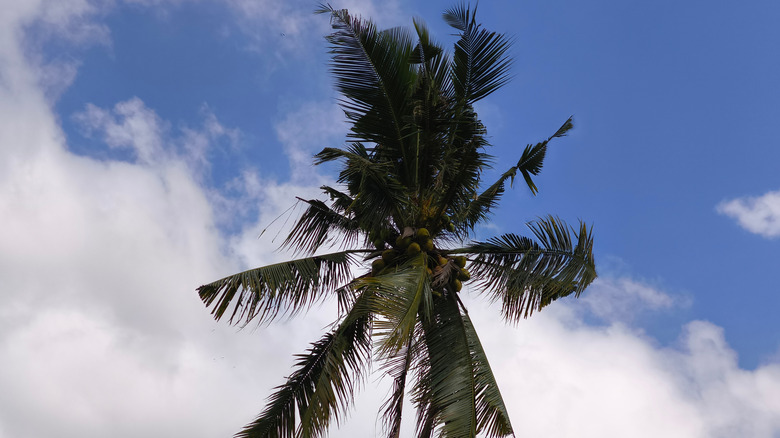
Noticing an infestation early is the only way to keep your property from looking like a graveyard of dry, shriveled palms. These pests cause some of the worst kinds of infestations because the damage often stays hidden in the early stages. One of the most obvious signs that a coconut rhinoceros beetle has been feeding on a tree is the appearance of very specific V-shaped notches in the leaves. These cuts almost look like they were made with a machine, or as though someone took a pair of garden shears and snipped out a perfect triangle from the frond. This happens because the beetle bores into the heart of the palm while the leaves are still tucked away in a tight spear. As the leaf grows and eventually fans out, the holes and cuts expand into those patterns.
You might also find round bore holes at the base of the leaf stems, which are often accompanied by a sawdust-like material known as frass. If you notice that your palm trees are looking sparse, or the new growth seems stunted or misshapen, there's a high probability that these beetles have made the trees a home. Noticing these signs quickly is the only way to help before the tree is entirely compromised.
Effective ways to handle the coconut rhinoceros beetle
If you find one of these bugs, the best move is to bag it, freeze it, and call your local officials, or use 643Pest platform, which allows people across Hawaii to track and report invasive species. You can submit a report online or via the mobile app; this method allows you to include photos and location data of suspicious plants or animals. Alternatively, you can dial 643-PEST (7378).
Killing the adult beetles when you see them is only half the battle when you're trying to protect your trees. To really eliminate them, you have to look at where they start their lives, which is usually in your mulch or compost piles. The larvae are thick, cream-colored grubs that can grow as large as a human thumb, typically curling into a C-shape when they are in the dirt. These grubs love decaying leaf litter and rotting vegetation, so managing your green waste is one of the most helpful things you can do to break their life cycle.
You should also avoid leaving large piles of grass clippings or fallen logs to rot on the ground. Understanding mistakes commonly made when storing firewood, such as leaving logs in direct contact with the soil for long periods, is significant, since these make the perfect home for CRBs to lay eggs. For those growing the native loulu palm (Pritchardia spp.), this is even more important, because these are endangered trees that are particularly susceptible to these beetles.