

Treat Your Landscaping Like Your Home Interior For Longevity
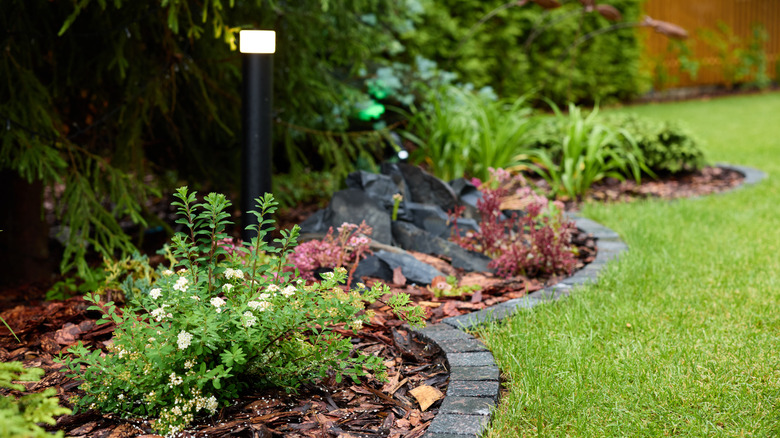
Landscaping is sometimes a bit of a challenge. Building the perfect yard feels like you're constantly walking a tight rope of adding too little or too much, leaving you with a space that looks unkept and overgrown, or bare and minimal. If you've been struggling to find that balance, it might be time to stop thinking about your landscape as its own separate entity. Instead, treat it like a part of your home. Though it may feel different, your landscaping can often benefit from the same treatment as your home's interior.
Think about it this way: when you design the inside of your house, it's rarely a "one and done" process. You often set up the space with furniture, paint colors, and materials you like and that are possibly trending. However, over the years, as popularity changes and you grow into the space, you make adjustments. What you start with and how your home looks years down the line are rarely the same. Knowing this, it feels a little silly to expect the landscape to be so static.
Like you, your plants are growing and may need some adjustments over time. A lot of home landscapers make the mistake of trying to fill in all the empty space in their yard right away. Minimalist gardens might be one of those outdated landscaping trends to leave in the past, but that doesn't mean you have to go fully in the opposite direction with a mess of out-of-control plants.
How to avoid an empty-looking garden without overplanting
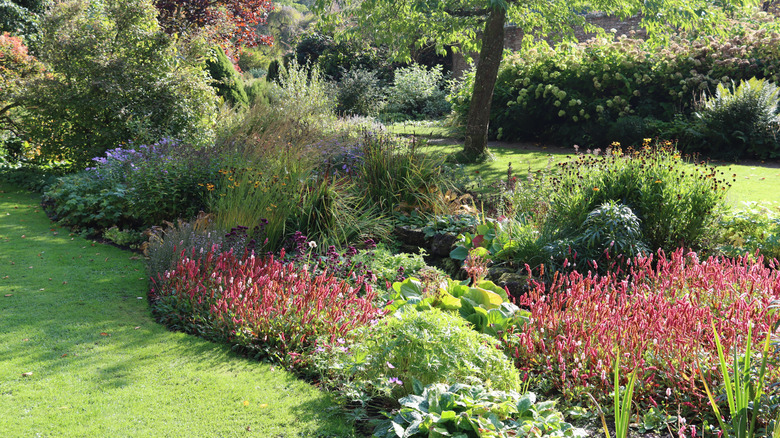
Like with houses, the key to getting your landscape to look just right and not cost a fortune while making major renovations is to plan. It's suggested that you imagine your landscaping roughly 10 years in the future, once everything you want to plant reaches maturity. Start by picking out your anchor flora. In landscaping, these are usually long-lived plants, like trees, or the gorgeous flowering shrub that makes the perfect foundation plant for your home. They can be the key pieces around which you design the rest of your yard, like picking out key furniture in a room.
Landscape plants tend to be much smaller than they would be when fully grown. It's up to you to make sure you have them spaced out enough so that they won't be overcrowded when they reach maturity. However, this may leave your garden feeling rather bare for the first few years.
Instead of adding more of your anchors, consider including a few annuals to fill the spaces in the meantime. This lets you play around with colors and layouts as well, making sure your landscape really speaks to you. Keep in mind, if they aren't working out as you wanted — even your anchors — you can always remove them, just like you would with pieces in your home. And who knows? You may even determine plants aren't for you and decide to go with a stone landscaping idea that requires little upkeep instead.