

The Bathroom Essential That Removes Adhesive Hooks From Walls Without Damaging Them
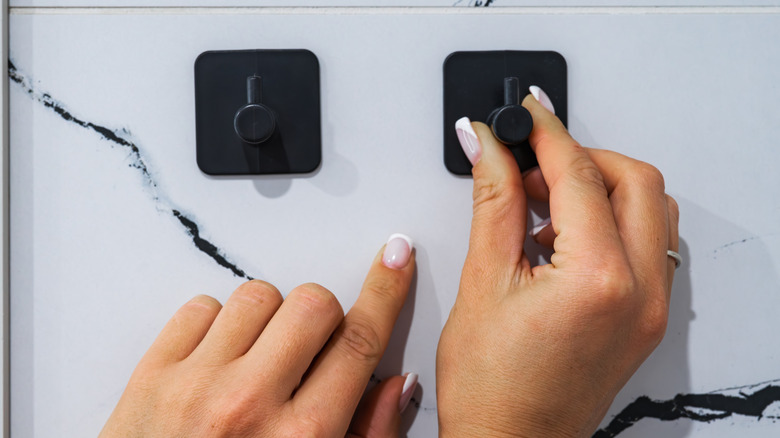
Chances are, you probably have at least a few adhesive hooks on the walls of your home right now. There are tons of ways to use these products, like Command Strips, around your house. Maybe they're holding up bathroom towels, razors, keys, jackets, or decor. They're quite popular with many homeowners, as they are easy to apply and affordable. However, although these adhesive hooks or Command Strips are used by many as an alternative to nails or screws to keep walls in-tact, they can be difficult to remove without causing damage. If you want to avoid damaging your walls or peeling off paint or wallpaper, you may need to try this handy trick that only requires one item from your bathroom: dental floss.
These hooks often attach to your wall with a simple strip of adhesive. While most suggest gently pulling up on the adhesive tab once it's time to remove, this step doesn't always go as planned. More often than not (especially when used on wallpapered or painted walls), the adhesive doesn't come clean off the wall and either leaves part behind or removes the material underneath altogether. To avoid this unwanted situation, grab a roll of dental floss from your bathroom.
How to remove adhesive hooks using dental floss
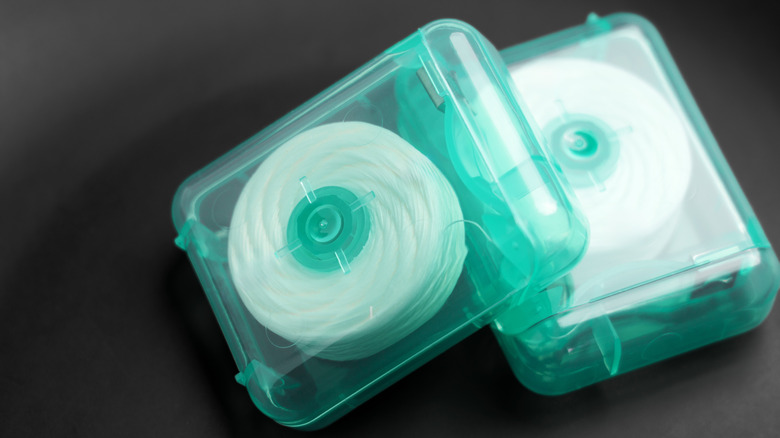
Save your walls from destruction from adhesive hooks and grab a container of dental floss. Pull out a string of the dental floss and cut it to a length that you can easily grab with both hands. Next, slide the floss behind the adhesive hook and maneuver it downwards, sliding between the adhesive strip and the wall or surface behind it.
The floss should slip easily between the two materials and when you pull it downwards, it should remove the adhesive altogether. If the floss breaks, which is quite possible, grab another piece and start again. It may take a few pieces to fully remove. Though the floss should help you to avoid any sticky residue, there may be a bit leftover on your wall. If this is the case, you can try using a hair dryer, blowing the hot air on the affected area while wiping it with a wet paper towel. Alternative methods like painter's tape, baby oil, vinegar, and razor blades are all other viable alternatives for removing that pesky residue.