

Will Removing A Tree Stump Prevent Root Suckers? Here's What You Should Know
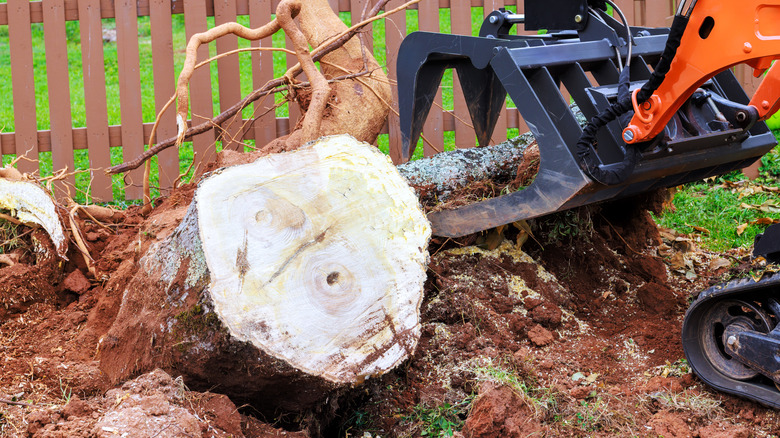
Some trees are very prone to suckering when they're removed, like mulberry, locusts, and many invasive species. But, almost any species will produce root suckers when they're stressed, and disease and removal are definitely stressful events! Tree root suckers are stems that grow vertically from the existing root system of a tree. They're nature's way of keeping the tree alive, but as they sprout, you can end up with a weedy patch of saplings to deal with. As a Master Gardener who has dealt with tree root suckers at home and the places I volunteer, I know how frustrating it can be to deal with them even when the big tree is gone. Complete stump removal is the most likely way to prevent roots from suckering, but it's not a guarantee.
There are many reasons you might need to have a tree removed. Perhaps it is diseased or it's a large tree planted too close to the house or driveway. Maybe you're trying to get rid of an invasive species, like white mulberry, which is illegal to plant in some areas. Whatever the reason for removal, you will need to decide how to deal with the stump to prevent root suckers. There are a few ways to get rid of it, but they're pricey. Stump grinding is exactly what it sounds like — grinding the stump down to ground level. The cost of this process is significant at an average of over $400 for a large tree. Physically removing the entire stump and root system is even more costly at $700 or more.
When removing a stump prevents tree suckers, and when it doesn't
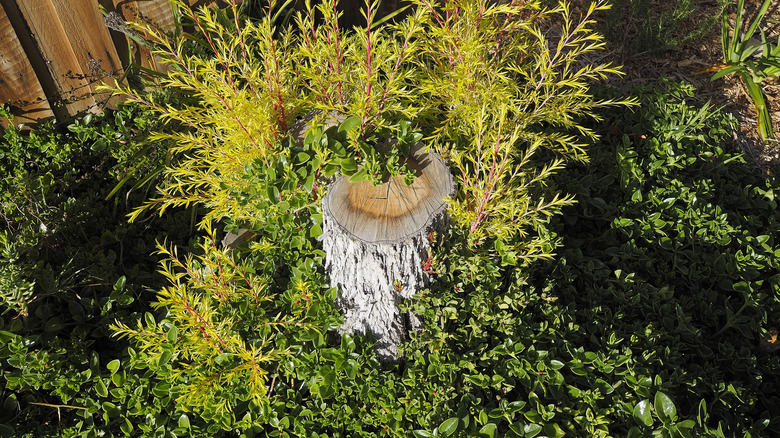
There are many variables that determine whether the tree's roots will try to produce more stems. Species certainly plays a big part; as mentioned above, mulberry, locusts, and many invasive species are prone to suckering. But the condition of the tree when it was removed is also a major determining factor. If the tree was completely dead, root system and all, you shouldn't need to worry about suckering. The roots attached to tree stumps that have been ground down may produce a few suckers, but as moisture and insects work their way into the giant wound left, it will rot. For most trees, this is sufficient to prevent suckers from becoming weedy and problematic.
In contrast, if you have removed an invasive species, like a Bradford pear tree, which is extremely prone to suckering, you may see a bunch of tiny stems pop up seemingly overnight. These trees are so prolific at reproducing that even removing the stump can leave you with enough roots to develop suckers. If this happens, cut off every one that sprouts as soon as possible. Over time, the roots will run out of energy because they have no leaves to perform photosynthesis, and the remaining system will die. In a situation like this, a combination of removing the stump and being diligent about removing suckers when they emerge is the fastest and most effective way to prevent more from forming.