

A Must-Have Material That'll Make Installing Tile In Areas With Water Easier
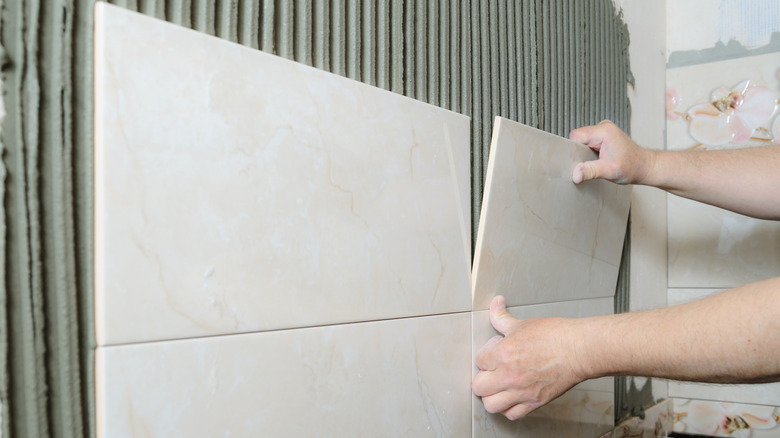
Humans have been creating pottery since antiquity, so ceramic tiles with waterproof glazing has been a staple of home construction for thousands of years. However, if you're working in areas with high moisture content (bathrooms and kitchens, for example), a waterproof exterior alone isn't going to be enough. Moisture problems and high humidity can lead to mold growth, but it'll also damage the tiles if water seeps through. You may start to notice loose tiles, warped floors, and a hollow sound underneath if there's water damage caused by moisture seeping through thin or cracked grout lines (assuming there isn't another problem, like pipes leaking behind the walls). A cement backer board that stays rigid and repels water is your best bet for protecting a newly-installed set of tiles from internal water damage, especially if you're using a water-resistant tile type.
Any cementitious material should work for the backer board for projects in rooms with higher-than-average water content, but a glass mesh-cement or mortar bed substrate are going to be the best options. You'll also want to use epoxy-based grouts for any projects installed in rooms with a wet interior. Unlike cement-based grout, epoxy is going to be more expensive and set faster, but it will also be more durable so it won't need any maintenance sealing. For rooms like your kitchen, epoxy grouts are also more stain resistant.
Preparing a cement backer board for tile installation
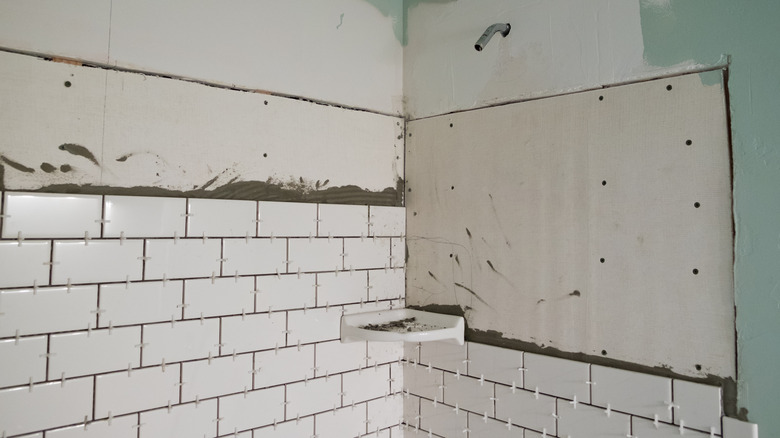
Utilizing cement backer boards is going to be especially important if your water-prone areas have been built with wooden subfloors which are susceptible to warping and mold. These thin layers of concrete and fiberglass mesh will typically come in predetermined sheets, but you can easily cut them to whatever size you need by scoring the material with a knife and then cutting through with a saw. Concrete substrates can be prepared for this work by cleaning and smoothing them through pressure washing or grinding down the surface, after which you can glue the backer board to the wall using a thin-set mortar applied using ridged trowels.
These boards aren't just a set-it-and-forget-it DIY project, though. You want to make sure that any foundational pieces are secure before you move onto tiling the area and filling those gaps with epoxy-based grout. Cement board screws will help secure the board to the walls or floor, after which you can secure the joints between boards using triple-stacked sandwich layers of mortar, fiberglass tape, and more mortar. Once the board is set, there are plenty of tips to follow from experts like Mike Holmes on how to install tile and prevent cracks, though you'll be off to a great start with this kind of foundational material which helps protect your home from water damage.
Using drywall backer boards as an alternative to cement
Cement backer boards (and other substrates made from similar materials) are going to be your best bet in areas that receive a constant onslaught of water, like the shower. When working on a shower or places outdoors with similar exposure, it's best not to use back- or edge-mounted tile assemblies which are susceptible to seeping water damage that can cause the entire tile structure to come undone. However, if you're tiling areas adjacent to these zones (for example, a kitchen countertop and backsplash pairing), you can get away with using cheaper, water-resistant drywall as the backing material.
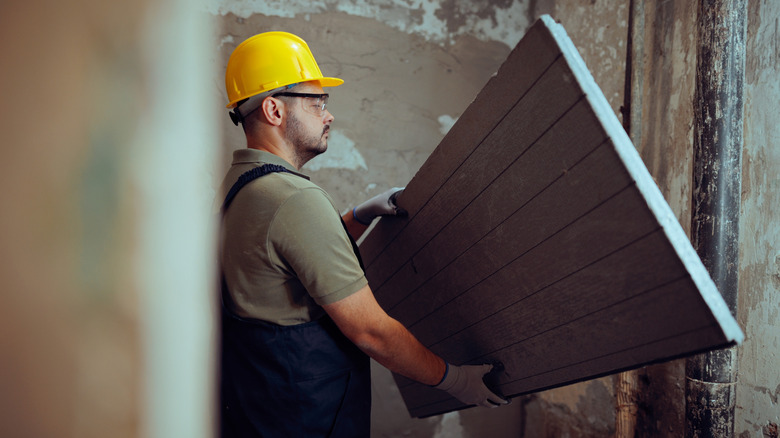
Naturally, the stronger, cement-based boards are going to be more expensive than anything gypsum-based like drywall. But of course, there are variations on these options, from gypsum backer boards with coated glass mats to fiber-cement underlayment and fiber-reinforced gypsum. Doing the job right isn't going to be easy; each individual piece of 3-inch by 5-inch cement backer board is going to weigh around 50 pounds. If you're working on the walls or ceiling, you'll want to have help installing to ensure they won't fall and break apart. A bit of a pain, but that extra help is going to be worth gathering when you end up with the bathroom or kitchen of your dreams shining with a new pattern of tiles that will hopefully last for years to come.