

Halogen Vs Infrared Heaters: How To Choose The Right One For Your Space
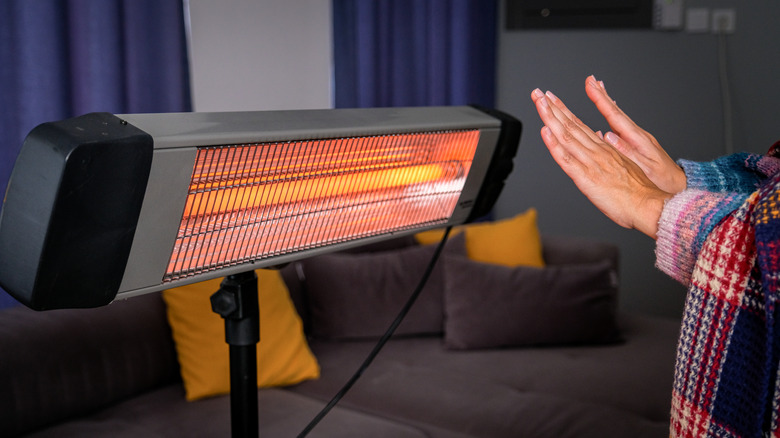
When you have an immediate need for heat in a small space and don't want to heat your entire home, space heaters can provide quick relief. Fortunately, there are many options for providing that relief efficiently and effectively. Smart space heaters in particular can save you money in the long run. Two popular technologies are halogen heaters and infrared heaters. While both are designed to warm small spaces, one may be a better fit over the other depending on your heating needs. If you need a quick blast of heat and light that might get uncomfortable over a longer period, get a halogen heater. If you want to heat a small space over a longer period of time without the instant blast, get an infrared heater.
Although halogen and infrared space heaters serve different purposes, they share one key similarity: they both emit radiant heat rather than convection heat. A simple convection space heater uses a heated coil and a fan to warm the air around you. By contrast, radiant heaters uses infrared waves to heat the objects in a room rather than the air itself. It's like sunshine on a winter's day. The air around you can be cold, but the sun's infrared rays feel warm, even if you can't see them. Since heated air rises whereas radiant heat warms objects, radiant space heaters are much more energy efficient than convection space heaters. Like sunshine, radiant heat needs to hit objects directly for them to be warmed, so you will need to place your space heater effectively so that their infrared waves aren't blocked.
The pros and cons of infrared and halogen space heaters
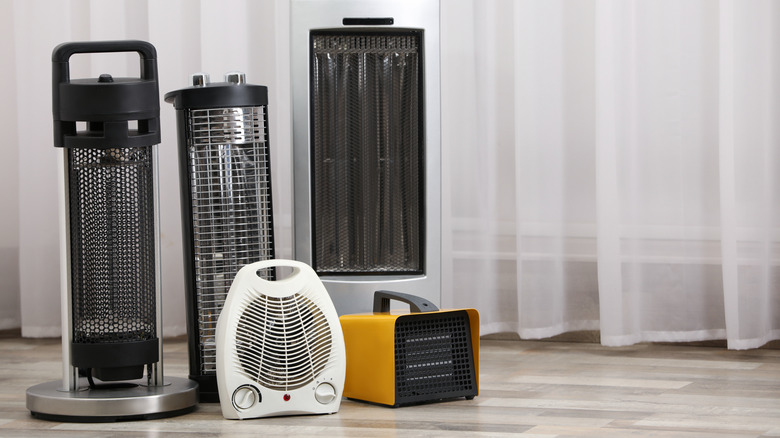
Halogen and infrared heaters produce infrared waves differently, which is why one may be better than the other for your purposes. Halogen space heaters use halogen light bulbs with a glowing filament. The halogen gas in the bulb allows the filament to glow much brighter than an infrared space heater, meaning the halogen space heater produces a surge of heat ideal for smaller spaces and people in the immediate vicinity. While that brightness can act as additional room lighting, many people find the intense light uncomfortably bright. Halogen bulbs can also get intensely hot, which can pose a fire risk if used incorrectly (such as placing combustible materials too close — a common mistake when using a space heater). According to the National Fire Protection Association, heating equipment is the leading cause of home fires in the U.S., with space heaters the most frequent source of those fires.
Infrared space heaters use electricity, natural gas, or propane to heat materials such as ceramic, glass, or quartz to produce infrared waves, which then heats objects that absorb the radiation. Rather than producing a bright light like halogen heaters, the heated material produces a reddish-orange glow. With lower surface temperatures and no glowing wires, they are less of a burn risk to nearby objects or people and are sometimes permitted in facilities where space heaters that use wires are not. Plus, ceramic and other materials have a longer lifespan than halogen bulbs, which need replacing from time to time. That said, infrared space heaters aren't entirely risk-free. While they're safe when manufacturer guidelines are followed, direct eye exposure to infrared radiation can cause eye damage and even blindness (so you'll want to avoid looking at it for prolonged periods of time).