

Yes, You Can Grow Kale In A Pot. Here's How To Do It
We may receive a commission on purchases made from links.
When I first started growing food, I had to garden in containers because I was a renter and couldn't make any permanent changes to the yard. Decades later, this Master Gardener still loves growing edibles in planters because it's convenient, attractive, and there's no weeding required. Growing in pots has many benefits, including the wide variety of plants that can grow and thrive in container gardens, including kale. You'll just need a planter, potting soil, and a spot that gets at least partial sun to get started.
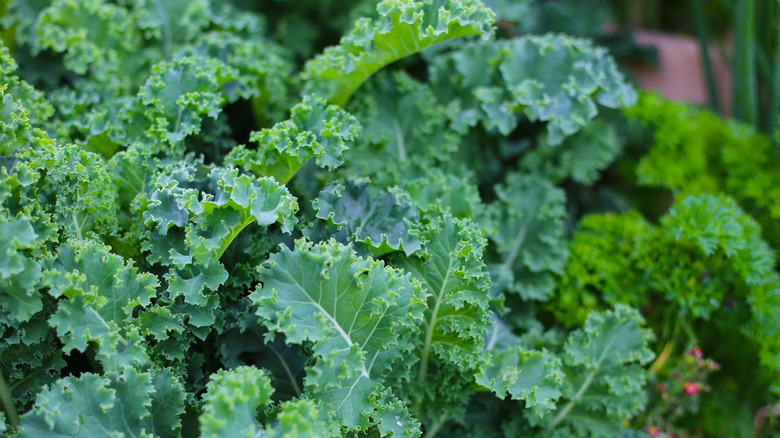
This hardy member of the brassica family is perfect for container growing because it isn't too picky about soil conditions, can tolerate some shade, and can do double duty as an edible ornamental for a stunning fall garden. There are four main types of kale. The most common you'll find in gardens is curly, but lacinato kale is becoming more popular, as are Chinese and Russian varieties. Within these main types there are many species and cultivars, all of which are suitable for container growing, thanks to their relatively compact size and similar growing needs.
What you need to know about growing kale in a pot
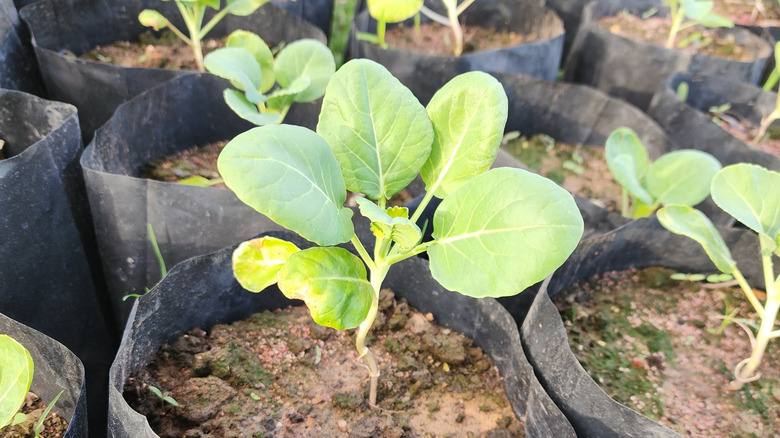
Like many plants grown for their green leaves, kale can tolerate some shade, although it will also grow in full sun. Make sure you have a spot for your pot that gets at least 4 hours of direct sun a day for the healthiest plant. Depending on the variety, kale can reach 3-feet-tall or larger, so you'll need a planter that can support its root system while also being big enough that the plant doesn't get top-heavy and fall over. A 5-gallon bucket is a budget-friendly option, or if you want to grow several kale plants, a set of four Land Guard Fabric Grow Bags is less than $7 on Amazon. This is an exceptionally economical way to grow your own food. If you're more interested in aesthetics than saving money, though, a 15-inch Whiskey Barrel Planter will also do the job beautifully.
Fill your planters with high-quality, well-draining potting soil – either store-bought or a DIY mix that prevents waterlogging. After the last chance of frost has passed, you can plant three seeds ¼-inch deep and cover them with soil or transplant one seedling into the center of the pot. Water well after planting.
Maintaining and harvesting your potted kale throughout the year
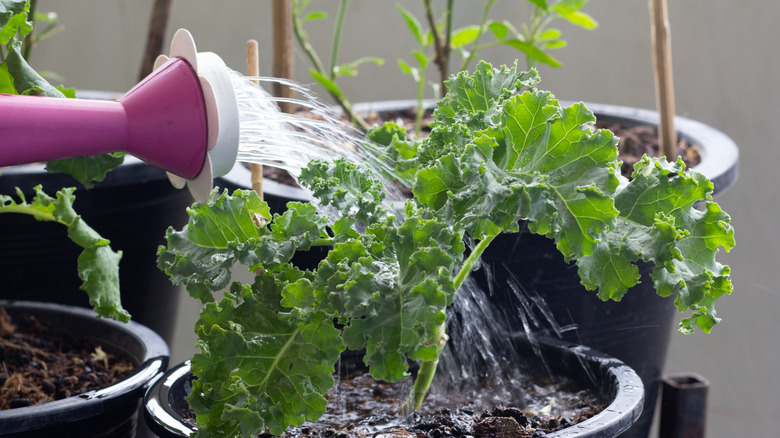
Kale is a cool season crop that provides the best flavor when it's grown in late spring through the fall. Frequently check your kale plants for pests like spider mites or aphids and treat accordingly. Fertilize regularly with high-quality plant food, like Osmocote Smart-Release Plant Food, according to the package instructions. Keep the soil consistently moist, but not soggy throughout the growing season.
If you live in a temperate climate, you may be able to continue harvesting through winter. While many leafy greens wilt and die in the summer heat, most kale species will continue to grow, although it gets very bitter in hot, humid weather. I like to plant it in the spring for fresh green harvests, let it grow in the summer without harvesting, then start plucking off leaves for my meals when the soil temperature drops below 65 degrees Fahrenheit (usually when daytime temps are around 75 or so). This is when you'll get the sweetest flavor from your kale.
If you are planning to grow kale in a pot from spring through winter, it is important to keep in mind that it is a biennial, which means it will bolt – produce flowers and seeds – its second year. As temperatures warm the following spring, your kale will produce pretty yellow flowers and the leaves will become inedible as the plant puts its energy into producing seeds. The fresh green pods are edible and tasty with a similar flavor as fresh green peas. If you leave some of them on the plant until the pods are dry, harvest the seeds to save and plant again.