

What're The Differences Between American And European Bathrooms?
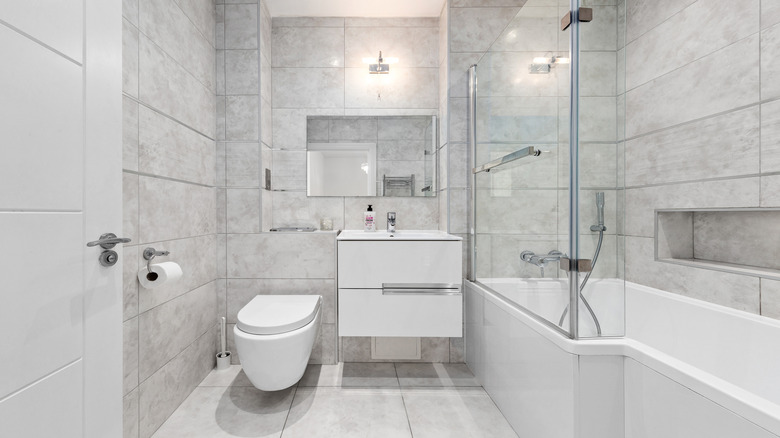
Bathrooms are an important part of every home, and their design deserve some serious thought. However, it often feels as if all bathrooms are the same. There might be a few differences in the layout or the size, but all the elements match any other bathroom, at least in the U.S. Across the world, though, there are different styles and elements that could be just what you need in yours. If you're looking for a bit of inspiration for designing your bathroom, why not look at examples from around the world? Europe encompasses a great number of countries, each with its own twist on how a bathroom operates.
Depending on the European country, the differences between bathrooms there and in the U.S. may not be too dramatic. For example, UK's bathrooms can look fairly similar to America's. The main difference is that those in the UK normally have a heated towel rack, a bathroom upgrade that might be the coziest investment you make if you decide to add one to your home. In the U.S., you can choose between a few different designs as an add-on, but in Europe, the towel heaters are rows of metal bars attached to the wall. But as you travel across Europe, you start to see more differences, notably in the design of shower heads, toilets, and bathrooms themselves.
In Europe, bathrooms are often fully waterproof
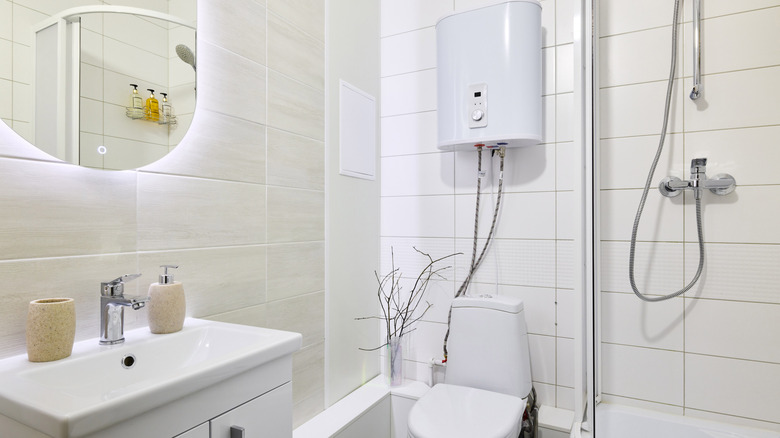
In parts of Europe, bathrooms are designed to handle water better. Some are fully waterproofed and don't include a separate showering space, so there is no need for curtains or glass. They may have a curtain up, but it's often strategically drawn around objects that should stay dry instead of the other way around. If there is a specific shower section, it's likely to be small. Because the water can go anywhere, a drain can often be found in the middle of the floor.
This design makes cleaning your bathroom a breeze, as you can just spray the entire space down. It's made even easier thanks to Europe's commonly used handheld shower heads. These are connected to a hose to allow greater mobility, with a bracket for hanging the head on the shower wall. This design lets you use the shower head to clean all around the waterproof bathroom. Again, this concept isn't entirely unknown in the U.S., but it's a little rarer and is a spa-like bathroom feature that can boost your home value.
There are other, more practical features inside European bathrooms as well. One of the most interesting ones is the fact that a lot of bathrooms have dedicated water shut-off valves. This wonderful addition enables you to turn off the water only in your bathroom in you need to make repairs.
The most striking difference between European and American bathrooms is in toilet design
In the U.S., most toilets are mounted to the floor, the bowls are round or oval in shape, and there's usually a little handle to flush when you are done. There are a few ways you can upgrade your toilets, including soft-close lids and flapperless flushes, but the basic model is the same.
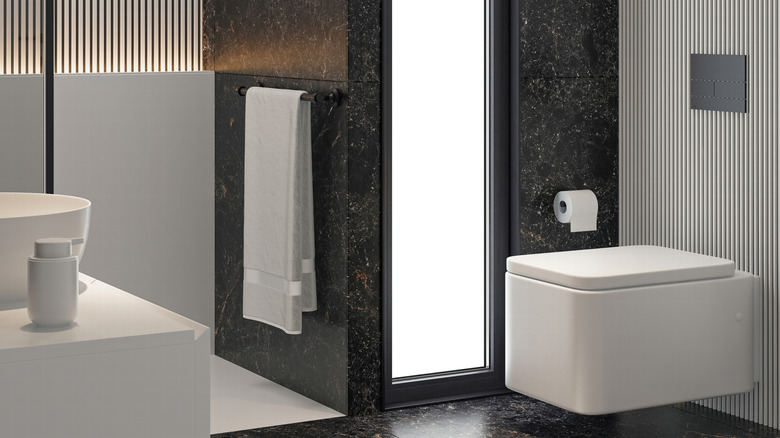
That's not the case around Europe. In the UK, toilets generally look fairly similar to their American peers, but in other parts of the continent, these fixtures come in a greater variety of designs. Depending on where you go, you can encounter square bowl shapes, squat toilets, shelf toilets, and more. One notable difference is that a lot of toilets are mounted to the wall instead of the floor. Generally, the tank is hidden in the wall, and the toilets are floating above the floor. Additionally, in many parts of Europe, the toilet is kept in a separate room from the rest of the bathroom, with only maybe a sink.
Another feature related to toilets is the bidet. Bidets are found in many parts of the globe, but in Europe, instead of being attached to the toilet, they are their own separate fixture. Bidets are starting to grow popular in America, but here, they are more often affixed to the toilet.