

Old Tiles May Be Hiding Asbestos. Here Are Some Signs To Look Out For
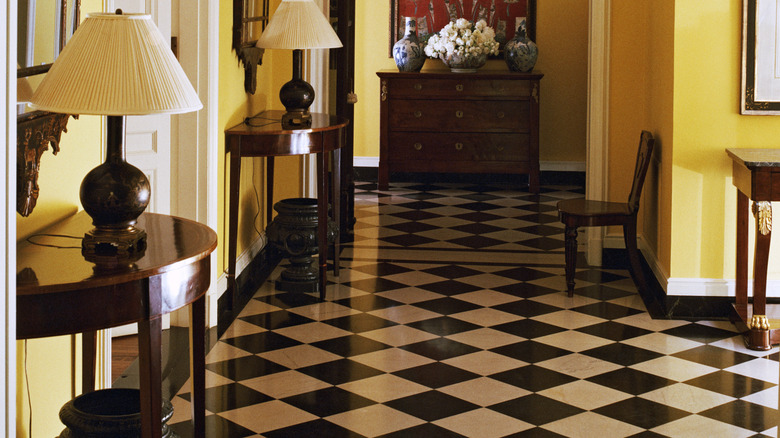
Asbestos was once thought of as something of a wonder material. It increases durability, it's a good insulator, and it's fire-resistant. From the 1920s onwards, it was added to floor and ceiling tiles and also used with linoleum and vinyl. We now know that it's a serious health hazard, but although links between asbestos, lung cancer, and other respiratory problems were widely recognized early on (the first reports of its impact on health came out in the late 19th century), it wasn't until the 1970s that its use became restricted in the U.S., with a widespread ban only coming in 1989. While asbestos usage wasn't completely banned after that, stricter laws were passed in the 2010s.
Asbestos is most commonly found in homes built before the 1980s, so if your house was built before then, there's a chance that old tiles might contain asbestos. They might be visible, or they might be hiding under other old floors, only to be revealed when you start renovating. So what are the signs to look out for? The first clue is that many asbestos tiles were 9 inches by 9 inches (not a common size today). Others were 12x12 and 18x18. The surface may have faded or appear brittle. Edges might be starting to curl. Tiles and other floorings containing asbestos were often stuck down using bitumen glue (which also contains asbestos), so sticky black residue is another sign.
Sadly, none of these indicators is conclusive. The only surefire way to tell is through professional testing. However, you absolutely should not handle suspect tiles yourself. The dangerous asbestos particles are too small to see, so you could inhale them without knowing.
What you should do if you suspect you have asbestos tiles
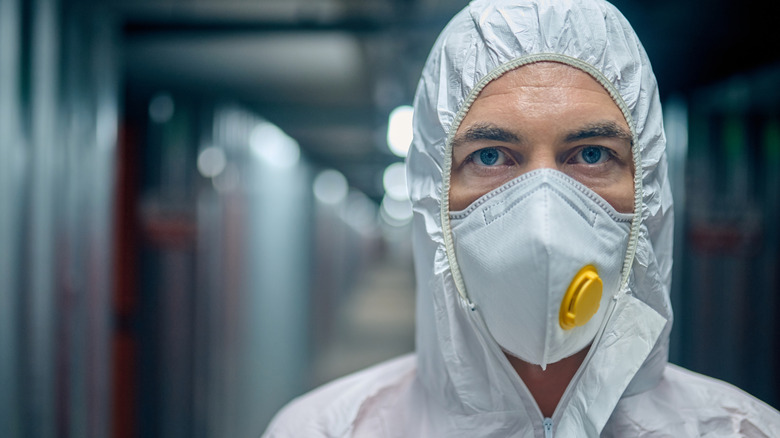
Given their durability, tiles containing asbestos may not necessarily be a problem. The fibers are inside the tile, so experts advise that if they are undamaged, the safest approach is to leave them alone. In fact, the best idea could be to cover the tile floor without removing them.
If they are damaged and starting to break up, then you need to call a professional who will be able to test them and tell you whether they contain asbestos or not. In the meantime, keep family and pets away from the area to avoid exposure. If this isn't possible and you really feel you have to remove the tiles, wear a face mask, goggles, and gloves. Seal them in heavy-duty trash bags. You still need to call a professional, as asbestos is considered hazardous waste and cannot be thrown out with household trash.
Old tiles containing asbestos are one of the outdated flooring trends we're leaving in the past, but unlike decisions that are based on fashion, this is one where the health of the household could be at risk. You do not have to remove them, but if you're in the process of renovating and you want them replaced, it's vital you hire someone properly licensed to do the job safely.