

Don't Prune Your Fruit Tree And Shade Tree The Same Way. Here's Why
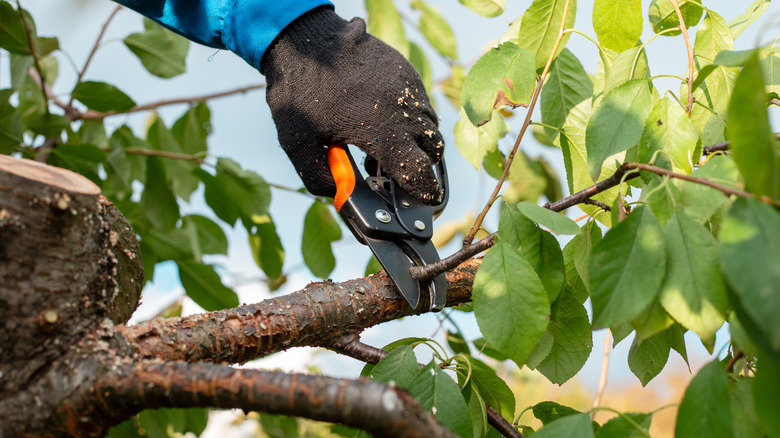
There's no doubt about it: Pruning is an essential garden chore if you want healthy, thriving trees. However, when it comes to the fruit trees and shade trees in your yard, pruning isn't a one-size-fits-all type of task. Instead, fruit and shade trees serve vastly different purposes in your garden, which means that their pruning needs are also different.
Think about the role a shade tree plays in your yard versus that of a fruit tree. A shade tree provides privacy and relief from the sun thanks to its eye-catching canopy. With a fruit tree grown for culinary purposes, however, you'll want to be able to pay close attention to its fruit while optimizing production. As a result, while the basics of pruning — such as the three D rule to minimize dead or damaged branches — apply to both types of trees, the way you prune your trees reflects their role. The species of your tree can also have an impact, especially when it comes to maximizing fruit.
If you want to learn how to prune your trees the right way, familiarizing yourself with the different techniques is the best place to start. With so many differences based on purpose, species, and even your specific tree and its location, you also may wish to reach out to a tree professional for help with this essential garden task.
The differences between pruning fruit trees and shade trees
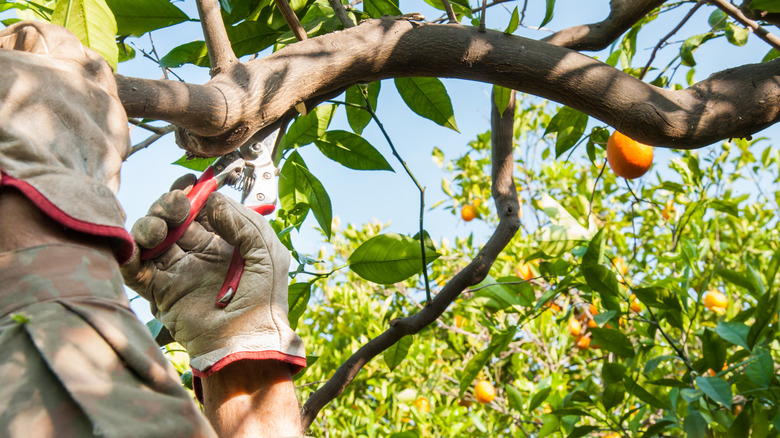
Overall, when you prune your fruit tree, the goal is to optimize healthy, abundant fruit production by increasing the amount of sunlight buds can receive and removing branches that no longer produce fruit. Many gardeners will also choose to prune to control size, making harvest time easier. However, the way you should prune your fruit tree depends on the species. For example, peaches usually grow their fruit on new growth, which means that old wood can often be pruned safely. However, European plums generally require wood from previous seasons to bear fruit. Learning how your tree fruits can help you decide where to prune.
With shade trees, however, there is no fruit production to optimize. As a result, your goal is instead to provide room for growth and safety — especially since skipping tree pruning can lead to structural damage. This means pruning your shade tree with the intention of removing any branches hanging over walkways or structures. While you may prune a fruit tree to control its size for easier access to the fruit, with a shade tree, you might instead pay attention to visual factors, such as how much shade is provided and where, as well as the overall silhouette of the tree itself. However, excessive pruning can harm a shade tree, so you'll want to avoid pruning any branches that aren't causing functional or visual problems.