

The Popular Snow Removal Method You May Want To Reconsider

When a winter storm dumps heavy snow on your driveway, your first instinct is probably to grab the toughest tool in your shed. For generations, the metal shovel has been the most common tool for snow removal, compared to plastic shovels. Homeowners trust them because they are durable and well made. Unlike plastic shovels that may flex or bow under the load, steel or aluminum tools offer a little more heft for the tough job. Heck, there's even undeniable satisfaction in the clink of your metal shovel hitting the pavement that a plastic version just cannot mimic. It signals that you're cutting through the ice. But while metal shovels (and other metal tools you could use here, like chisels) are certainly strong enough for the task, they could also be damaging your driveway.
People often associate metal tools with professional-grade power and quality and think it's the only material capable of handling heavy snow. Metal shovels tend to last for decades, too, so they seem like a good financial investment. Homeowners continue to use them simply because it's the way things have always been done, and they appreciate a good product that won't snap in half before the job's done. And since the goal is to clear snow (or ice), a strong and sharp metal edge may seem like the only way to make that happen. However, while metal shovels do make short work of snow buildup, the invisible (and permanent) damage they could be causing is worth considering.
How metal shovels can damage your driveway
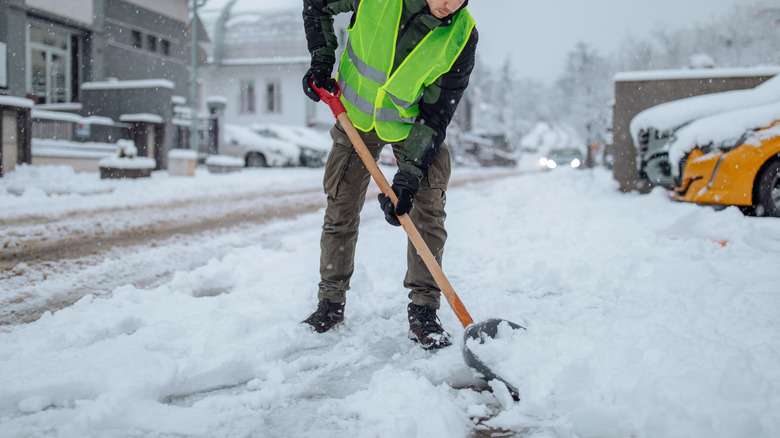
Metal is terrific at breaking up ice, but it has zero give when it hits your pavement. Most driveways aren't perfectly flat, either, thanks to pebbles or high/low spots. So, when a rigid metal blade strikes these uneven areas, it can act as a chisel and can cause damage such as chipping or pitting. Over time, these small strikes strip away the smooth protective sealant of your concrete, causing issues like flaking. This can expose the porous material underneath, making your driveway look weathered and worn-down.
The most serious damage, however, happens after the snow melts. Every small ding from your metal snow removal tool becomes a place to hold meltwater. And when temperatures drop again, that trapped water freezes and expands. This freeze-thaw cycle puts pressure on your driveway material and can turn a minor shovel strike into a potentially serious structural crack by the time spring rolls around.
What started as a seemingly efficient way to clear the snow can end up costing you thousands of dollars for driveway repairs. By sticking with rigid metal tools, you could be sacrificing the long-term integrity of your pavement for a few minutes of wintertime convenience. So, protect your investment and consider that the toughest tool may not always be the best one for the job. Plus, there are simple ways to make driveway snow removal easier, regardless of the tool you use.