

Hide An Outdoor Siding Eyesore With A Landscaping Upgrade
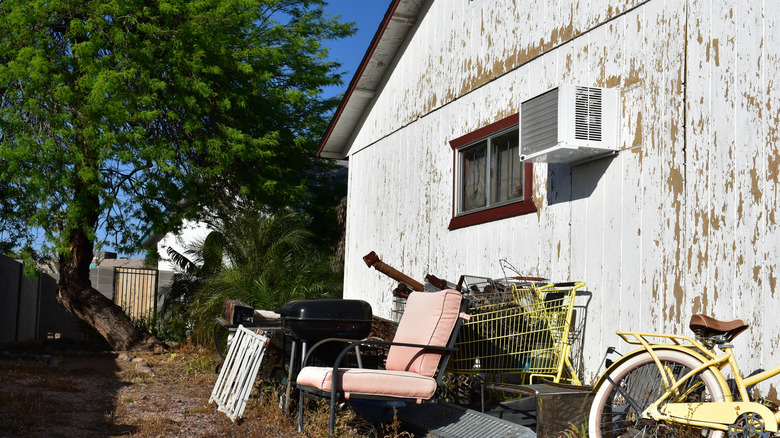
Living next to an eyesore can be frustrating, especially if there is no simple way to fix it; covering it up may be the only way to fully enjoy your outdoor space again. Many stores sell covers and fences that hide eyesores from the property, so why not use those? Well, for starters, these products can be eyesores themselves. Plastic fencing isn't as attractive as living trees and shrubs. With tall, bushy plants, you can create a living fence that hides the unattractive siding while also beautifying your space.
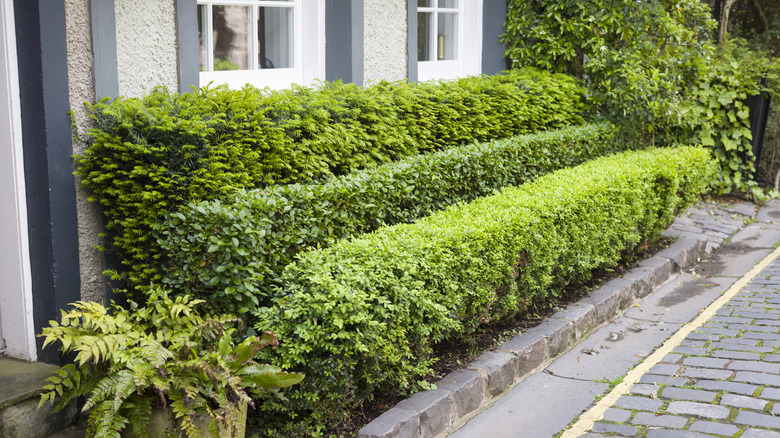
Hedges are great whether you're hoping to conceal an ugly air conditioning unit or ugly mismatched siding. Short, squat plants work to cover small things like water meters mounted on siding, while tall trees are perfect for hiding junk piles and broken windows. For year-round protection that keeps siding issues hidden, there are evergreen plants that brighten up your yard the entire year, which don't lose their foliage in cold weather. Those living in hot, frost-free climates should try broadleaf plants.
Besides height, spacing is another crucial aspect during the landscaping process. Plant your trees too close together, and they'll crowd each other in maturity. Plant them too far apart, and they'll never join together to create a privacy hedge. Most trees will have spacing guidelines on their tag when you purchase them. If they don't, use their mature size to guide the spacing. Regardless of the size of the eyesore, there's sure to be a plant perfect for keeping it out of sight.
How to hide an outdoor siding eyesore with a hedge
Most gardeners select types of arborvitae, or evergreen species of Thuja. These conifers have dozens of varieties to choose from, with columnar, dwarf, and hybrid types available. In cold regions, try the 'North Pole' arborvitae, a frost-tolerant variety that's rated for USDA hardiness zones 3 to 8. It stays narrow and reaches about 15 feet tall in maturity. 'Smaragd,' commonly known as 'Emerald Green,' is another favorite variety perfect for northern gardens.
Cherry laurels and boxwoods are superb options for broadleaf plants. They tolerate regular pruning and adapt well to shaping. You may choose flowering or deciduous trees or shrubs—just know that they will change throughout the year. Choose the best hedge to plant carefully to ensure it meets your landscaping demands.
Before starting the hedgerow, consider the time of year. Typically, transplanting works best when the weather is cool, mild, and moist. The ground should be soft and diggable. Ensure the site is level by using a shovel and a rake to even the soil surface. Then plan where you'll put each tree or shrub. You may create a straight line or place the trees in a curving shape for a more natural look. Straight lines work best in formal gardens, while curvy ones work well in wild or naturalistic landscapes.