

Think Twice Before Growing This Pollinator Attracting Shrub
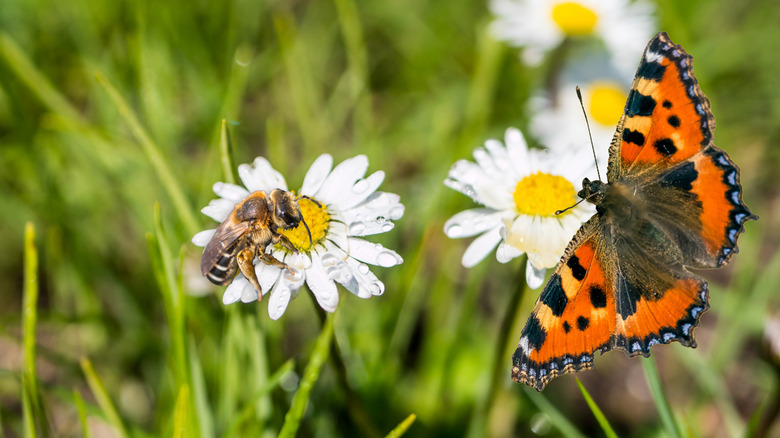
If you've ever accidentally introduced an invasive plant into your yard, you're no doubt being careful when you purchase landscaping plants from nurseries or big box stores now. Not only can these over-achieving species lead to small plants popping up throughout your property, they can also spread to wild areas and damage the local ecosystem. Even though Japanese spiraea (Spiraea japonica) has blooms that attract pollinators, its behavior as an invasive species will make you want to leave that nursery pot at the garden center and choose a better alternative.
Japanese spiraea can be a fast-growing shrub that adds privacy and color to your yard. While it attracts pollinators like butterflies, you should avoid growing because it's invasive, specifically in the eastern United States. Depending on where you live, this shrub might actually be illegal to plant because of its invasive tendencies. You can recognize Japanese spiraea by its oval-shaped, toothed leaves arranged alternately on the stems and its pink flower clusters. Expect this deciduous plant to be between 4 and 6 feet tall and up to 7 feet wide at maturity.
There are better choices than invasive Japanese spiraea
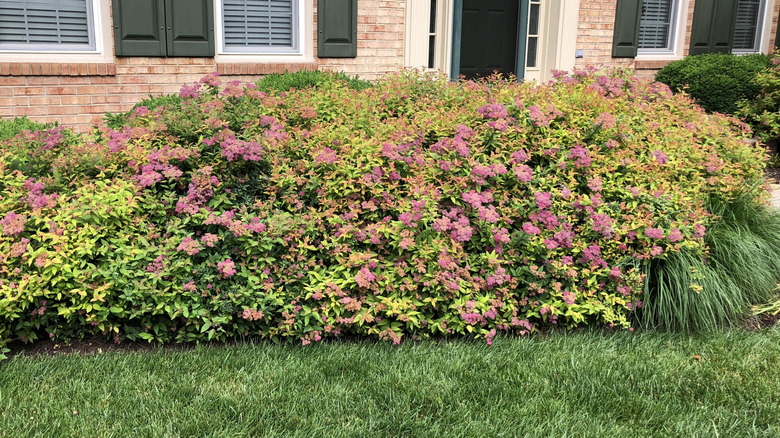
Japanese spiraea spreads quickly from seeds and displaces native vegetation. Those thick pink flower clusters produce a large amount of seeds. These seeds can remain in the soil for years, making removing these unwanted shrubs a long-lasting and nightmarish project. All those unwanted plants end up disrupting the balance of ecosystems in both forests and meadows by outcompeting native flora. This ends up having a negative impact on pollinators over the long-term as specialist bees, butterflies, and other insects lose their partner plants.
If you want to make the best choice to attract pollinators and avoid that unwanted species, there are many beautiful native plants to grow instead of invasive spirea. There's a type of native spiraea called steeplebush (Spiraea tomentosa) that also has pink blooms, and it attracts bees, beetles, and butterflies. Common ninebark (Physocarpus opulifolius) also makes a wonderful pollinator-friendly substitute, and it has showy white flower clusters. And eastern leatherwood (Dirca palustris) is a long-living alternative to invasive Japanese spirea with yellow flowers that are loved by butterflies.