

As A Home Gardener For 20 Years, I See One Garden Trend That's Actually Worth Following
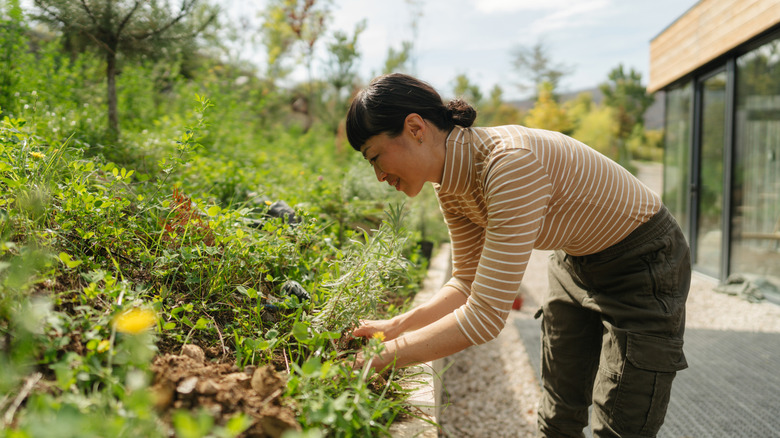
When my daughter was born 20 years ago, I started a garden so that she could experience the cycles of nature in her own backyard. I used my five years of experience working in a commercial nursery to design a garden that excited my child's senses, encouraged her imagination, and invited her to explore. I then brought that experience to create a new educational garden at her elementary school, where I learned even more about gardens as educational spaces. Now that my daughter is in college, I've been pleased to see the principles of child-friendly gardens emerging among the gardening trends you're likely to see more of in 2026. It's as if we've discovered that adults can also wander, explore, and imagine as they delight their senses in their own backyard!
What makes up a child-friendly garden? Unstructured designs, sensory-rich environments, places to reduce anxiety, and engagement with wildlife are vital. It's also important to only include safe, non-toxic plants, pesticides, and soil amendments. As children spend more time in front of screens and less time outdoors, a host of public health issues has followed: increases in childhood depression, anxiety, aggression, sleep disorders, and more. To counteract these trends, a child-friendly garden can encourage exercise, reduce stress, increase attention span, and create healthy eating habits. It gives young people a place to play, relax, learn, and rediscover their place in the natural world that we all live in. Touching grass, leaves, stems, and the earth itself literally grounds children in their environment and helps them develop their own emotional roots which they will need as they grow into adolescents and blossom into adults.
Designing a child-friendly space for safety, fun, and enrichment
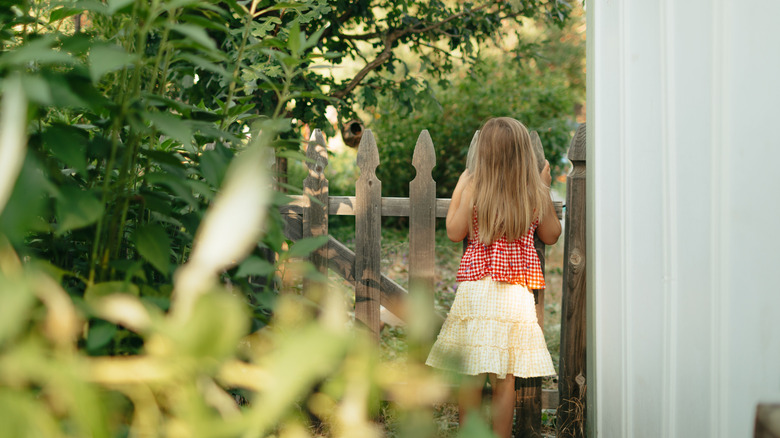
Setting boundaries indoors and outdoors is important to childhood development. In a garden, it's also important for keeping children safe. Designing a child-friendly garden starts with having securing fencing, gates, natural hedges, or other garden borders that prevent children from wandering away from safe areas. It's important that garden structures don't have sharp edges, unsafe heights, or other features where little ones can harm themselves. Keep a lock on the door of a garden shed that contains tools or chemicals that children shouldn't handle. Paths should be made of soft, non-slip surfaces, and be wide enough to prevent tripping.
Creating different types of spaces in a garden design is also an educational opportunity. Circular, winding paths with organic material and irregular patterns invite exploration, while separate garden areas turn your backyard into a secret garden oasis where children can retreat to have some down time rather than constant movement and stimulation. Logs, benches, and books in those spaces can encourage them to sit calmly and read. Mounds or garden structures that allow children to climb encourage physical activity. And, another garden design that's trending in 2026 is creating an "outdoor study zone" with a table and chairs, giving your child a place to draw, journal, or just do their homework. Safety is always the most important consideration for designing a child-friendly garden: That secret garden should feel secret to your child but still be visible to you.
Creating an inviting, exciting, and non-toxic garden space
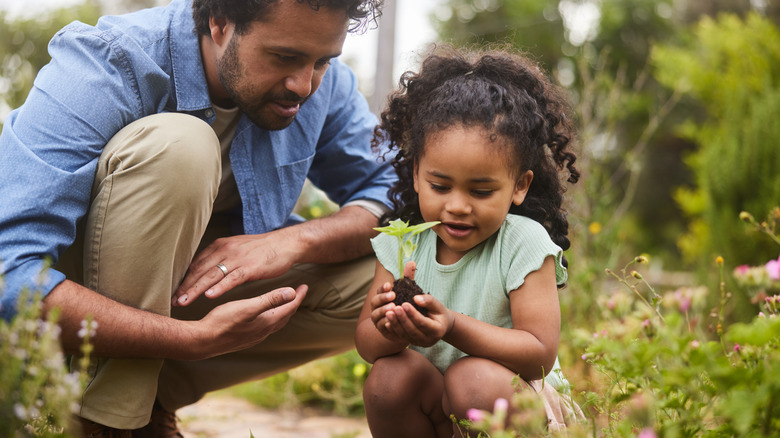
Safety also applies to the plants you grow in a child-friendly garden. Many of adults' favorite plants can be harmful to children in many ways. Roses come with thorns, thistles have spines that can pierce a child's skin, and other plants have burrs that can get stuck in their hair. Numerous plants are toxic, and your child may not be able to tell the difference between common edible plants and their poisonous look-alikes. Always check Poison.org for a list of toxic plants before you place anything in a garden where children might play. Also, consult a native plant list, like the one created by Cornell Cooperative Extension, for plants that can grow easily without the need for any synthetic fertilizers and pesticides. For plants like fruits and veggies that may need fertilization or pesticides, seek organic, child-friendly options like compost and use natural pest control methods.
Plants themselves have educational value, especially if you involve your child in growing and caring for them. Planting seeds in a raised bed, watching hungry bees and butterflies congregate in your pollinator garden, and harvesting fruits and vegetables are all opportunities for children to learn about the life cycle. You can also embrace biological diversity: Grow plants that produce seeds or berries that feed wildlife over the winter. Teach them about plant adaptations by encouraging them to investigate plants with leaves as fuzzy as lamb's ears and others with flowers that look like birds. The more ways in which your child appreciates your garden, the more they learn, the less stressed they become, and the healthier they grow.