

17 Ways To Dry Clothes And Linens More Efficiently To Save Energy

We may receive a commission on purchases made from links.
Do you know how much energy your dryer uses? Even if you do, do you know what its kilowatt-hour rating means in real, monetary terms? Today, given the current residential average cost of around $0.18 per kilowatt-hour, it means that one hour spent running a 3-kilowatt dryer will use 3 kilowatt-hours of electricity, costing approximately $0.54 at an average rate of $0.18 per kWh. Which is fine, right? What's half a dollar? Well, if you have a large or growing family, or you live in a climate where air drying is harder than using your dryer for the majority of the year, then those hours — along with your energy costs — can quickly start to add up.
This is why we thought we'd create this guide. While it can seem like an unavoidable expense, it's actually perfectly possible to dry your clothes more efficiently without using more energy. Even more amazingly, there are actually several ways to do it. For example, do you have to run your dryer in the daytime, or could you wait until nighttime when off-peak energy tariffs kick in? And did you know that keeping your dryer vents clean can also help to lower your energy bill, or that shaking out your towels before bundling them into your dryer can dramatically speed up the drying process?
Whether you're using a dryer, a clothes line, or a blend of both, this guide is here to help. Covering no fewer than 17 nifty tricks to dry your clothes more efficiently, not only will it help to save you time on laundry, but it could also help you to make a substantial saving on your energy bills.
Run an extra spin cycle (or increase spin speed) to remove more water and reduce drying time
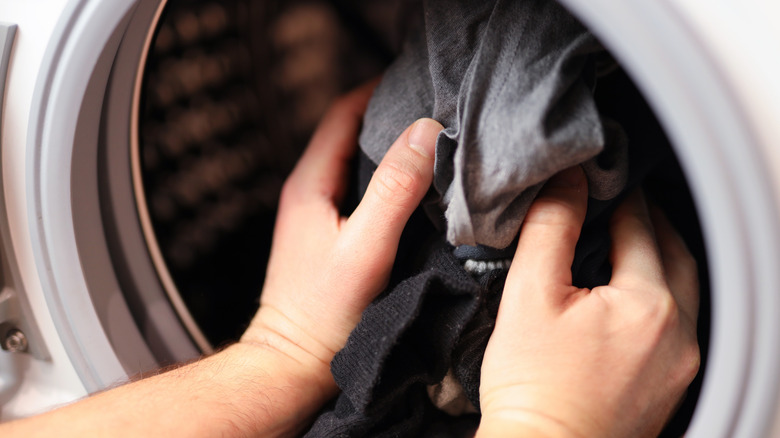
If you're able to increase the spin speed of your regular wash cycles, or at the very least put your washed clothes through an additional spin cycle, you'll remove significantly more water from your fabrics, thus making them a lot easier to dry. This is essential in homes that rely on air drying, especially in cooler climates, as it'll speed up air-dry times dramatically. But it's equally essential in homes that rely on a dryer. By running that extra spin cycle, you'll dramatically reduce the amount of time your dryer needs to run in order to dry them — perhaps by up to 30 percent. It's especially effective with towels and linens, since they tend to be more absorbent and therefore hold onto more water at the end of a regular wash cycle.
Dry similar fabrics together to improve dry times and drying efficiency
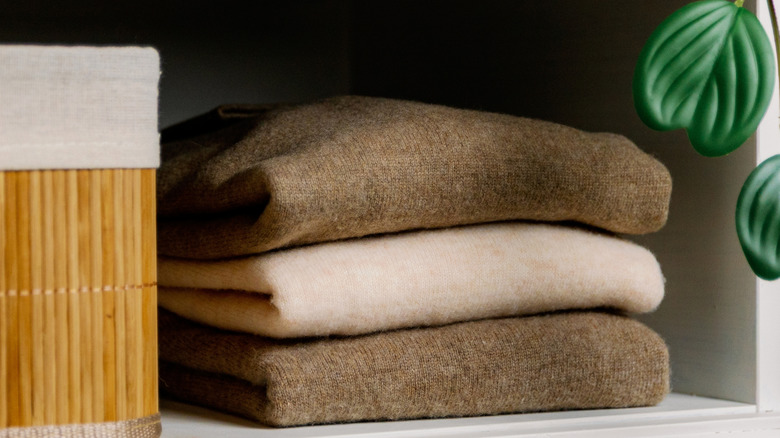
This tip boils down to the fact that not every garment, towel, or blanket will require the same amount of time to dry. For example, if you have heavy towels or a couple of pairs of jeans, you can expect them to take much longer in your dryer than, say, a thin cotton t-shirt. If you bundle them in together, you could risk 'overdrying' your t-shirt, while under-drying your towels and jeans. But if you separate them out and run dedicated cycles for both heavy and lighter items, you'll find that everything dries in a much more uniform fashion. Crucially, they'll dry more quickly, which in turn will help to reduce your energy costs.
Now, let's say that you have a basketful of towels to dry, with just a couple of pairs of socks or underwear. In that case, the best thing to do is to pull those smaller, lighter items aside and either dry them on a rack, on the back of a kitchen chair, or in your airing cupboard. If you bundle them into your dryer along with those comparatively gigantic towels and blankets, you can almost guarantee that they'll become bundled up inside them and will fail to dry completely. More than that, they'll create "damp spots" inside your larger linens, leading to a longer runtime for your dryer than is actually necessary.
Avoid overloading your dryer to ensure everything dries
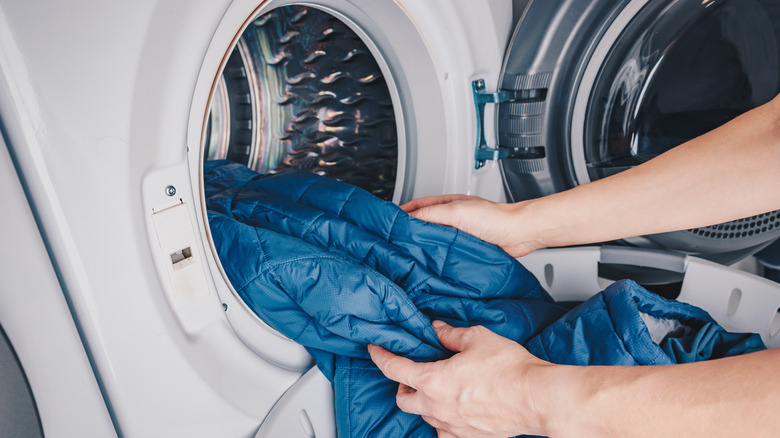
Regardless of what it is you need to dry, if you overload your dryer, it'll be forced to work harder to remove the moisture from your clothes. This will lead to one of several undesirable outcomes. In an older-style dryer with standard-timed cycles, your clothes simply won't dry within the cycle's allotted run-time. In newer-style dryers with moisture sensors, it'll be forced to run for much longer.
In either case, you could easily be left with a mix of dry and damp clothes and linens. To avoid any of these annoying scenarios, check your dryer's manufacturer instructions for the maximum load capacity, and try to ensure you never exceed it. If you only ever run it to dry appropriately-sized loads, you'll allow for proper airflow, even drying, and crucially, shorter run times.
Use wool or rubber dryer balls to improve airflow in your dryer
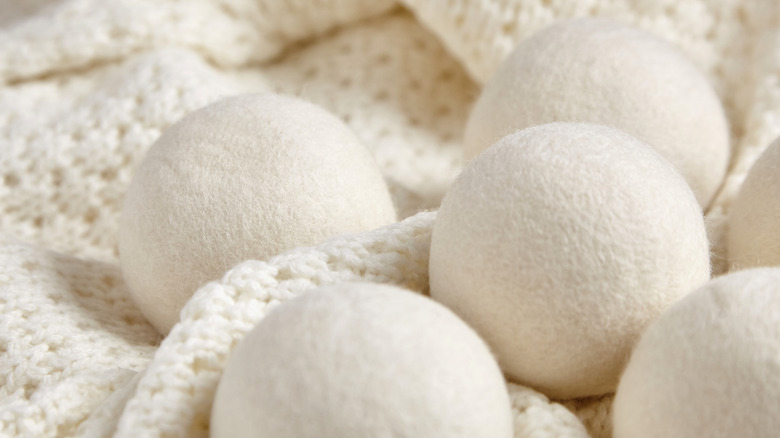
There are several reasons why you should consider replacing traditional dryer sheets and fabric softener with dryer balls. The first, in the context of this guide, is that they can reduce drying times by up to 25 percent, thus helping to reduce your energy bills. They do this by creating air pockets between your fabrics for the duration of the drying cycle. This, in turn, leads to more consistent airflow and avoids the clumping of damp fabrics.
Another way they can help to cut costs is by eliminating your need to buy specially-designed fabric softener. By bouncing around in the dryer and agitating your fabrics, they keep downy items like blankets, towels, and jackets plumped up and fluffy. Crucially, unlike fabric softeners, they do it without coating the material, thus ensuring your towels retain their absorbency. Add to this the fact that dryer sheets and softener bottles eventually need to be discarded, and using dryer balls is one of the most cost-effective and environmentally-friendly solutions to reducing dry times while keeping your fabrics nice and soft.
Remove lint from the dryer filter before each cycle to ensure optimal dry times
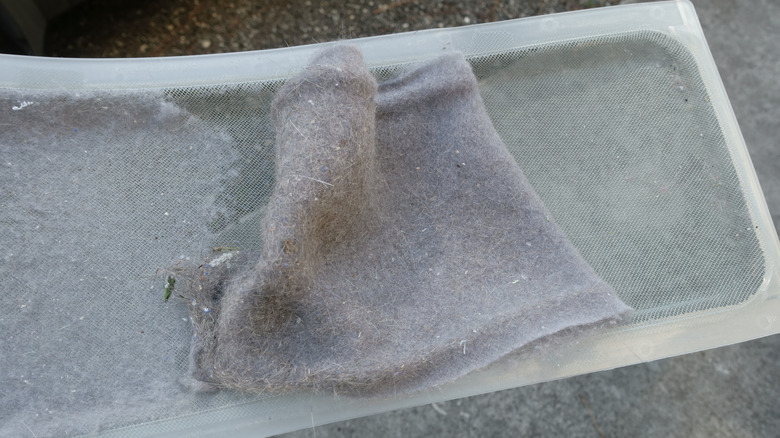
This trick is an easy one to build into your laundry regimen, and if you're not already doing it, then we would strongly urge you to start. Why? Well, firstly, if allowed to build up — which it can do after just one or two dryer cycles — then the lint in your dryer's filter can quickly become a fire hazard. Emptying your lint filter after every cycle creates a positive habit that will keep you and your family safe.
The second reason is that, if you don't clear the lint from the filter, then it can quickly start to restrict the flow of air to your dryer. In turn, this can dramatically increase the time it takes to dry your clothes. Fortunately, it usually takes mere seconds to clear lint from the filter. Refer to your manufacturer's instructions if you need help finding the filter, and make a point of clearing it after every cycle.
Air-dry clothes outdoors whenever possible to minimize energy use
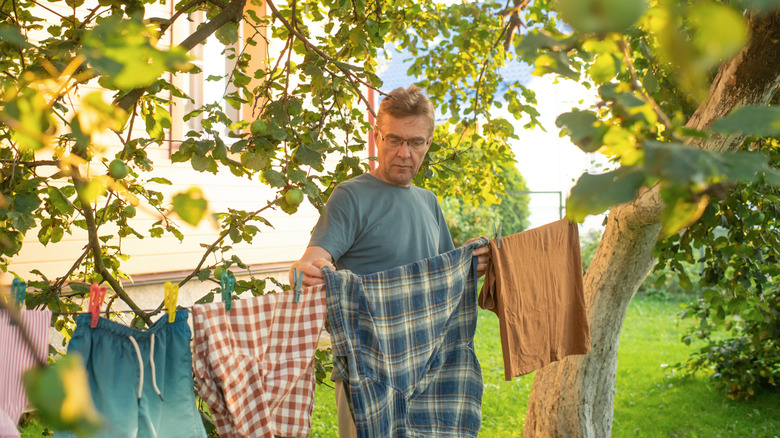
This one boils down to the simple fact that if you don't use your dryer, then you don't have to pay to run it. In the summer, you can simply hang your clothes on the line and allow the sunshine and gentle breeze to do the work. Even in the winter, while fair weather may be harder to come by, it can still help you to save a small fortune on your energy bills, especially if you have a sheltered spot, like a porch, where you can dry your clothes in the cooler months.
Whatever the season, the key is to keep your clothes outside. If you dry them inside, then you may need to use a dehumidifier to prevent the build up of condensation (and eventually mold), which will add to your energy bills. What's more, there are certain fabrics that should only ever be air-dried, and even those that can withstand the dryer are sure to last longer if not constantly bundled into a hot dryer.
Keep your home well ventilated when using indoor drying racks (and consider using a fan)
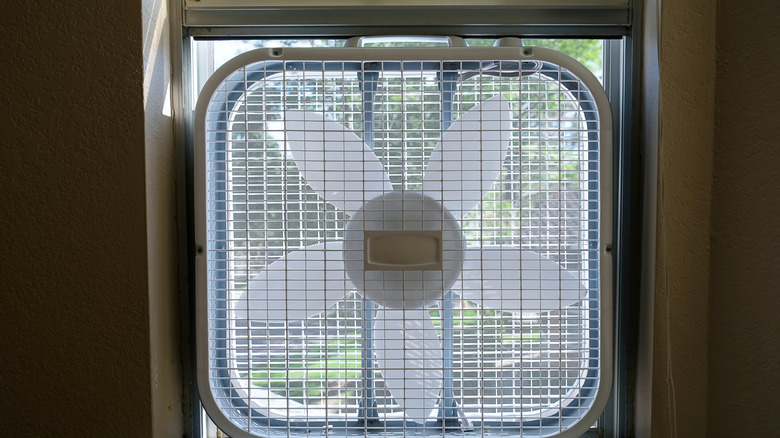
If you're limited on outdoor space, or the weather is absolutely foul and you have no choice but to hang your clothes indoors, then this is one of the best tips for air-drying laundry. By keeping your windows open (or by using a fan) you can dramatically improve air flow around your clothes, thus speeding up the drying process. It'll also help to minimize the build up of condensation, which, if left unchecked, could eventually lead to mold.
Even if temperatures outside are freezing and you'd prefer not to crack a window, don't worry. Instead of opening your windows, you can simply use a dehumidifier and a fan. The fan will help to keep the air flowing around your clothes, while the dehumidifier will keep the air (and your walls) nice and dry, thus speeding up dry-times while keeping your home free from damp.
Invest in a dryer with a moisture sensor to pull energy costs down
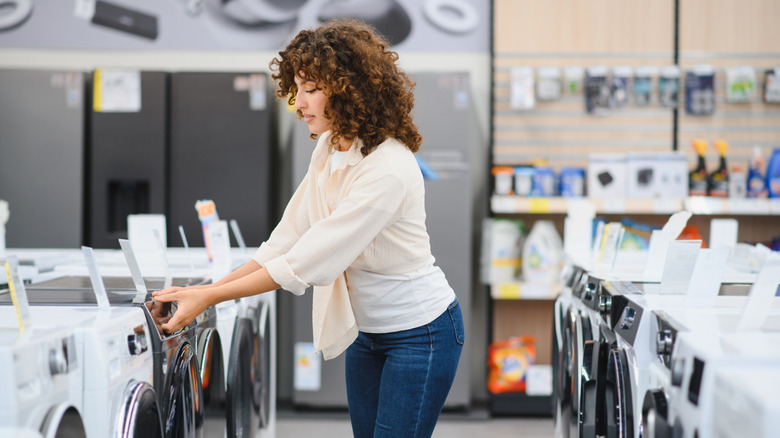
In older dryers with cycles that run on a standard timer, clothes are left to spin at the specified temperature for as long as is left on the cycle. With heavier loads, this can mean your clothes don't actually try properly within the allotted time. Worse, if your dryer is slightly underloaded, then it will continue to run even after your items are dry, thus over-drying and potentially damaging your clothes.
Modern dryers, particularly those with moisture sensors and auto-dry settings, are designed to forgo these age-old laundry issues. You don't need to keep opening the dryer to check your items — that's what the sensor's for — and you'll often find that the cycle comes to an end long before you thought it would. In other words, your dryer will only ever run for as long as it needs to, which means less energy wasted and fewer clothes damaged by over-drying.
Dry consecutive loads to use residual warmth and reduce the required amount of warming up time
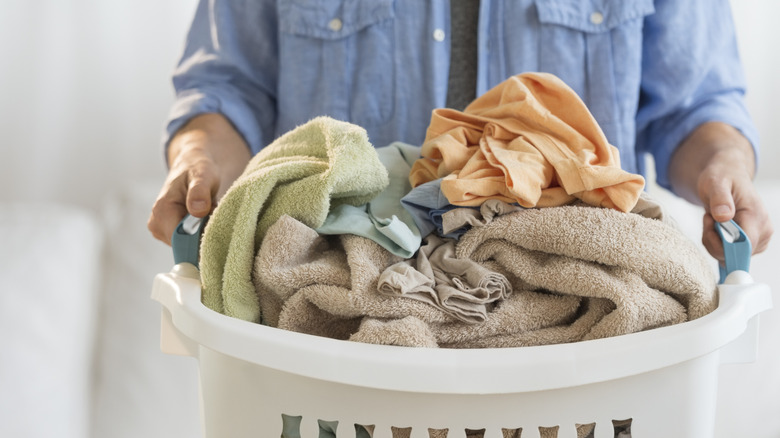
Did you know that, generally speaking, household dryers can take up to 10 minutes from being switched on to reach their optimal temperature? Multiply that time by the number of cycles you run each year, and you could be looking at hours, days, or even weeks of energy spent on running your dryer just to warm it up. That's before it even starts to dry your clothes.
With this in mind, if you have consecutive loads of laundry to dry, then try to ensure you bundle the next load into the dryer just as soon as the first load is finished. Doing so will allow you to benefit from the residual heat that's still in the drum from the first load. Since the dryer won't have to warm up again, it'll consume less energy, thus helping to reduce your energy bill while shortening the time it takes to dry your clothes.
Use low-heat or eco dryer settings to minimize spend on energy
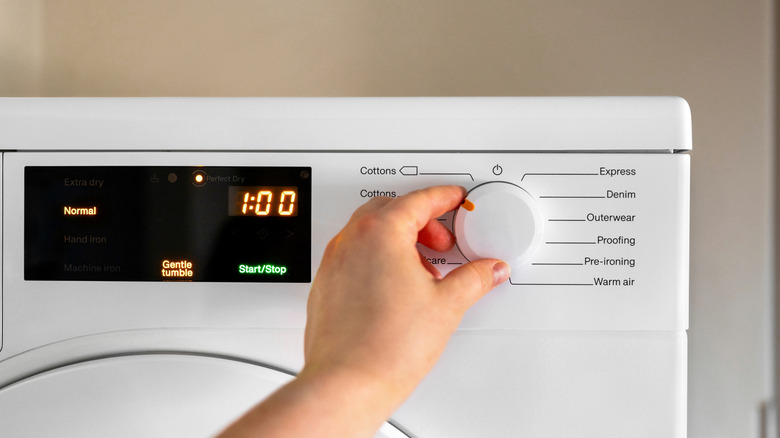
You may think that lowering the heat setting on your dryer will dramatically increase the time it takes to dry your clothes, but don't forget that even the lowest heat settings are likely to dry your clothes far more quickly than your home's ambient temperature. That's especially true when you factor in the motion of a dryer, which ensures that your clothes are constantly moving and fully exposed to the heat.
Crucially, even though the dryer will have to run for longer at a lower temperature, it will nevertheless use less energy than it would on a shorter, hotter cycle. In other words, it's much cheaper, and when you add to that the fact that lower temperatures can help to reduce the wear on your fabrics, this method is really a no-brainer for laundry loads that you're not in any rush to dry.
Keep your dryer's vents and ducts clean for optimal efficiency
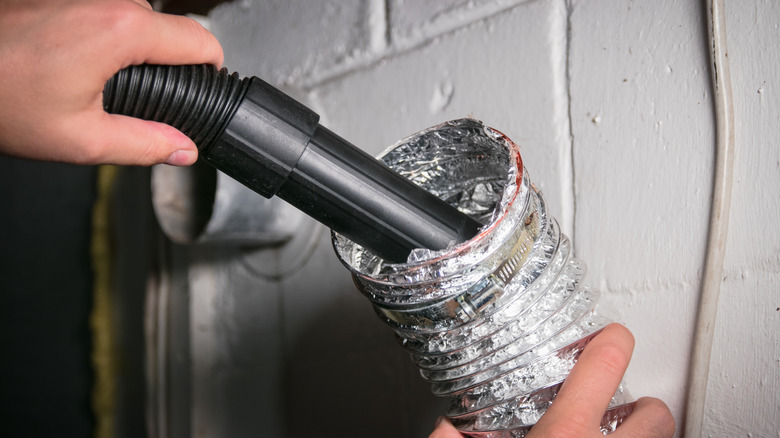
As with cleaning out your lint filter, it's important to regularly clean out your dryer's ducts and vents. The reason it's important boils down to airflow. Clear ducts and vents allow damp air to escape from the dryer. When they become clogged, your dryer is forced to cycle your clothes in humid air, which naturally increases the time it takes for them to dry.
Now, you don't necessarily need to do this every day, in fact the frequency with which you should clean your dryer vents depends to a large extent on how heavily you use your dryer. However, you'll almost certainly need to clean them out eventually, and it's generally best to try and clean them out once a month, especially if you use your dryer regularly. As for how to do it, one of the easiest ways is with a vacuum cleaner. Use a handheld nozzle to gather any lint that's collected below the lint filter, and use a vacuum-compatible attachment like the PetOde vent cleaner to get deep into the ducts and ensure they're cleared of any lint that might have accumulated.
Wait until you have a full load before running your washer and dryer
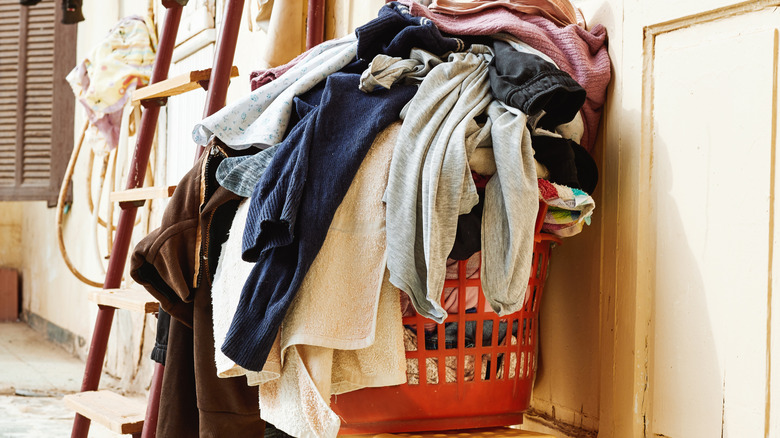
If you don't have a full load of laundry to dry — and you don't desperately need the items that are already dirty — then it's worth holding off. By only washing and drying your laundry in full loads (that is, when you have enough to fill your machines), you'll maximize your energy expenditure by running fewer cycles in the long run. Of course, this can be a delicate balance to strike, especially if you have a family and need plenty of clean linens on hand. But with a little discipline, and by prioritizing essential items, you'll be surprised by how much energy (and money) you can save in the long term with this simple laundry day optimization hack.
Shake out clothes before drying to improve dry times
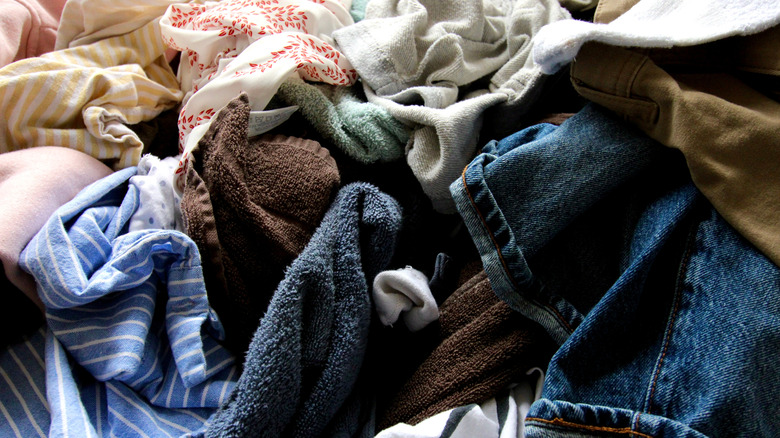
Have you ever pulled your clothes out of the dryer only to find a rogue sock that you neglected to unfurl? Annoying, isn't it? By simply taking a moment upon emptying your washer to shake out your clothes and linens, you can easily address bunched up socks and other items that may have become wrapped around one another. What's more, by unfurling them — and by shaking out your towels, blankets, jumpers, and t-shirts — you can ensure that everything is properly exposed to the heat once loaded into the dryer. It takes mere moments, yet by simply shaking out your clothes, you're almost guaranteed to improve dry times and thus reduce your energy consumption.
Space items evenly on drying racks, and never overload them
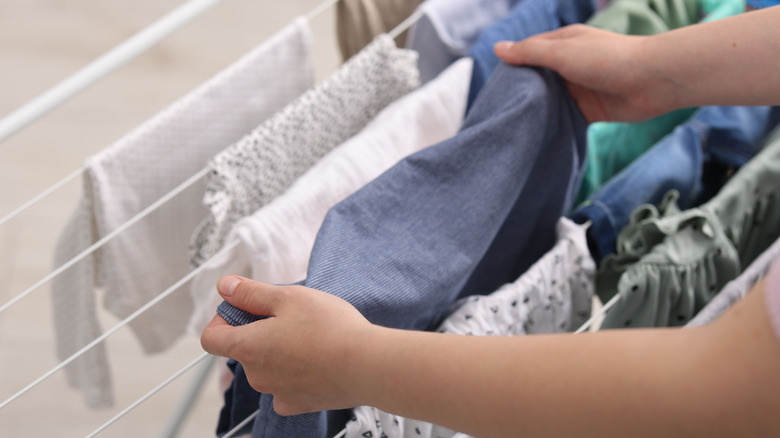
If you're drying your clothes or linens indoors, you should avoid overlapping items on your rack at all costs. Items that overlap will inevitably dry unevenly, and if too much is loaded onto a single rack, air won't be able to flow properly around your clothes. This means if you're running a fan or dehumidifier, you'll have to run it for longer. Instead, try to ensure everything has room to breathe. Space your clothes out evenly, and give the air around them the space it needs to naturally evaporate the moisture from your clothes.
Run your dryer during off-peak energy hours only
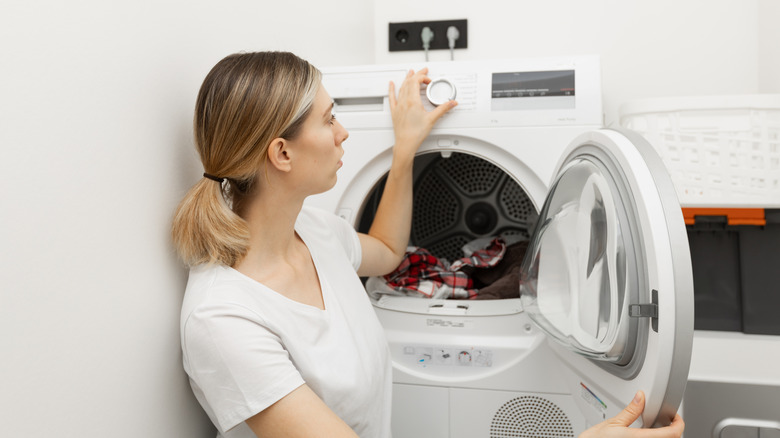
If you're wondering whether there is a cheapest time of day to do your laundry, then yes — there absolutely is! In fact, unless it's absolutely essential, it's always worth holding off running your dryer until off-peak energy tariffs kick in, especially if you have several loads to dry, or you regularly need to use your dryer. And while it's recommended regardless of the type of dryer you have, it's especially important for older, less energy-efficient models.
Generally, the lowest energy costs apply overnight, making that the most cost-effective time at which to do your laundry. And while this may mean staying up later than you otherwise might in order to capitalize on those lower energy fees, it doesn't have to. With a smart dryer, you can simply load your laundry before bed and then set it to start the cycle once the off-peak tariffs kick in.
Upgrade to a more energy-efficient heat pump dryer to save on energy costs
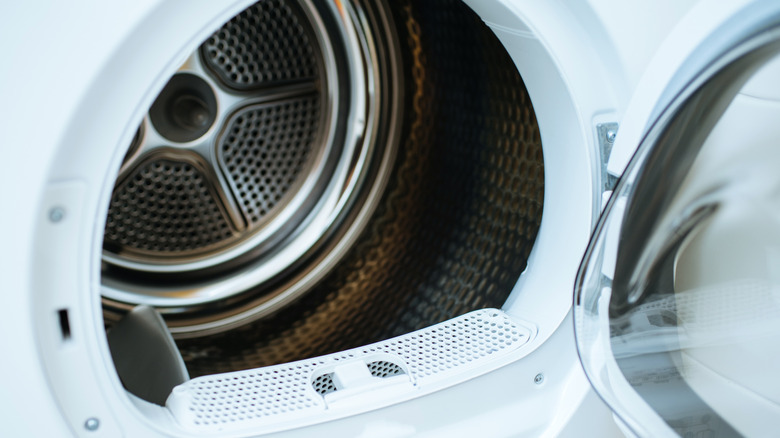
Heat-pump dryers are significantly more energy efficient than their conventional cousins. In fact, thanks to a closed-loop heat circulation system that recycles heat (instead of constantly working to generate new heat), these dryers can use up to 60% less energy than traditional appliances. In the long term, especially in households that regularly use a dryer, this represents a significant saving on energy costs.
Of course, as with any type of appliance, it's important to avoid washers and dryers with consistently poor customer ratings. It's also important to be aware that heat pump dryers have longer cycle times, which might not be ideal for all households. However, on the flipside, a handy perk of these innovative models is that they don't need to be vented outside.