

Rethink This Method When Trying To Get Rid Of Hard Water Stains On Your Toilet
If your home has mineral-rich water, you likely get hard water stains regularly. It may be tempting to attack these spots with vigor and harsh cleaners, but using products that are too harsh may cause more harm than good. If discoloration in your toilet bowl has you reaching for abrasive cleaners, it's time to learn about the damage they can cause and the essential steps to cleaning your toilet the right way.
Hard water contains higher levels of calcium, magnesium, and other minerals, which can make cleaning more difficult. When hard water in your toilet bowl or other fixture evaporates, the minerals get left behind in what looks like a chalky, white residue. Over time, the minerals build up and harden, leaving you with unsightly limescale and stains that are tough to remove. They often appear along the water line and rim of the toilet bowl, and can be white, off-white, or gray in color.
The obvious concern with hard water stains is that they can make your bathroom look gross and unsanitary, but their long-term effects are even worse. Over time, the mineral buildup can lead to plumbing issues, including clogs and reduced water pressure. Cleaning the toilet weekly is a good starting point, but if you have been using the wrong supplies, such as abrasive cleaners, you may find yourself needing to clean the toilet more often. To avoid counterproductive cleaning, ditch the steel wool, pumice stones, and any products that contain bleach or claim to remove tarnish and rust. These products are all designed with small, hard particles that rub against grime to physically remove it but often catch the surface below, too.
Why you should avoid abrasive toilet cleaners
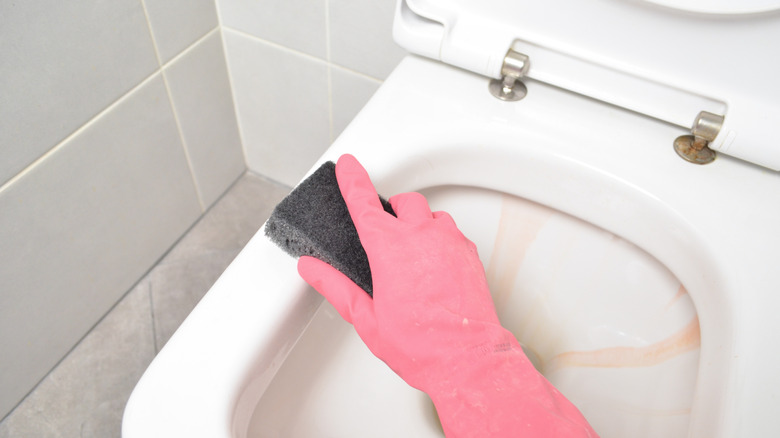
Most toilets today are made of vitreous china rather than porcelain, and while this ceramic material is known to be durable, abrasive cleaners, brushes, and sponges can scratch the glaze, just as they can on classic porcelain bowls. If you are skeptical about the damage an abrasive cleaner can do, checking your toilet's warranty may convince you to avoid them. It is common for them to include a warning about the damage abrasives can cause and to note that using them and harsh chemicals like bleach can void the warranty. Visible scratches and warranty violations may be enough to deter you, but if not, then learning that these scratches make the bowl easier to stain may do the trick.
Scratches in the protective coating of a toilet bowl make great porous spots for bacteria, mold, and mineral deposits to accumulate. This means that a scratched toilet bowl is both less sanitary and more likely to get stained. This can lead to more frequent cleaning and turning to other harsh cleaning products that will continue the cycle. Don't worry if it seems like you are out of cleaning options, though, because there are plenty of gentler ways to remove the stains.
Removing hard water stains without abrasive cleaners
Rejecting abrasive cleaners can be intimidating if you are used to using them, but there are plenty of gentler methods and hacks that remove hard water stains easier than ever. Some of them even use common ingredients you likely already have, such as baking soda and vinegar. Baking soda is often considered an abrasive ingredient, but it is very mild compared to commercial abrasive cleaners and tools like pumice stones. Avoid scrubbing with too much force when using it, but also know that it is widely recommended.
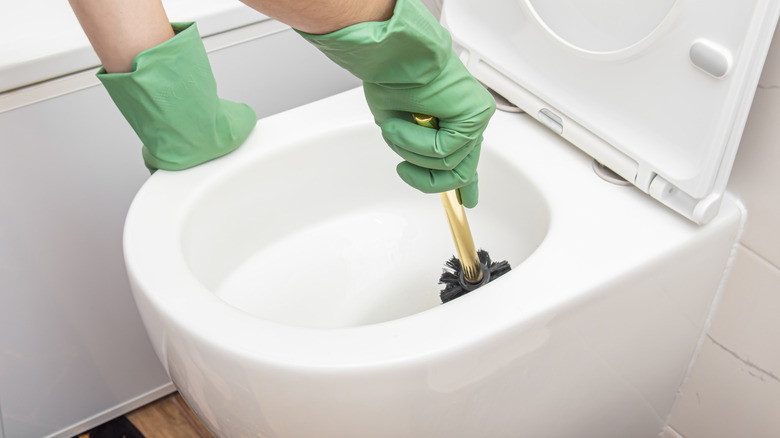
To prevent any possible scratches, it is best to start with a vinegar soak. Spray white vinegar from a spray bottle onto the stained areas of your toilet bowl and let it sit for about 30 minutes. Then use a gentle toilet brush to remove the mineral buildup dissolved by the vinegar.
For stubborn stains, you can add baking soda to the mix. Pour 2 cups of vinegar into the bowl before adding 1 cup of baking soda. Use a soft brush to scrub the toilet bowl, focusing on stained areas. Leave the mixture in place for 10 minutes before flushing the toilet.
If repeated gentle attempts are unsuccessful, you may benefit from stronger chemicals, but follow all directions closely to avoid permanent etching and scratching damage. When the stains are gone, be sure to learn more tips and tricks to prevent hard water stains from building up in the toilet so you don't need to risk harsh scrubbing again.