

Keep Your Snake Plant Thriving With 14 Clever Hacks And Care Tips
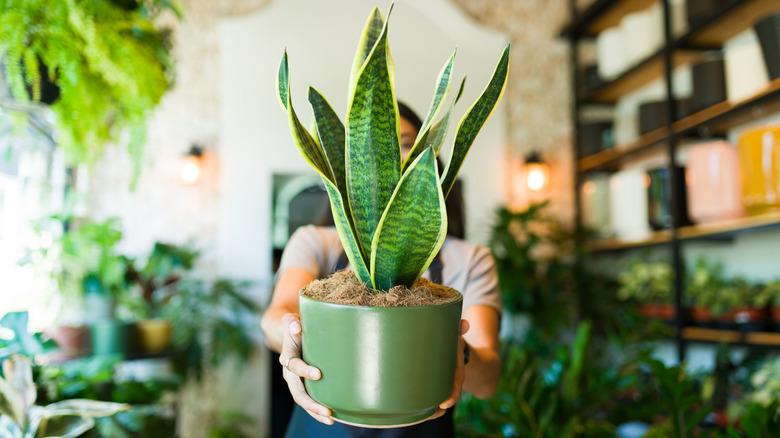
I love snake plants. Even though I'm a master gardener, I enjoy how little care and attention they really want. They're one of the plants I recommend to beginners and those who've never managed to keep a houseplant alive before. And my biggest hack for them is basically to leave the plant alone, water it sparingly, and enjoy its beauty.
Snake plants aren't truly unkillable, though. They'll eventually die from too little water, too much water, bad lighting, the wrong kind of soil, disease, rot, and pest problems. But in general, if you treat them right, they're easy to keep alive, because they're incredibly unfussy. These succulents aren't princesses and don't need constant "plant parenting," but these tips and hacks will ensure they are as healthy as can be.
Give your snake plant more bright, indirect light
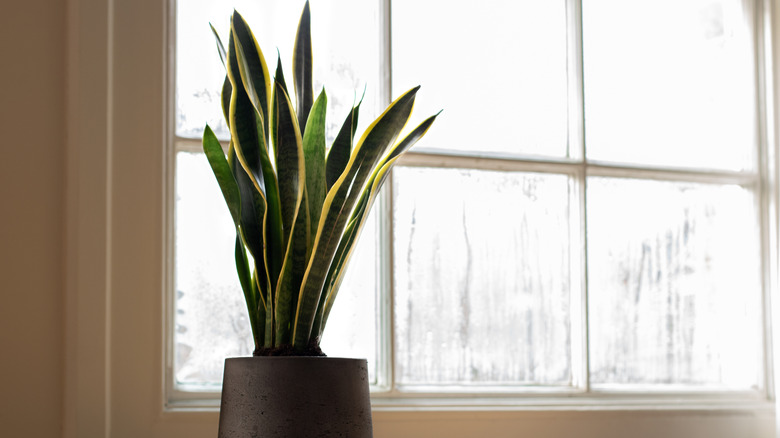
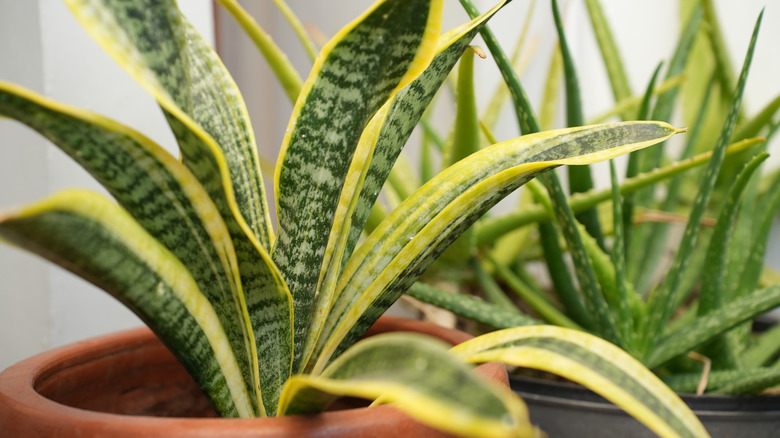
Snake plants will tolerate low(ish) light, but they don't grow well in dim, dull locations. You'll find the plant's growth incredibly slow. Plus, over time, the interesting markings will fade and the leaves will become pale and uniform. Lower light levels also mean the soil stays wetter for longer, which can encourage root rot and fungus gnats, neither of which you want.
Your best bet is to move your snake plant to a sunny window sill where there's plenty of bright, but indirect, light. For example, a simple sheer curtain filters light enough not to overwhelm and scorch the plant's succulent leaves, but still provides lots of bright, albeit filtered, light. Ideally, snake plants need 6 to 8 hours of bright but indirect sunlight per day. Signs of too much direct sunlight include bleached patches on the leaves, or scorched or crispy edges. If you can't get the plant in a suitable spot, add an LED grow light over the plant for 8 hours during the day.
Let the soil dry completely before you water
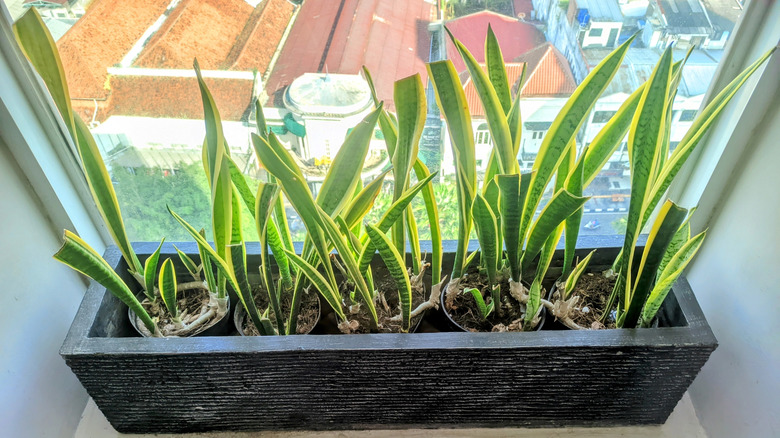
This slightly lazy hack is the way you keep your snake plant alive and healthy. Overzealous watering and too frequent watering are the fastest ways to kill a snake plant. Remember, these plants are succulents, and they hold large amounts of water in their thick, fleshy leaves and their rhizomes. And they do not like having very wet roots, as excessively wet soil deprives those roots of oxygen and causes rot. The plant will start to lean, and the leaves will get mushy and begin to yellow.
Water deeply but infrequently. I can't tell you a specific number of days between waterings, because it depends on the time of year, how much heat and light there is in the microclimate around the plant, and the type and quality of your soil. However, you can use a moisture meter or just use your finger. Once the top inch or so of soil is fully dry, you can water the plant. As a rule of thumb, in bright, warm conditions, you'll only water once every 2 to 3 weeks. In winter, or in low light and cooler rooms, you'll likely only water once every 4 to 6 weeks. Just be aware that, during winter, when the plant is semi-dormant, you'll need to water less frequently.
Use a gritty, fast-draining potting mix and a pot with drainage holes
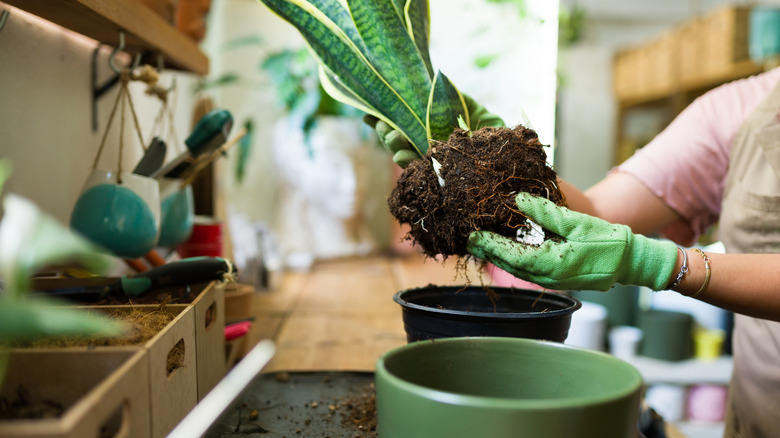
Regular potting soil isn't the right choice for snake plants. Standard houseplant soil is too heavy and dense, and many contain peat for moisture retention. But, as we've already established, we don't actually want the soil to retain a lot of moisture, or the plant will be oxygen starved and end up with root rot. Heavy potting mixes collapse tightly around roots, squeezing out air pockets. And pots without drainage holes, even if you add some pebbles or gravel in the bottom, can hold far more water than you realize.
Choose terracotta pots (this is important for another hack) with at least one substantial drainage hole in the bottom. And, for growing medium, use a succulent or cactus mix. I make my own, with a 1:1:1:1 ratio of compost, coco coir, horticultural grit or sand, and perlite. This mixture provides plenty of nutrients, drains freely while allowing enough retention to keep the plants suitably hydrated for a couple of weeks, and creates and holds air pockets for proper aeration, reducing the risk of root rot. You can also purchase a commercial succulent or cacti potting mix.
Keep temperatures warm and avoid cold drafts
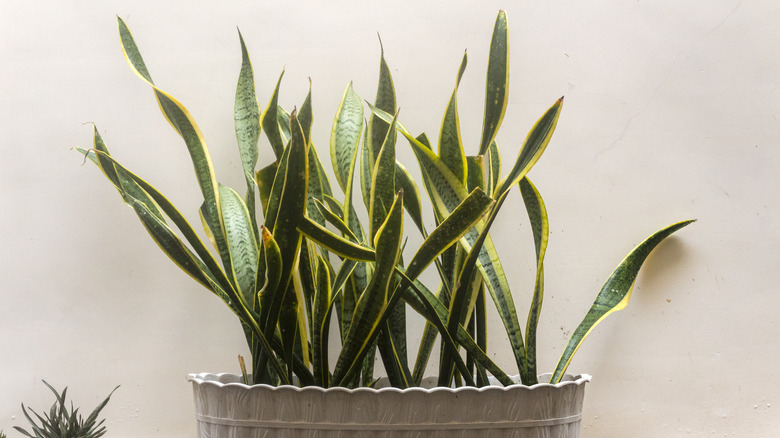
Snake plants are one of the best succulents to grow indoors, but do not appreciate the cold, and really do not like drafts. They're tropical and so do best in warm conditions and, when temperatures drop or fluctuate between hot and cold, they get stressed. Leaves can droop, go mushy, and turn pale, root rot can set in because soil stays cool and wet, and growth slows. Even if you let a leaf sit against a cold glass window, you could see signs of cold damage.
Ideally, keep your plant in a draft-free spot, which means keeping it away from leaky windows and out of the path of exterior doors. Daytime temperatures should be a minimum of 70 degrees Fahrenheit and nighttime temperatures shouldn't dip below 60 degrees Fahrenheit. Aside from doors and windows, remember to move the plant away from AC vents, too.
Let the plant stay slightly rootbound until it bursts out of its pot
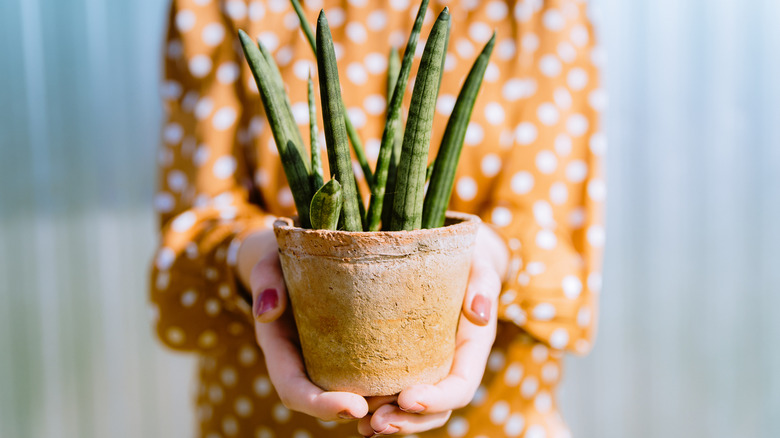
This is the lazy hack that I told you you'd need a terracotta pot for. Snake plants don't like having too much room in their pots. In fact, the tighter, the better. So don't be tempted to re-pot them every year or two. As their roots grow, there's less room in the pot for soil that might otherwise stay saturated, which is why they grow best when rootbound.
If you've got a new snake plant in a plastic pot, I strongly recommend switching the pot for a terracotta one of around the same size. Vensovo's 6-inch Terracotta Pots come with matching clay saucers. Don't go too big, as the more soil, the more moisture it'll hold, and the greater the chance of root rot, fungus gnats, and other diseases. And then, once potted, just leave it alone. Don't repot until the roots start cracking the pot. This is the point when you know your snake plant needs repotting. They are incredibly strong and will eventually bust open the terracotta like triffids. If you must use thin plastic pots, watch for the pot starting to get distorted as the roots push against the plastic. At this point, yes, it's time for repotting, but only step up an inch or two in pot size. This would also be a good time to divide the mature plant or remove and pot up any pups that have appeared.
Watch for root rot early and rescue healthy pieces
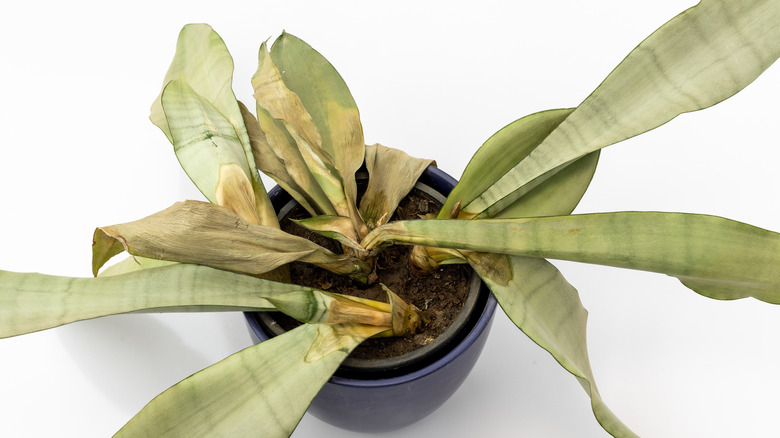
Root rot is the absolute enemy of snake plants and other succulents. And the main cause of root rot is usually overwatering and/or using heavy or standard houseplant potting soil that retains too much moisture. If you catch the symptoms early enough, you might be able to save the plant, but there's no guarantee. Because the symptoms start under the soil line, by the time the disease has progressed enough to show signs on the leaves, it's already pretty advanced. One of the first signs your snake plant is in trouble isn't actually a visible one. Before you see signs on the leaves, you may notice a distinctly sour, swamp-like smell coming from the soil. And you might realize that the soil never truly dries out. On the plant itself, you'll see stressed, mushy leaves that eventually yellow and fall over or fold in on themselves. The plant may also develop an obvious lean as parts of the root system die off and the plant loses its anchor in the soil.
At the first hint of potential root rot, take quick action. Slip the plant gently out of its pot and rinse off the root ball with tepid water. Hot or cold water will shock the roots and do more damage. Healthy roots are firm and pale, while rotting roots are mushy, brown, or black. They also smell pretty gnarly if the root rot is severe. If more than two thirds of the roots are rotting, you may struggle to save the plant. In which case, I'd recommend trying to salvage any undamaged pups or taking divisions of adult leaves that have their own healthy roots and repotting these individually. If you still want to try and save your main plant or it has more than a third of its root mass in tact, gently snip off all signs of rot. Next, you're going to sprinkle ground cinnamon over the cut ends of the roots (or just the whole remaining root mass). Cinnamon has antifungal and antibacterial properties that will help stop further rot and heal the plant's wounds. Pot up in suitable cacti or succulent soil.
Water with willow water to encourage strong root growth
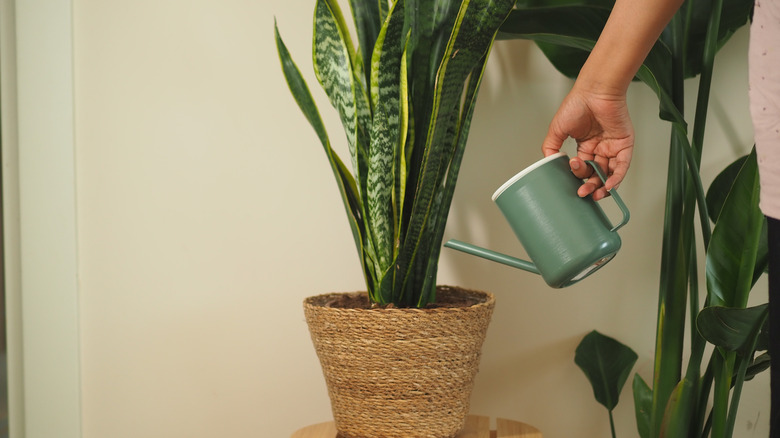
If you've just re-potted, made divisions, are trying to fix root rot, or have just separated new pups into their own homes, this hack is for you. Young willow contains a huge amount of natural growth and rooting hormones, along with high concentrations of salicylic acid. So they contain compounds that encourage strong growth and root development and fend off fungal diseases, fungus gnats, and other common problems.
All you do is cut a length of first or second year willow growth (these are usually the twigs and young branches no thicker than a pencil), chop them into 1-inch pieces, and steep them in water for 48 hours. And ta-da, you've got willow water, a natural tonic filled with healthful stuff your snake plant needs to develop strong roots, recover from stress, and stay disease-free. If the water is particularly dark, dilute it 1:1 with plain water. It should look yellow-green. Then just water the plant with it, as normal. Only use it when really needed, though, as remember that snake plants don't like too much care.
Dust and wipe leaves to keep them working efficiently
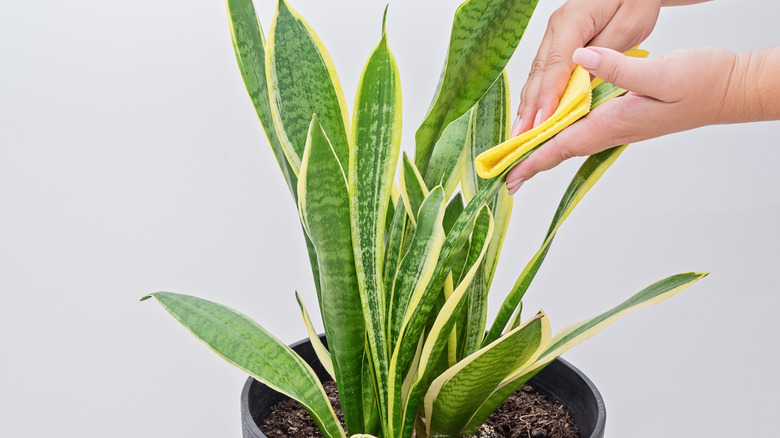
Snake plants, as we've already discussed, need plenty of light to thrive. But they also sit in our homes and those wide, fleshy leaves gather dust. Which seems fairly harmless, but even a thin layer of dust across the leaf surface significantly impacts how well it can absorb light and photosynthesize. Plus, dusty, undisturbed leaves make the plant more attractive to pests like spider mites who like dry, quiet conditions.
Again, when caring for you snake plant, don't be too over-enthusiastic, but once every month or two, gently wipe over each leaf with a soft, lightly dampened cloth. Put one hand behind the leaf to support it while you wipe the other side. Do the front and back of each leaf, but please don't be tempted to use leaf shine products. Plants are alive, and their leaves are covered in pores that get clogged when you use these kinds of products. If you want a plant that looks artificially shiny, buy a fake plant.
Fertilize lightly only during the growing season
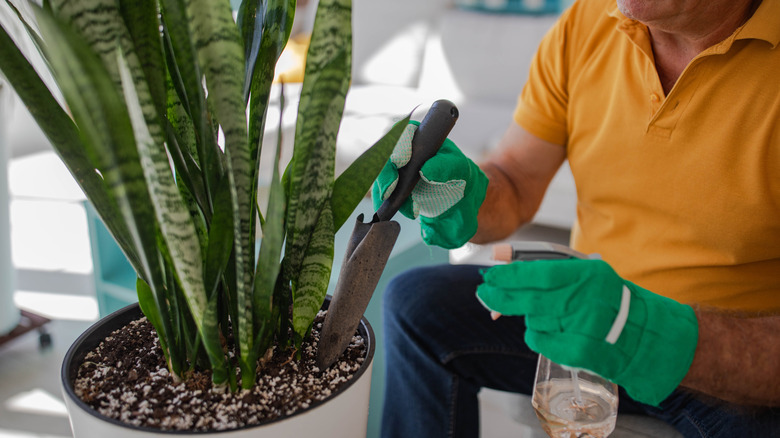
As I've said, snake plants don't enjoy helicopter plant parenting. And that includes too much nourishment. They are slow, light feeders so adding too much fertilizer because you want to "boost" your plant ends up causing an unhealthy buildup of salts. These can end up burning the roots and stunting growth. If fed too much or too often, you'll see browning leaf tips or edges, a sudden general decline in overall plant health and growth, and eventually, crusty white deposits on the soil.
First, don't feed at all in fall or winter, as the plant is semi-dormant and only really feeds in spring and summer. Second, when you do want to fertilize your snake plant, do it with a very light succulent or cacti feed, and only once every 8 weeks or so, depending on whether the plant looks stressed. If you think you've over-fertilized, the next time you're watering, place the plant in the shower under a gentle stream, and leave it to flush through. This will thoroughly hydrate the plant and flush out all the accumulated salts in the soil. It's good practice to do this twice a year anyway, as salts can build up over time, even with gentle feeding.
Give it a summer vacation outdoors in bright shade
If you live somewhere with summer nighttime temperatures consistently above 60 degrees Fahrenheit, if you're smart and careful, you can give your snake plants a little summer vacation in the great outdoors. Living outdoors in warm, more humid conditions and with access to ambient light during the summer can encourage succulents to grow more leaves and put off pups at a faster rate than if they stay inside year-round.
You've got to be careful though. A sudden transition can cause shock that damages the plant and stunts growth. Once overnight temperatures are steadily above 55 to 60 degrees Fahrenheit, move the plant to an area of bright, dappled shade, such as under a tree canopy or even a bright, but shady, porch. You'll also need to check the soil more frequently, as it'll dry out faster outdoors. And keep one eye on the weather forecast so you know when to move your plant back indoors to avoid a sudden cold snap.
Tie tall leaf fans together before repotting
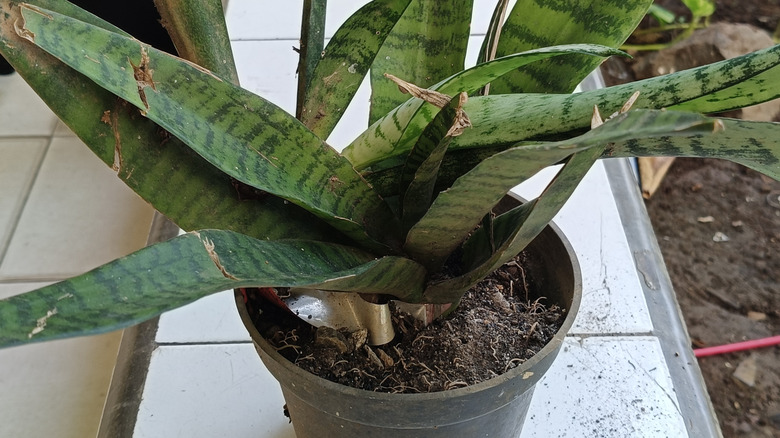
Snake plant leaves can be a little delicate to handle, especially when the plant is large. There's a real risk of snapping or damaging leaves when you move the plant. It's particularly vulnerable during repotting.
To prevent snapping, creases, or tearing, get a wide, flat piece of ribbon and gently tie it around the leaves. For very big plants with large leaf fans, you may want to tie individual fans together, and then add a large ribbon around the whole plant. Don't tie tightly — just tight enough to offer gentle support about half way up the leaves. Too low and there isn't enough support, too high, and the leaves can bow outward at the midpoint and fold or break.
Watch for common houseplant pests on foliage
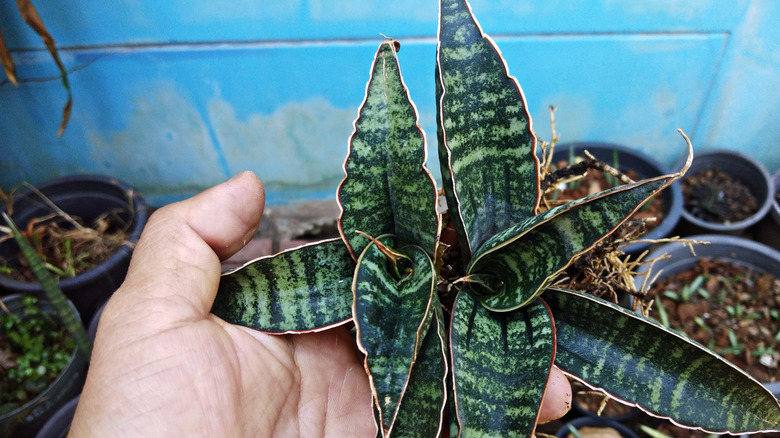
Snake plants aren't generally a target for many common pests, but they're not completely immune. Spider mites, mealy bugs, and scale will all settle on snake plants that are dusty and undisturbed, or those that are stressed or sick. If you're dusting the plant regularly and it's in good health, you don't have too much to worry about, but it's still worth making a casual inspection of key areas every now and then.
Every time you water, do a quick leaf check. Look for tiny specks, sticky residue, cottony tufts, and tiny, fine webbing. Check leaf bases, undersides, and crevices and the base of the fans, as these are all places you're most likely to spot early signs of pest trouble. For most snake plant pests, you can use insecticidal horticultural soaps or oils, following the directions on the packaging, doing regular treatments until the pests are gone. Just don't sit your plant in strong sunlight right after using these products, or you can cause leaf scorch.
Use diluted castile soap spray to kill pests
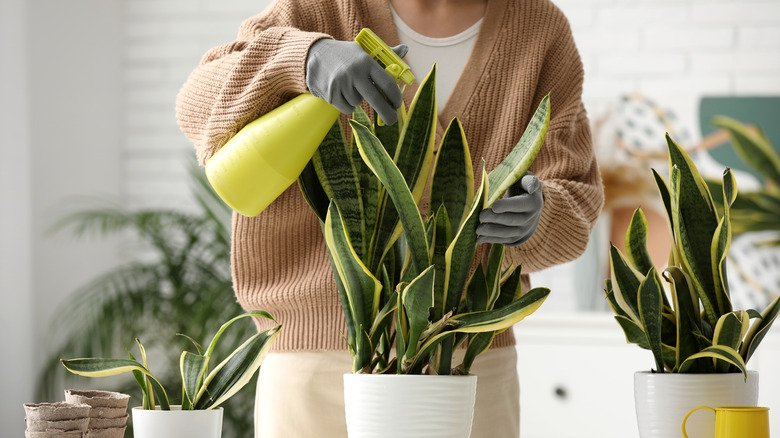
If you want a more natural option for pest control, you can use my castile soap hack. Insecticidal soaps work on soft-bodied pests by disrupting or removing their protective outer coating, so they quickly dehydrate. Mild natural soap can have the same effect, if used currently. Don't be too heavy handed, and only use a very mild detergent, and only in very diluted quantities. Too strong and you'll damage your plants.
I use Dr. Bronner's Unscented Castile Soap, mixing just a few drops and a cup of water in a spray bottle. Give it a good shake, then go ahead and spray the whole plant. Pay particular attention to any obvious areas of pest activity and the visible pests themselves. Dr. Bronner's is biodegradable and natural, so you don't need to worry about washing it off or harming your soil. You can safely repeat this treatment every week until you've got a handle on the pests.
Adjust watering and light in winter
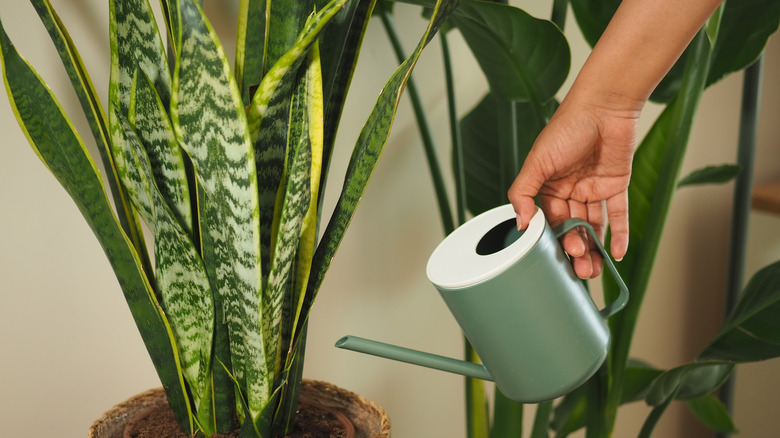
In the winter, days are shorter and the sun is weaker, so the snake plant's natural rhythm is to slow right down to semi-dormancy. It won't die back, but it won't produce loads of new growth, either. Winter is a time of rest for the plant. So, while you can encourage new growth by keeping temperatures high and using grow lights, I recommend you don't interrupt the plant's natural rhythm. Nature knows what she's doing. Let the plant rest so it can maintain its health for years to come.
Your plant won't need as much water in winter, so adjust your schedule to check for dryness and assume you'll be watering probably about every 4 to 6 weeks. It might even be every 8 weeks. Just make sure the top inch or so is completely dry before you water. And make sure the water can drain away, as the plant will use less of it while it's resting. Remember not to feed in winter. And, to maintain leaf color and pattern, make sure the plant is in bright but indirect light to make use of what sunlight is available during the shorter days.