

Beautiful Rain Garden Designs For Your Next Backyard Project

If you're no longer asking, "What exactly is a rain garden?" and are instead ready to install your own, you're probably trying to decide on the perfect design for your backyard. You no doubt understand that this is a smart solution to prevent excess stormwater flooding your yard and are ready to take action. And it's going to feel great to get that project started, isn't it? You may not be able to fix all that is not right with the world, but you sure can take care of that excess rainwater. Now you just need to see your options, because there are many beautiful ways to create this stormwater management approach — from tiny pocket gardens that attract pollinators, to invisible options that blend in with your current landscaping.
As you consider the following designs, you'll no doubt see lovely examples that aren't quite right for your conditions, and others that might be spot on. If your wet area is shady, you can take notes based on how other gardeners have confronted a comparable situation. On the other hand, if your entire backyard is turning into a pond due to drainage issues, look to the rain gardeners who have solved a similar challenge with adding features such as stepping stones. And if you're worried about whether your neighbors are going to approve, you'll find some low-profile designs to choose from too.
A pocket rain garden makes a difference in a small space
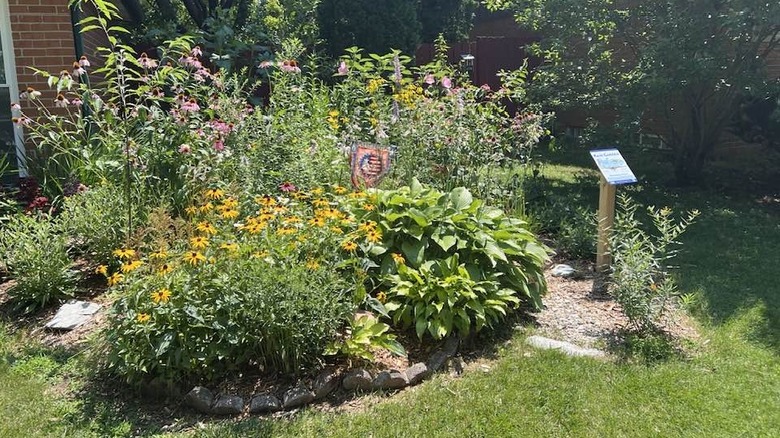
A stormwater-focused landscaping design doesn't have to take up all the room in your backyard — you could dedicate just a small space to the project, and it will add beauty, variety, and interest to your yard in addition to serving its practical purpose. Choose from plants such as purple coneflower (Echinacea purpurea) and black-eyed Susans (Rudbeckia hirta), which are among the plants that will fill your rain garden with abundant blooms.
Stepping stones add beauty and access through rainwater
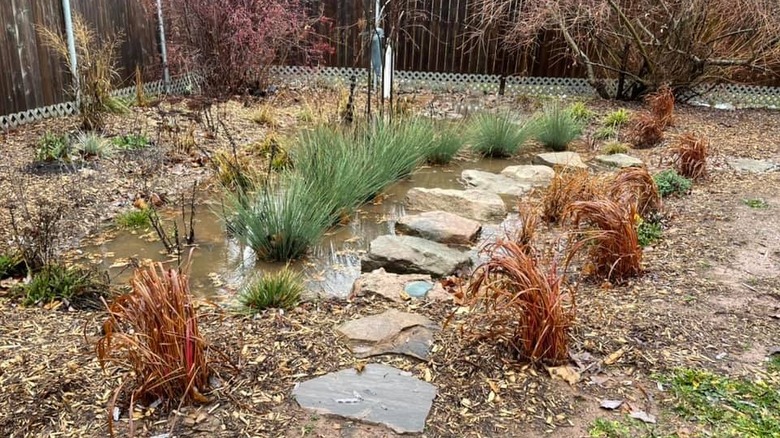
If you anticipate rain filling your garden regularly, why not create a project with stepping stones to help you navigate the water? It may take up to 48 hours for your rain garden to drain after a storm, so a raised pathway can add access through your yard, especially necessary if your rain garden is huge. This type of hardscaping can transform your project into a gorgeous intermittent water feature. To make the feature look intentional, consider adding the stones parallel to plantings like bunch grasses.
Flagstones create a beautiful bordered rain garden
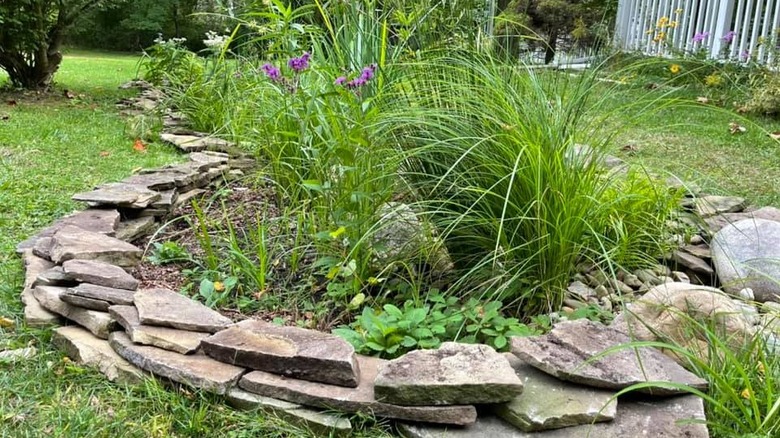
If you're looking for an incognito rain garden design that looks like a typical garden bed for your backyard, surround it with a common landscaping material that everyone will instantly recognize, like flagstones. Irregularly shaped flagstones will convey a natural appearance and using them as a border will make your collection of stormwater plantings look tidier. Your neighbors won't be able to tell your rainwater landscaping project from a simple garden bed.
A dry creek bed combines perfectly with a rain garden
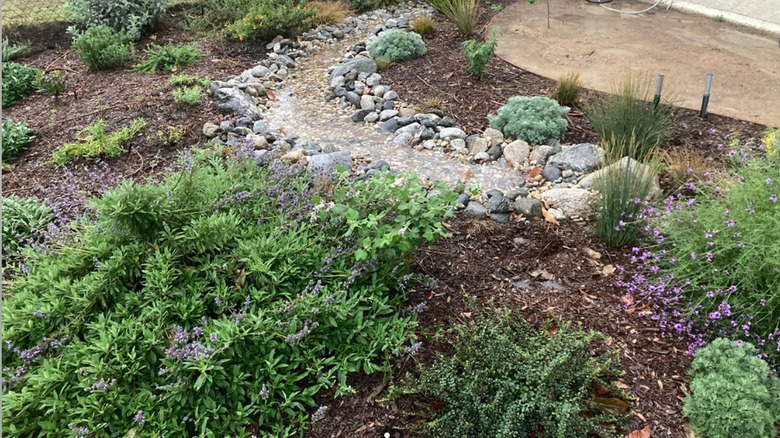
Dry creek beds can save your yard from flooding when combined with rain gardens. You can add one of these rocky features to your backyard project to direct stormwater away from a problematic area like the foundation of the home, and into a planted area where the moisture will be absorbed by plant roots. Since dry creek beds are also designed to slow water flow, they need to curve along the way to their destinations – those curves happen to create attractive and eye-catching landscaping features.
A roof rainwater harvest hydrates a flower garden
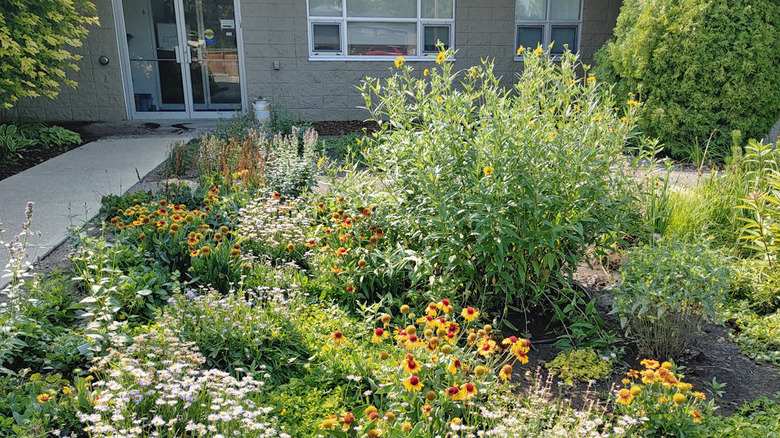
You can use rainwater from your roof to help hydrate a beautiful and vibrant garden design that includes your favorite blooms. Direct the water from your roof to your backyard beds with a downspout extension, and the moisture will be absorbed by the plants' roots, preventing it from running off into places where it could cause damage. Just make sure to choose plants for the project like butterfly weed (Aslepias tuberosa) and cardinal flower (Lobelia cardinalis), that can handle the swings in moisture levels that occur in rain gardens.
Use foliage plants to fill a sunny backyard wet spot
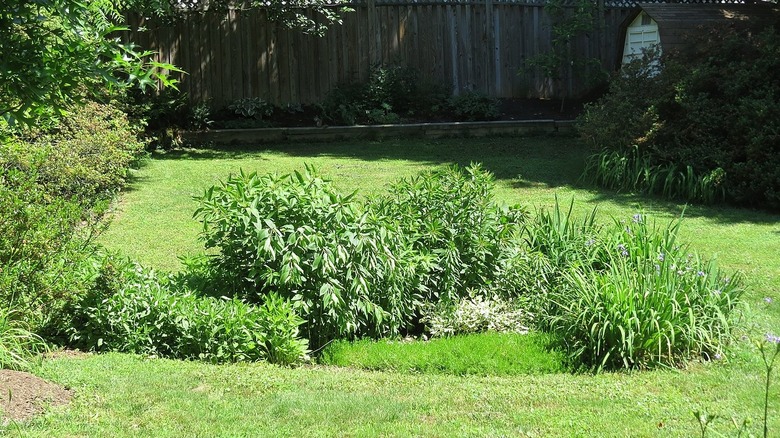
There's no rule that says your rain garden project must focus on flowers. Choosing attractive foliage plants can help your yard use up extra moisture while visually blending more seamlessly with the turf grass in your backyard. To create a pleasing design, choose perennials of different heights and that have a variety of foliage types. You might even choose beautiful, variegated foliage plants, and low-growing ground covers.
Big boulders add rugged beauty and stabilize the soil
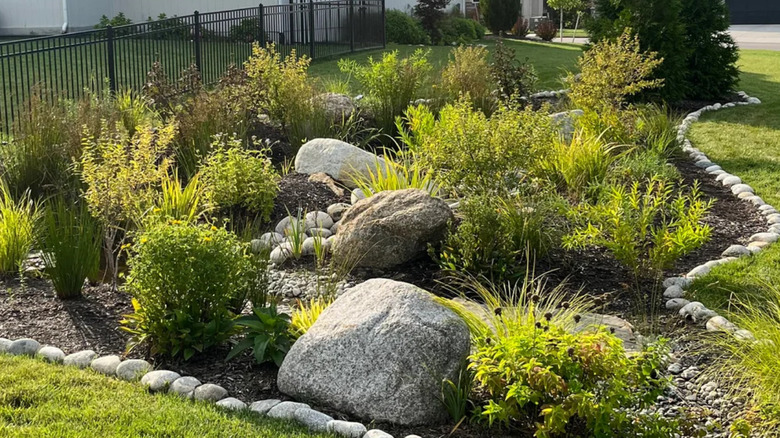
When creating a rain garden in your backyard, don't forget to include additional elements besides plants for aesthetic interest or more practical purposes – such as boulders. If your planting project is on a slope, large rocks or boulders can help prevent erosion while adding a rugged beauty to the design. To provide an echo of any large stone features already in your stormwater-ready landscaping garden, consider lining the border with smaller rocks.
A gravel-bottomed rain catchment helps show off blooms
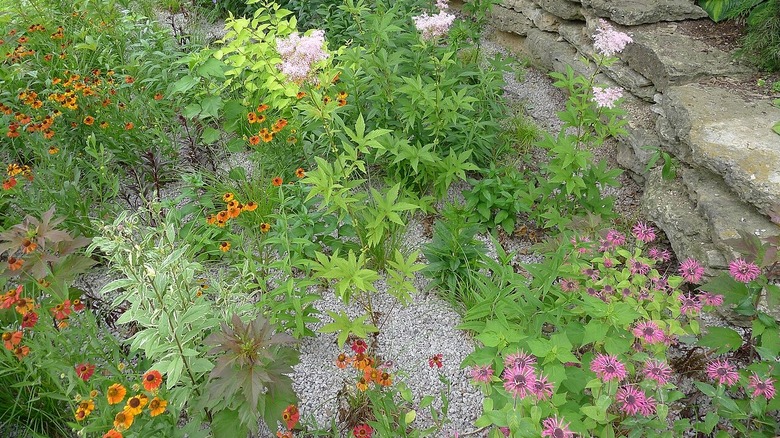
You may want to use mulch in the bottom of your rain garden, but that mulch doesn't have to be wood chips or pine bark. Gravel might be better for your design depending on what resources are available to you for your backyard landscaping project. Gravel can allow plant blooms and foliage to stand out beautifully above the non-organic ground covering. Just be aware that until the plants fill in the space, you'll want to hand pull weeds to keep the feature looking tidy.
Shade-friendly shrubs slow stormwater in a backyard
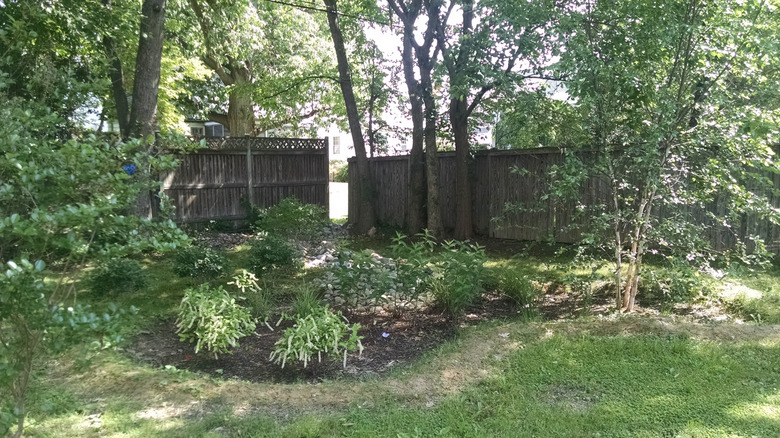
Don't assume you can't have an attractive rain garden design if you don't have sun in your backyard — this rainwater solution also works in shady areas. To complete your own beautiful rainwater managing project for a shady or part shade area, choose low light adapted shrubs that can handle flooding and dry periods, such as Virginia sweetspire (Itea virginica), coastal sweet-pepperbush (Clethra alnifolia), or northern spicebush (Lindera benzoin).
Landscape a prominent corner project for yearlong interest
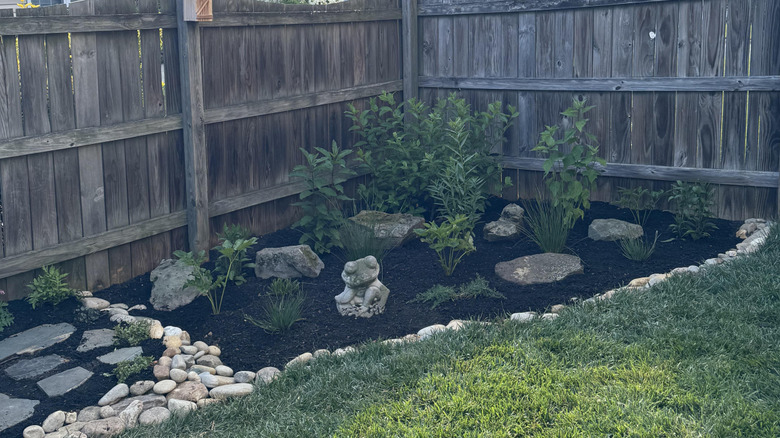
An empty corner of a backyard where water accumulates after a storm will be the perfect spot to add some flood-tolerant plants in an attractive design. And if the water is running Into your neighbors property, then you should feel even more motivated to use this solution. For rain garden projects like this that highly impact the aesthetics of your yard, you might want to add broadleaf evergreens such as inkberry (Ilex glabra) or wax myrtle (Morella cerifera) to your plant mix to keep the feature looking attractive all year long.
A naturalistic rain garden goes perfectly with natives
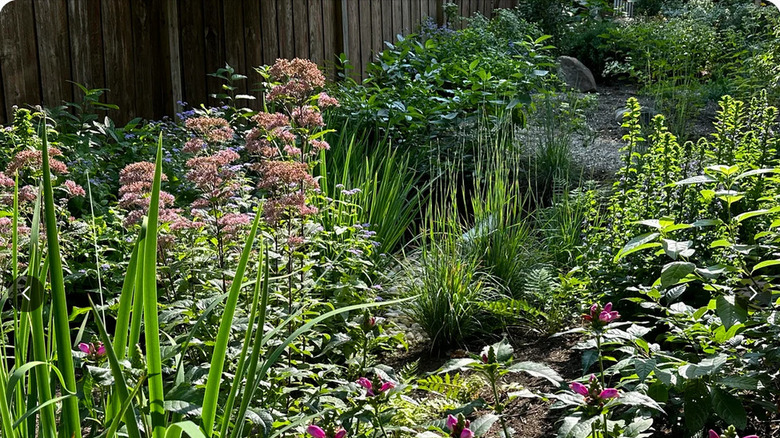
Native plants are the best for backyard gardens intended to prevent rain runoff, and one of the favored ways of installing these species is with a lovely, naturalistic planting style. Just like natives feed and shelter pollinators, a naturalistic design mimics natural eco-systems. To achieve this style for your rain garden, choose different plant types that grow well together to form layers of different heights. Depending on your region, you might use Joe pye weed (Eutrochium maculatum), dense blazing star (Liatris spicata), and slender mountain mint (pycanthemum tenuifolium) for the perennial layer.
A circular design makes a meditative landscaping feature
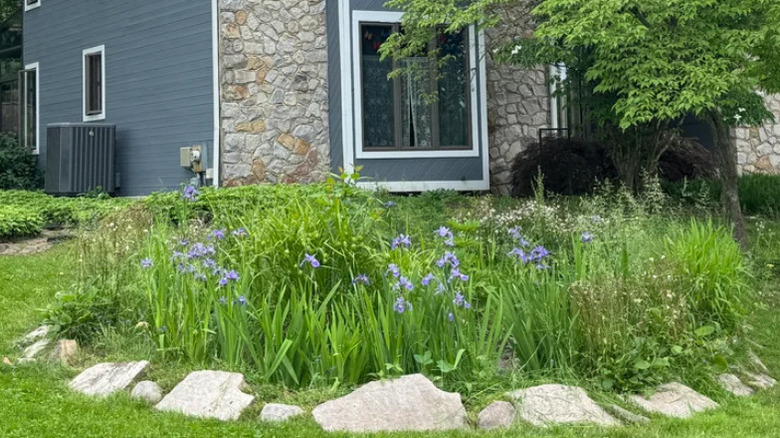
There's no need to create a naturalistic planting area if you want something more structured. Circular shaped rain gardens can add an element of intrigue or meditativeness to your backyard. For your round stormwater project, you might include blue iris (Iris virginiana) or swamp milkweed (Asclepias incarnata) depending on your growing conditions. Consider adding a border along the edge of the circle to accentuate the attractive circular design.
A privacy fence will make your rain garden stand out
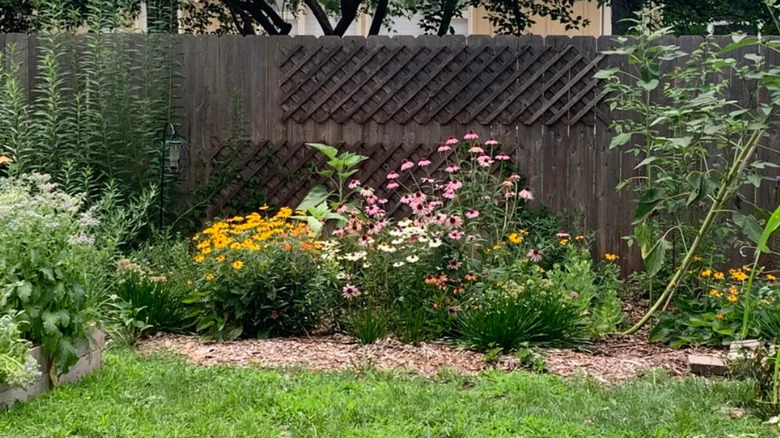
If you have a wet area near a backyard privacy fence, you can design a beautiful garden that will really stand out. Since the plantings will be clearly on display, you'll want to choose the most beautiful plants of your region for your rain garden – just make sure to account for sun needs since the fence wall may cast shadows. Coreopsis species, wild bergamot (Monarda fistulosa), and common milkweed (Asclepias syriaca) are examples that will flourish and look lovely in the alternating wet and dry conditions of your planting.
Low-profile ground covers help manage stormwater
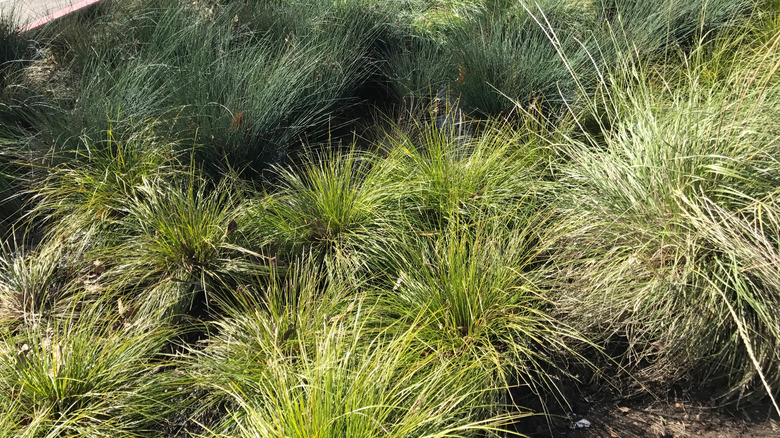
If you're imagining a rain garden that is colorful and full of texture but not tall, focus on a design that uses a mix of low profile ground covers. There are lots of rain tolerant ground covers that can help soak up extra rain in your backyard, and these species can also be beautiful choices for your project. Reach for plants like creeping phlox (Phlox subulata), blue fescue (Festuca glauca), or green and gold (Chrysongonum virginianum) for low-growing perennial vegetation to cover the ground while absorbing excess rainwater.
Blend seamlessly with a natural area to stop flooding
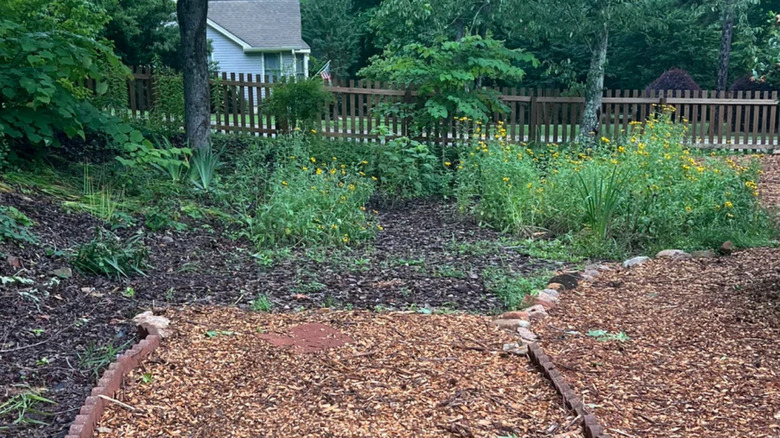
Nobody said a rainwater-focused design needed to be a well-defined, easily identifiable feature in your backyard. Instead, you could add a rain garden that blends perfectly into a lovely natural area while reducing stormwater accumulation on your yard. Even if you don't know what you're doing with this project, adding wildflowers to soak up extra water can reduce the impacts of flooding. The natural area rain garden will absorb more water than a lawn would in the same location.