

10 Go-To Bathroom Cleaning Hacks, According To Martha Stewart

Martha Stewart, the high priestess of household maintenance, is renowned for her advice on topics from entertaining to gardening to decorating. Perhaps unsurprisingly, the household cleaning hacks she swears by are also popular. In particular, her bathroom-cleaning tips are useful for their simplicity and effectiveness. We've gathered some of Martha's best tips for various bathroom-cleaning tasks, from sinks and toilets to showers and mirrors and even tricky surfaces like grout.
Although Stewart has sold her own product lines for years (they include everything from paint to crafting supplies to bed linens), her chosen cleaning supplies for the bathroom mainly consist of two common ingredients: baking soda and white vinegar. Armed with a simple sponge, Stewart tackles most bathroom-cleaning jobs using one or both of these ingredients. Not only are they inexpensive and easy to find, but they're non-toxic and environmentally friendly. This reflects Stewart's overall ethos, which emphasizes natural products and sustainability.
Using vinegar is preferable to using ammonia or bleach in the bathroom, as this is often a small space where toxic fumes from cleaning products can be unpleasant. Also, the smell of vinegar dissipates fairly quickly, unlike the smells of harsh commercial cleaning products. Baking soda is mildly abrasive, which means it's good for cleaning, but it's less likely to scratch fixtures as other powder cleansers. It's also great for neutralizing odors and dissolving greasy soap build-up.
Clean and freshen your toilet with vinegar
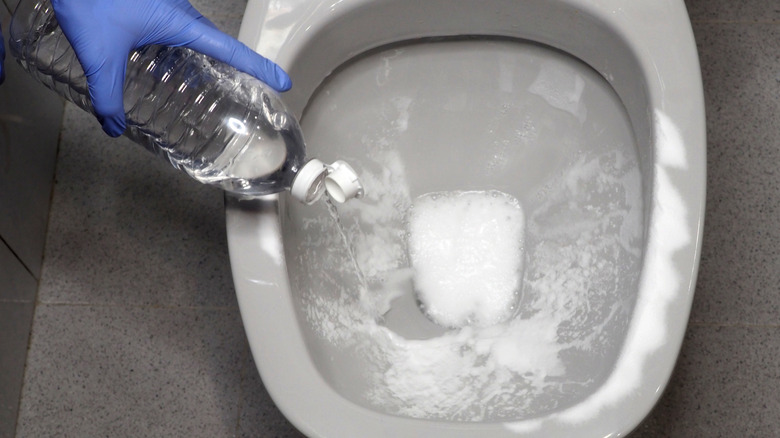
In her best-selling 2018 book "The Martha Manual: How to Do (Almost) Anything," Martha Stewart explains that the secret ingredient for keeping your toilet clean and fresh is white vinegar. Just ½ a cup of white vinegar, either on its own or after using ½ a cup of baking soda, helps keep your toilet bowl clean, deodorizes it, and kills bacteria that can cause stains and odors. You can use your toilet brush with vinegar for a quick routine clean. A final rinse with vinegar and water keeps the brush clean, too.
Use baking soda and vinegar for drains
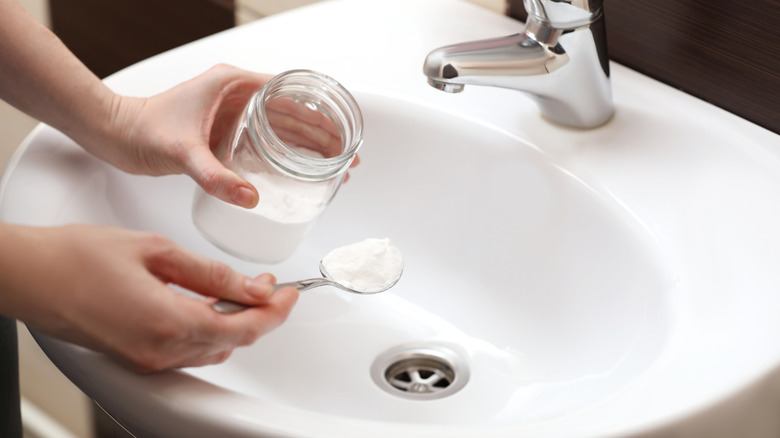
Keeping bathroom drains clean and odor-free is easy to do with baking soda and vinegar. Martha Stewart's website recommends this combo for bathroom or kitchen drains if you need to dissolve minor clogs that slow draining action. Just pour ½ a cup of baking soda into the drain, followed by ½ a cup of white vinegar. Let them sit and bubble for 30 minutes, then pour boiling water down the drain. This is a good method to help prevent sludgy build-up that can lead to clogs in bathroom or kitchen sink drains in need of cleaning.
Use baking soda for bathroom surfaces
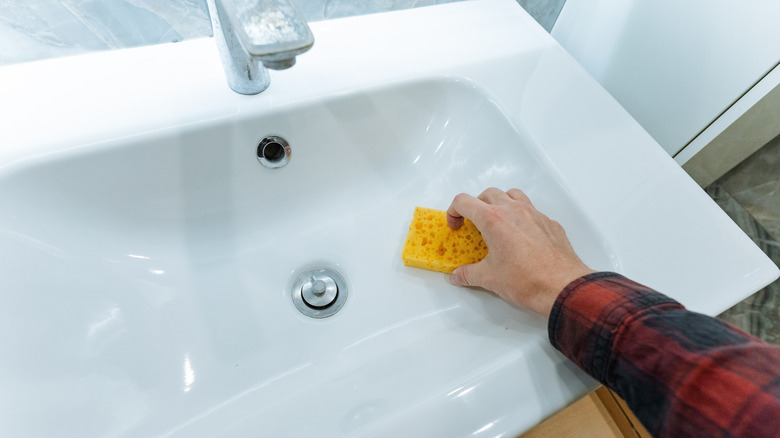
As Stewart points out in this YouTube video, baking soda is all natural and has almost unlimited household uses for cleaning. It deodorizes by neutralizing odors, dissolves grease on surfaces and on your hands, and also scrubs away stains and grime with its gently abrasive texture. For easy bathroom cleaning, you should keep a box of baking soda near your sink. Just use it on a damp sponge, rinse with water, and blot dry with paper or cloth towels. This simple method leaves sinks and other bathroom surfaces fresh and sparkling in just minutes.
Use baking soda for cleaning tub rings
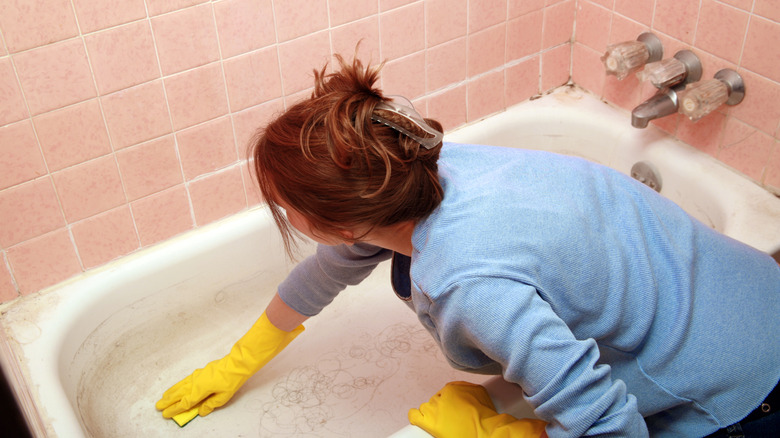
In the same video above, Martha Stewart recommends using baking soda on a damp sponge to clean grimy rings from the surface of porcelain or fiberglass bathtubs. Once bathtub rings become visible, it can mean there are layers of grime built up over a few days, but they can also form quickly when using oily products such as bath oils or hair conditioners. Baking soda works well to clean the surface by dissolving greasy spots and removing dirt. Use a clean sponge for best results, and rinse it out occasionally if the surface gets dirty.
Clean grout with baking soda, too!
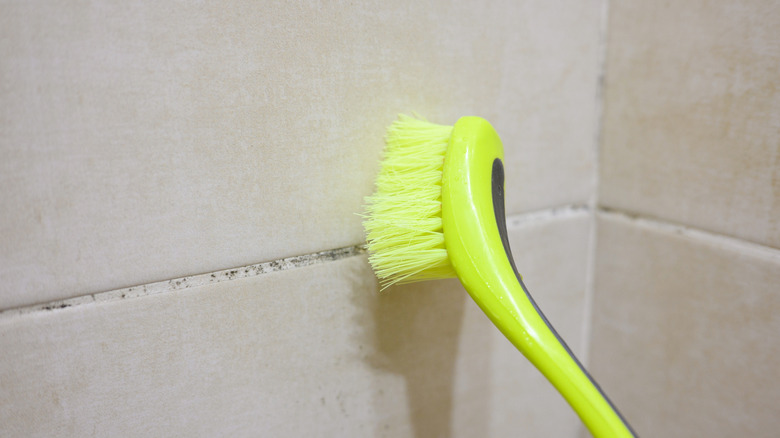
Over time, tiled bathrooms can show dingy grout stains or even develop mildew in corners and on surfaces. In a helpful list of Martha Stewart's all time best cleaning tips, she recommends cleaning bathroom grout with a paste of baking soda and water, using a sponge or small, soft brush (even an old toothbrush). The slightly abrasive quality removes stains and won't harm color like bleach-based cleaners can. Once you clean your grout, follow up with a maintenance cleaning using the baking soda paste to prevent mildew from forming again.
DIY glass cleaner for glass and mirrors
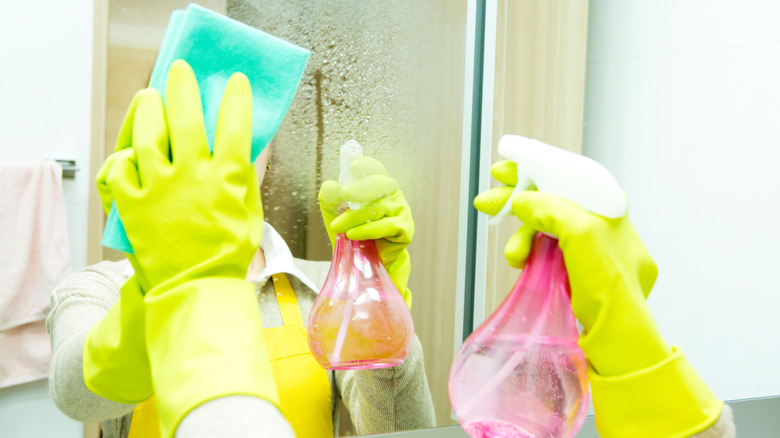
Martha Stewart fans are well aware that she has her own label for a number of cleaning products, including a glass cleaner that works on all glass and mirror surfaces, as well as stainless steel (per YouTube). But Martha also recommends making your own DIY glass cleaner with simple white vinegar mixed with equal parts water. This easy-to-make cleaning solution can be mixed and stored in a spray bottle and used with a sponge, microfiber cloths, or paper towels. To make it slightly stronger, you can increase the ratio of vinegar to water.
Prevent mildew on glass showers with a squeegee
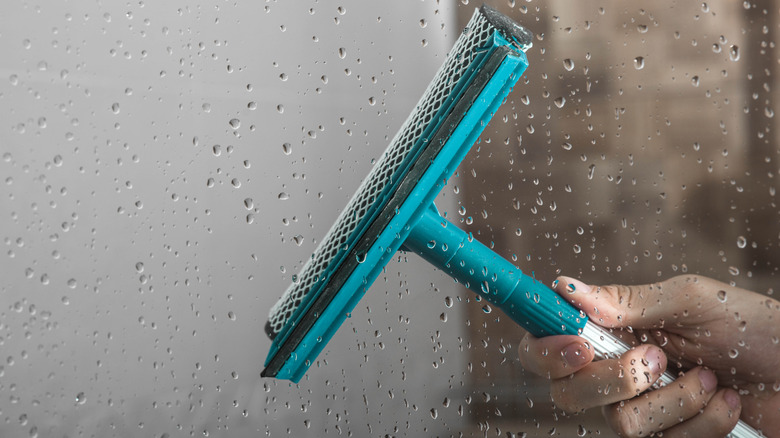
The Martha Manual recommends using a rubber squeegee after every use to keep glass shower doors and walls clean and free of water spots or build up that can lead to mildew or mold. Keeping the squeegee near the shower makes it easy to remember to do this each time. White vinegar on a sponge is also a good glass cleaner and a go-to Stewart solution to prevent mold and mildew. For stubborn residue, this YouTube video shows that she recommends her all-purpose heavy duty degreaser concentrate that's non-toxic and works well on glass and many other surfaces.
Follow bathroom window cleaning tips
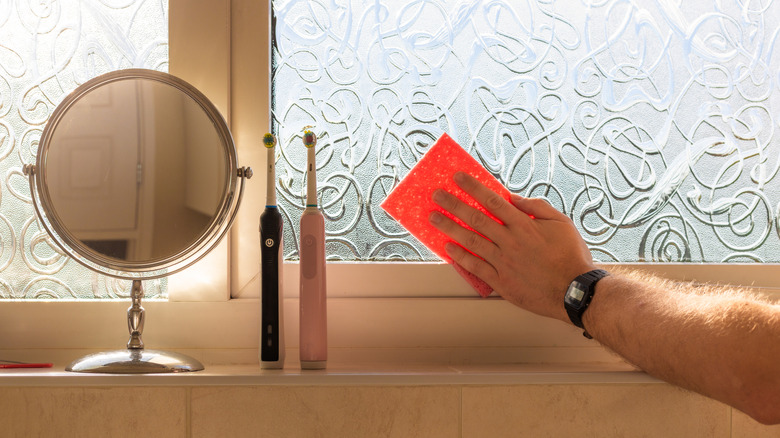
Bathroom windows can build up residue from inside, when moisture from the shower or tub mingles with dust, bacteria, or particles from grooming products. On her website, Stewart suggests her usual go-to, a vinegar-water solution to clean them, and provides special window cleaning tips. These include being careful to avoid spraying the solution directly onto window panes, and also not cleaning them on a sunny day, when heat might dry the solution too quickly, leaving streaks on the glass. For textured glass, damp clean with a sponge then wipe dry with paper towels or microfiber cloth.
Prevent toilet bowl hard water stains with vinegar
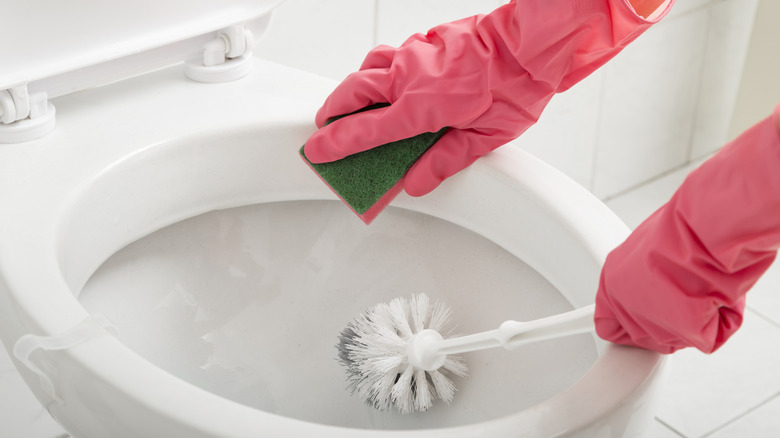
Hard water contains traces of minerals, including calcium, lime, and iron. This can sometimes cause residue build–up on porcelain or stainless steel fixtures, including unsightly "rings" in your toilet bowl, which can be resistant to scrubbing or commercial "flush and forget it" cleaners. Stewart recommends a preventive approach with frequent maintenance cleaning using her standby white vinegar to tackle this problem. In The Martha Manual she details the steps, including letting the vinegar sit for at least an hour before scrubbing with a brush and rinsing thoroughly.
Reduce moisture to prevent mold and mildew
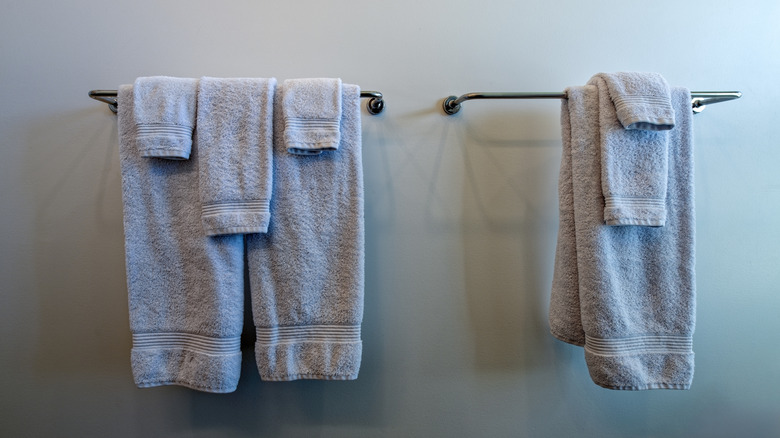
Stewart says preventing mold and mildew in the bathroom is all about reducing the presence of moisture. This means wiping down wet surfaces like shower walls or sinks, and making sure moisture-retaining materials like towels and bath mats dry out between uses. Cotton bath linens are more absorbent than other fiber blends, so they can remain damp longer. Hang towels on hooks or racks, and hang bathmats over the side of the tub. You can also use a folding drying rack to hang them on, or if you're feeling fancy, get a heated towel rack.