

3 Alternatives To Nonstick Pans That Work Just As Well, According To Consumer Reports
Open the cupboard in almost any American kitchen and you'll likely find at least one nonstick pan. They're affordable, versatile, and make cleanup easy, but they're not perfect. Nonstick pans must be replaced when the coating is damaged, and they don't stand up to high cooking temperatures, but there's another reason cooks are turning away from nonstick. The presence of per- and polyfluoroalkyl substances (PFAS), known as forever chemicals, in nonstick coatings creates both environmental and health concerns. Consumer Reports recommends three alternatives to nonstick pans that don't have potentially harmful coatings but work just as well, and are readily available: ceramic, cast iron, and stainless steel. You may have to make some slight adjustments to your current cooking methods if you make the switch, but none of them are barriers to great cuisine.
PFAS is a broad category of synthetic compounds, among them PTFE (polytetrafluoroethylene), or Teflon, that are used in a variety of products from nonstick pans to dental floss. They last thousands of years and are linked to a host of health issues like cancer, asthma, and developmental problems. Even though PFAS are ubiquitous — studies show that more than 98% of the population has them in their bloodstream — switching from nonstick pans to alternatives could reduce your exposure and reduce the volume of chemicals that wind up in landfills. These alternatives range in price from budget-friendly to top-of-the-line and come in designs to complement any kitchen. Look for cookware labeled "PFAS-free" or "PFOA-free."
Choosing between ceramic, cast iron, and stainless steel
Ceramic nonstick pans have a coating, usually made from silica (sand), on a standard metal base. They're free of PFAS, can withstand higher cooking temperatures than traditional nonstick pans, and come in a range of colors. Ceramic heats up quicker and holds heat longer, so you'll need to adjust cooking times and temperatures. It's less durable and may need to be replaced as often as every year; avoid using metal utensils and abrasive cleaners to extend the pan's life. Clean ceramic pans with soapy water.
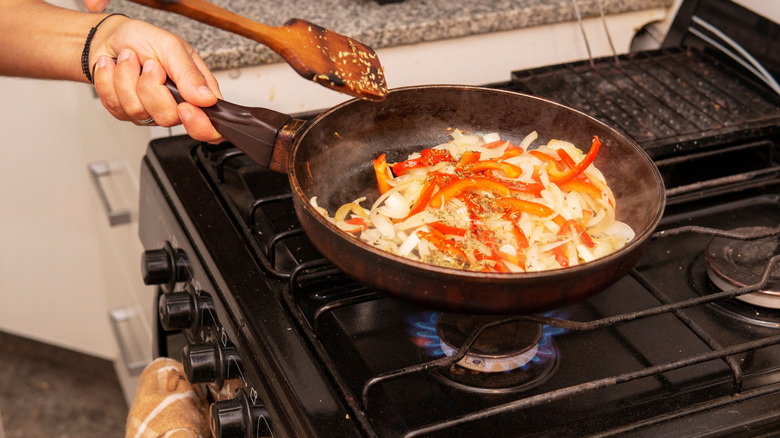
You may not think of cast iron as an alternative to traditional nonstick, but this workhorse of the kitchen and campground develops a nonstick surface when it's properly seasoned. It's free of synthetic compounds, withstands very high temperatures, and can last long enough to hand down to the next generation. Cast iron you buy new is usually already seasoned, so maintenance is limited to wiping surface soil out of the pan with a paper towel. However, good cast iron is very heavy. When you're using cast iron on a glass cooktop, set the cookware down gently and pick it up rather than sliding it when you need to move it.
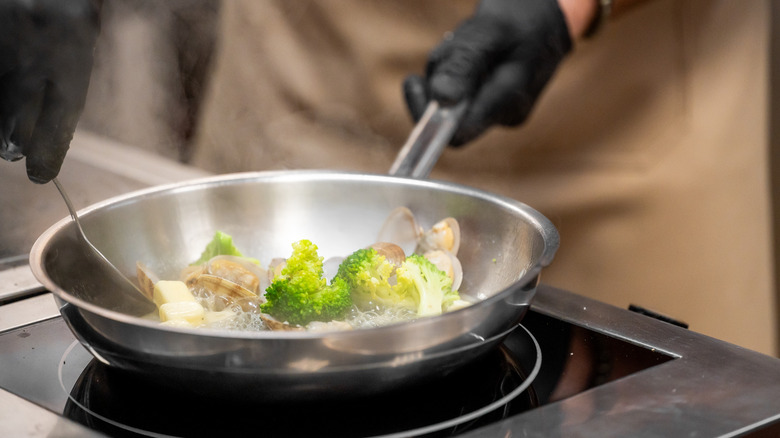
Stainless steel pans are a close second to cast iron when it comes to durability and heat conduction. Unlike cast iron, they heat up quickly and aren't as heavy. Stainless steel may be your best option if you frequently sear meat or brown foods like potatoes on high heat. While stainless steel pans aren't traditionally nonstick, you can mimic nonstick properties by cooking at the right temperature. To test the temp, preheat the pan, then scatter a few drops of water on the surface. The pan is the right temperature when the drops bounce around like balls.