

7 Best Types Of Paint To Use On Tile (& The Type To Avoid)

We may receive a commission on purchases made from links.
Over time, your tile surfaces can lose their luster, and you'll either have to spend a lot of money or time replacing them. So instead of a major renovation, some folks decide to cover up the blemishes with paint. A new paint job can also add a vibrant or trendy atmosphere to a previously drab and dated space. But if you choose the wrong paint, you may end up regretting it later. Unlike wood, tile doesn't give paint very much to grab onto, which means that only certain paints will work, including epoxy, polyurethane, and enamel. Before you get started, it's important to research the best options for painting tile floors.
The wrong paint will cause you a lot of headaches. In a kitchen, a porous paint will absorb stains and force you to spend extra time cleaning. You also want a paint that can withstand abrasive cleaning solutions, especially in a bathroom. If you're painting tile on an outdoor patio, you need to make sure that the coating can withstand the UV rays. Otherwise, your paint will peel, and the removal process will be a hassle. Before you start, there are a few drawbacks you should consider before painting tile floors, like paint struggling to adhere to tile surfaces over time. Smooth materials like porcelain are generally harder to paint than porous materials like slate because the paint doesn't have as much to cling to.
Epoxy paint
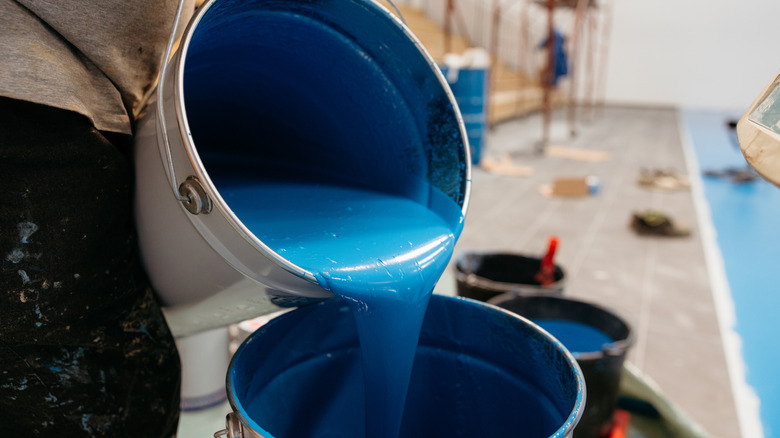
Contractors often use epoxy paint on kitchen and bathroom tile because it's tough and seals out water. Epoxy paint — a mix of latex acrylic and resin — hardens to form a non-porous protective layer that will resist scratches and stand up to strong cleaning solutions. Just be aware that drying between coats may take a minimum of 24 hours.
Chalk paint
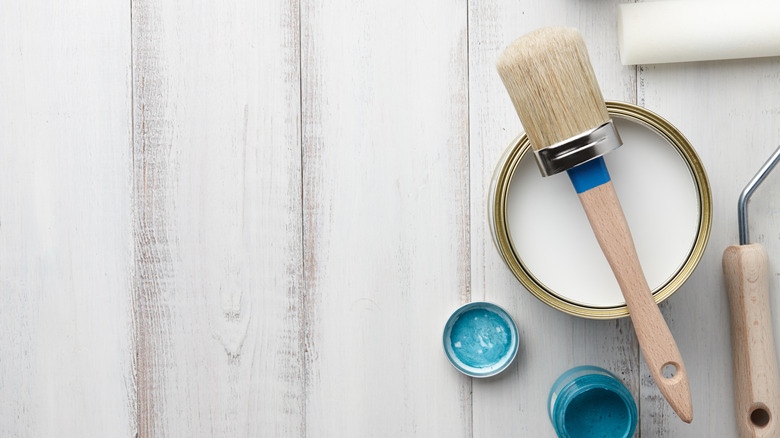
Chalk paint is water-based and features a mix of calcium carbonate and latex. This paint stains and peels easily when left unsealed, so you need to protect its matte finish with a lacquer topcoat, especially when painting bathroom or kitchen tiles. One upside is that the paint dries quickly, so you're less likely to see drip marks.
Polyurethane paint
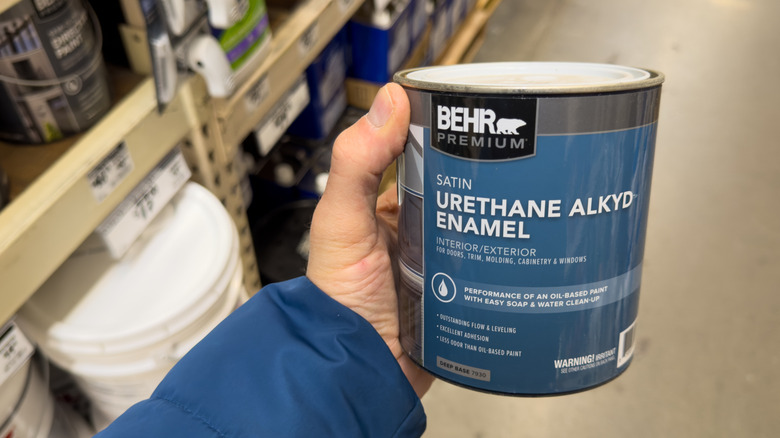
This paint is often used for commercial applications, because it dries hard and is easy to clean. It works particularly well on floors that are subjected to a lot of foot traffic. Several coats of water-based polyurethane paint will prolong the life of your painted tile floor. The polyurethane acrylic resin binds well to tile surfaces. It isn't very porous, so it's less likely to absorb stains. This makes it great for outdoor tile.
Concrete paint
Not all paints adhere well to cement surfaces like the concrete tiles you might have in your outdoor area. Acrylic and chalk paints will have trouble staying bonded to these. You'll find that concrete paints are specially made for cement tiles. They are either made from acrylic or epoxy. Acrylic-based concrete paint is cheaper, but if you need to paint an area that experiences higher traffic, epoxy-based paint is the better option.
Porcelain paint
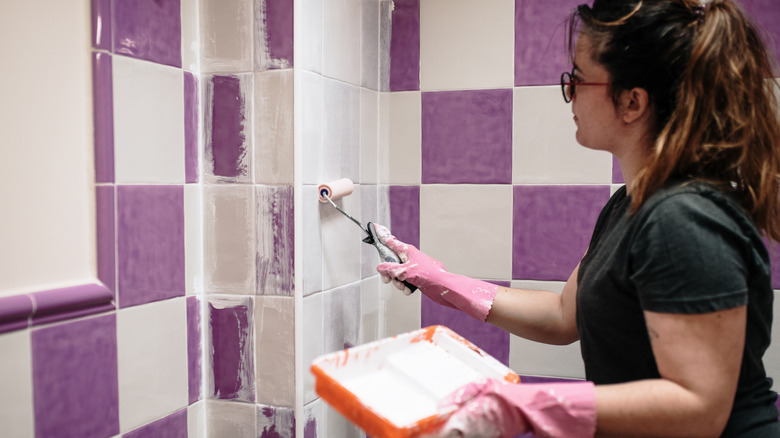
A lot of tiles are non-porous, which makes it hard for paint to bond to them. Porcelain tiles are particularly troublesome as they often have a glossy coating as well, so specially formulated paints must be used. One example is Marabu Porcelain, which is an acrylic paint that leaves a glossy finish. This is good for detailed work on kitchen backsplashes.
Silicone-based paint
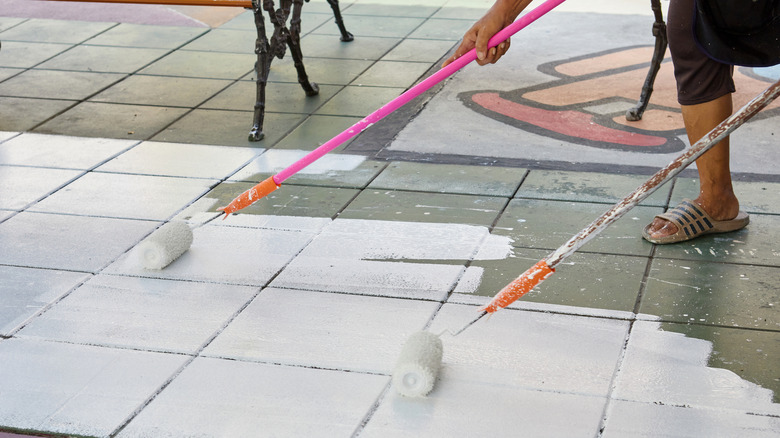
Silicone paints are great for wet areas thanks to their water-resistant properties. The breathable layer protects the tile while wicking away water, which allows it to stay attached. You simply have to clean and dry the surface before applying the paint, which will form a durable, long-lasting layer. This type of paint is also ideal for outdoor tile surfaces because it's resistant to fading from UV exposure.
Enamel paint
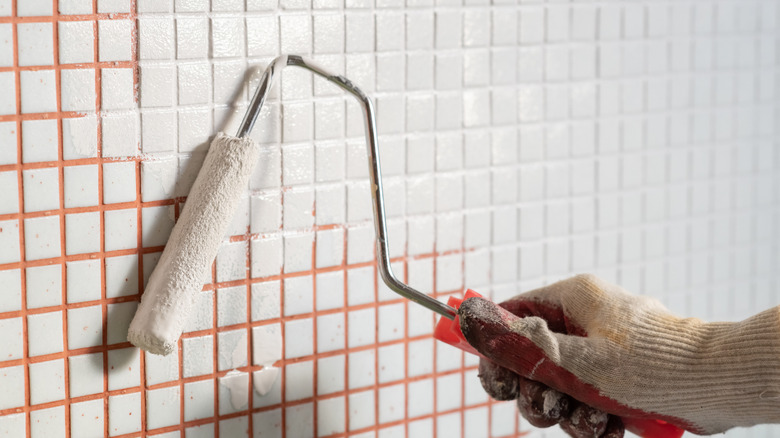
Enamel paint adheres to stone and ceramic surfaces that experience a lot of friction, moisture, and heat. You can identify an enamel paint job by its smooth, sometimes even shiny appearance. Some people roll it onto surfaces while others spray it on, which can be a little more convenient for touch-ups. It takes several hours to dry and provides excellent coverage. However, if spraying this paint, make sure to wear a protective breathing apparatus so you don't inhale the fumes.
Avoid standard latex wall
Standard latex wall paints, especially without using a primer, do not bond well to the non-porous surfaces of most tiles. You'll find that, unless the surface of the tiles is prepared well and then a sealer is applied on top, moisture will cause latex paint to peel, bubble, and flake faster than harder, less-porous enamel or epoxy paints. With all the extra preparation and finishing that's needed for this type of paint, the entire process might just not be worth it.