

Leave This Dried Fruit Out If You Want To Attract This Type Of Bird To Your Yard
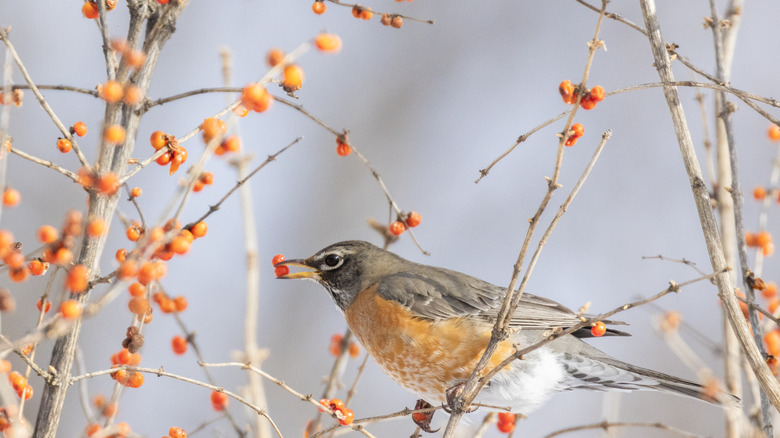
One of the best ways to attract birds to your yard is to put out the foods they love most. Many birds enjoy berries and small fruits like crabapples, making summer and autumn very busy feeding times. Although the common perception is that American robins (Turdus migratorius) eat mainly earthworms and insects, the bird experts at Audubon say that robins also love berries and similar fruits. Putting raisins out for them is a good way to attract them, especially in the winter and early spring before insects become plentiful.
In colder regions, American robins are often considered a sign that spring has arrived. These migratory birds head north to Canada and Alaska in summer for their mating season, but they hang around in temperate regions for a while in spring to eat tasty bugs. However, with climate change affecting some migratory birds' habits, one study has found that robins are on average migrating north almost two weeks earlier now than they did 30 years ago.
This shift in their migration behavior means their spring stopover is earlier, too, and their search for food may get tricky if spring weather is too cold for their hoped-for supply of bugs. Putting some raisins out for robins gives them a good source of energy and calories to keep them warm and active during times of food scarcity.
The best raisins to feed robins
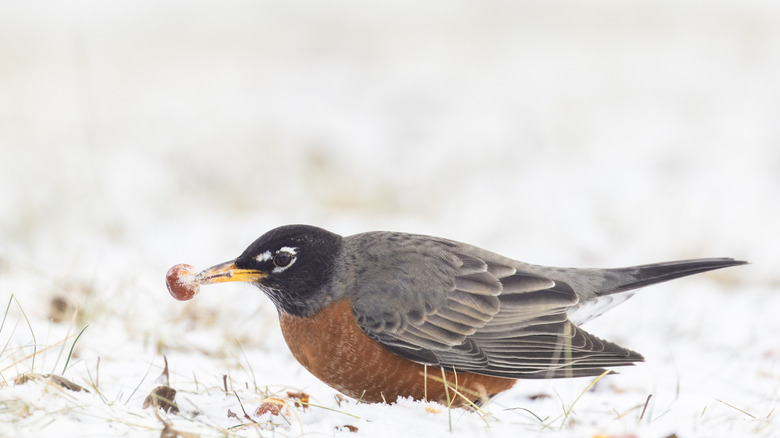
Robins love to forage for various berries and other small fruits like crabapples in season. They also rely on berries for winter food, like holly and juniper. Providing dried fruits in winter and early spring gives them a food source when other foods may be scarce, and in addition to raisins, dried cranberries and dried currants are also good choices for attracting robins.
Be aware that commercial raisins (and other dried fruits such as cranberries) might contain added sugar, which isn't good for birds. These fruits already contain plenty of natural sugar, so it's best to get them unsweetened instead. Some dried fruits may also contain oils or preservatives, but these ingredients will vary, so check labels. Definitely avoid feeding birds raisins that are covered in chocolate or that are flavored with spices.
It's recommended that you soak raisins in water prior to putting them out for birds. This softens them, making them easier to eat, and will also leach out added sugar. It also plumps up the berries and adds moisture, which birds may have trouble accessing in freezing temperatures. If you want, you can also provide fresh water for backyard birds in winter.
Where to put raisins for robins
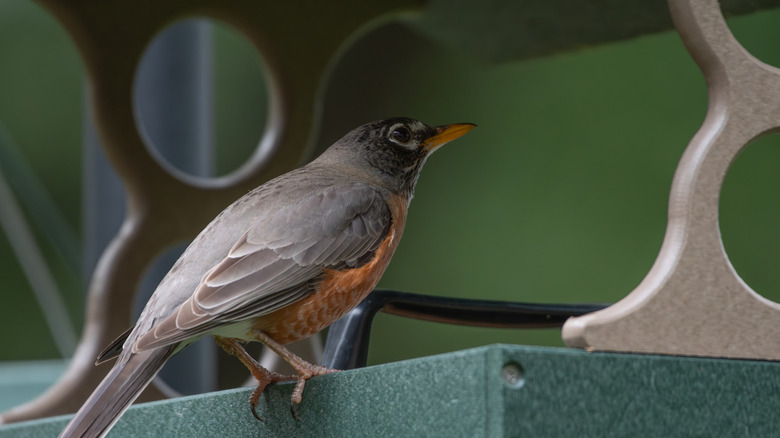
Robins are considered ground feeders when they're not perched in berry bushes eating their fill. They prefer to approach feeders that aren't too high up, and will even eat off tables and benches. Robins also prefer a flat tray feeder or one with wide ledges to perch on like a hopper feeder. A flat tray feeder can be attached to a pole or fence post, or placed on top of a table or other surface.
When leaving dried fruits like raisins for robins, don't fill the tray too full, to avoid attracting rodents such as squirrels or raccoons. Some bird experts recommend that you fill your bird feeders at night, so that early-rising birds (like robins!) can start feeding at dawn. But if you fill them first thing in the morning, you may find the birds patiently waiting for you.
Robins may show up in large flocks once they find a good source of food in the winter. But they will tend to avoid feeders that only contain seeds, which aren't their preferred food. If you have separate feeding areas where seed eaters congregate (like finches, juncos, chickadees, and nuthatches), they might leave the fruit offerings alone for the robins. But other birds enjoy raisins, too, including cedar waxwings, northern cardinals, and orioles, so your feathered friends might have to share.