

Is Your Thrift Store Find A Piece Of Porcelain Or Pottery? Here's The Easy Way To Tell
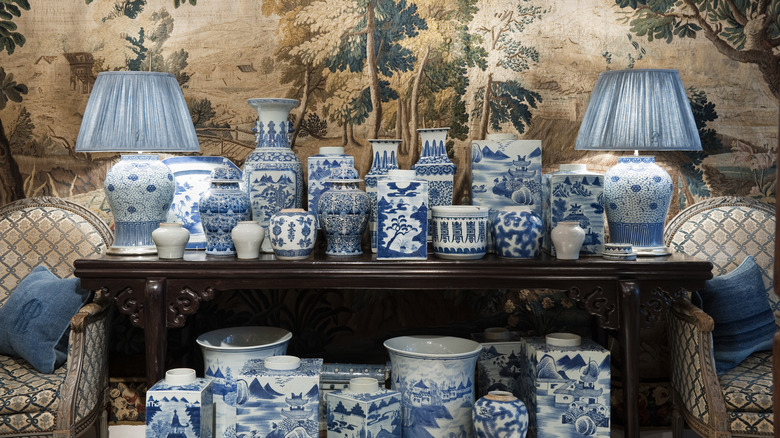
Any thrifter knows that vintage stores are a treasure trove for much more than a new set of clothes. With enough time and a sharp eye, you can find enough thrifted furniture and decor to give your entire home a unique design perfectly curated to your tastes — often for a fraction of the price you would spend on new items. Even if you just want to add a touch of antique charm to your space, a good place to start is with thrifted ceramics, since it only takes a few styling secrets to make vintage ceramics the centerpiece of your home. However, if you're going for a certain aesthetic or are trying to turn a profit with your find, you may want to know the difference between pottery and porcelain. Luckily, that's an easy feat with just a few tests.
Originating in China, porcelain is a strong, versatile form of ceramics that can be used to make everything from dinner plates to fine art. Due to the high amount of skill it takes to work with it, porcelain often comes with a high price tag. The fastest way to tell if a piece of thrifted stoneware is porcelain is to hold it up to the light. If it's translucent, it's likely porcelain. Another method for identifying porcelain is by feel. Not only is porcelain noticeably cooler to the touch, but it also tends to be lighter than normal pottery of a similar size.
Porcelain is lighter and stronger than normal pottery
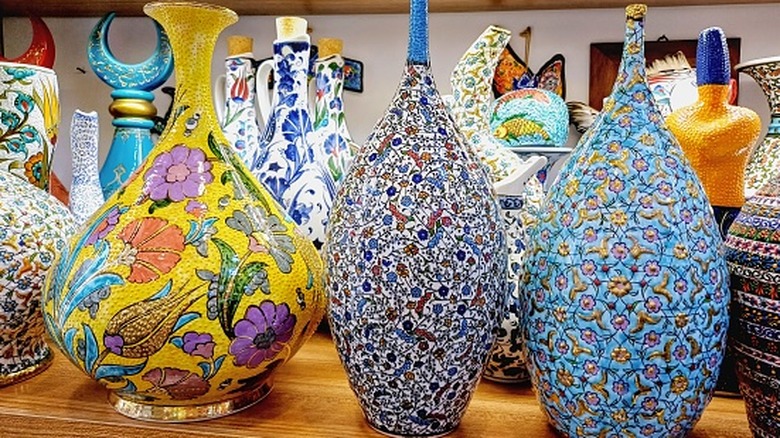
While chipped pottery isn't worth nearly as much as pristine pieces, it still has plenty of aesthetic value, and the damage can tell you something about the composition of the piece. Thanks to a unique manufacturing process that involves an extremely fine medium and high firing temperatures, delicate-looking porcelain is surprisingly resilient to damage. The resulting negative space from where porcelain has chipped should take on a scalloped appearance, like a sea shell, instead of being sharp and jagged. Porcelain is also very dense, so it won't absorb much water. You can test the legitimacy of porcelain at home by pouring a small pool of water on the piece. If it's real porcelain, hardly any should be absorbed. Once you score a genuine piece of porcelain, there are endless ways to incorporate it into your home, but don't forget the secret to using vintage ceramics as decor.
The characteristics of porcelain don't just make it very identifiable; they are also what make the pieces so coveted as both decor and everyday items like mugs and plates. Of course, real porcelain isn't the only fine category of ceramics to look out for while thrifting. If you're looking for a showstopper to add to your ceramics collection, search for the rare and valuable vintage pottery brand collectors love.