

Say Goodbye To Stink Bugs With The Help Of Your Cat's Favorite Treat
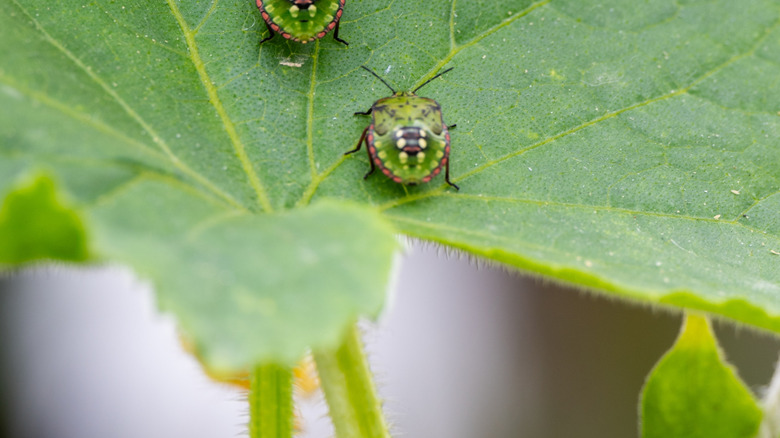
Of the many pests that can invade your home and garden, stink bugs are one insect you really don't want to see hanging around. As the name suggests, stink bugs leave a nasty-smelling residue in their wake if they are threatened or if you squish them, which consequently makes pest control a bit of a nuisance. To make matters worse, there are more than 20 types of stink bugs you should know about — and learn how to keep them out of your home. Your cat's favorite treat, catnip (Nepeta cataria), is a great choice for deterring stink bugs because of the aromatic organic compounds it contains.
Homeowners and farmers should be particularly concerned about the brown marmorated stink bug (Halyomorpha halys), an invasive introduced species that can cause catastrophic agricultural damage and take up residence in homes during winter. They don't structurally harm home interiors, but no one wants to live with these odorous (quite literally) bugs. While sealing entry points and keeping your yard clean can help keep stink bugs of all species away, they may have a secret weakness.
It turns out stink bugs are sensitive to certain plants, like garlic, mint, and, fortuitously, that favorite herb of felines, catnip. The nepetalactone in this hardy plant might put cats into a euphoric state, but it has a very different effect on insects of all kinds. Stink bugs rely heavily on their sense of smell to navigate the world. It stands to reason that overwhelmingly strong botanical scents, like that of the nepetalactone in catnip, would confuse and deter them. Also, plants release scent when their leaves are bruised or crushed, and stink bugs tend to avoid injured plants. In fact, some insects also produce nepetalactone to deter other insect predators.
How to repel stink bugs from your garden with catnip

That catnip can act as a natural insect repellent for stink bugs isn't even the best part. You can apply this versatile herb to your garden in a few different ways. Catnip can be grown as an outdoor perennial in most climates — its USDA Hardiness Zones are 3 to 9. You can also use dried catnip or the essential oil.
If you want to successfully grow a catnip plant in your yard for stink bug protection, careful placement is vital — both for ensuring healthy growth and maximizing insect repellent potential. Catnip grows best in full sun with adequate spacing — 18 to 24 inches between plants. You can also grow it in containers. For pest control, plant catnip in or around garden beds or near plants that stink bugs like such as tomatoes, peppers, apples, peaches, corn, and soy beans.
Alternatively, you can purchase dried catnip, which is usually used as a treat for cats. Sprinkle the herb near the areas where you see the most stink bug activity. That being said, the most potent, but short-term, method is using catnip oil. Mix 10 to 20 drops of oil into a 1-pint spray bottle of water, shake well, and spray on the affected areas.
While catnip can certainly contribute to a stink bug-free environment on its own, you can pair it with other plants, dry herbs, or oils to maximize the impact, especially if your space has already been invaded. Companion planting provides many benefits for your garden, including increased pest control power. Other herbaceous plants and oils like lavender or mint can increase the insect repellent potential in your yard.
Using catnip to prevent a stink-bug home invasion
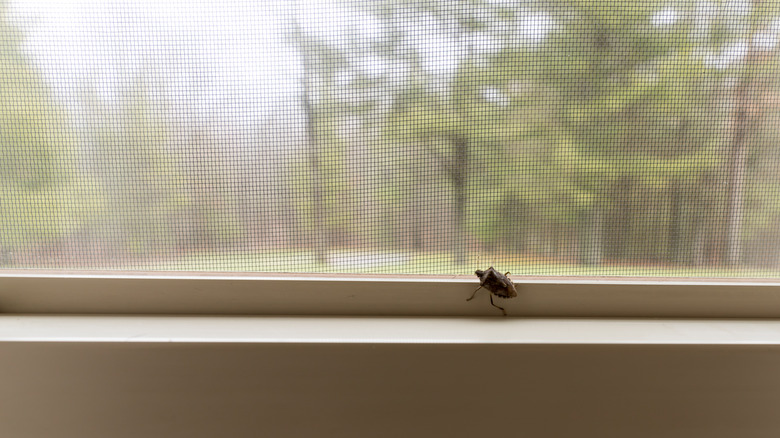
Essential oil spray may have longer-lasting effects indoors, especially if you live in a climate that frequently rains. If you want to use essential oils, you can absolutely blend them together in the same spray treatment. However, blending the wrong scents can create a rather unpleasant odor, so be careful when using this method indoors. Select oils that are from the same family, like catnip and mint. You can mix them equally, or select which scent you want to be the most prevalent and add twice as much. To test the mix beforehand, add a single drop of each oil to the same strip of paper and allow it to dry for up to 30 minutes. The strip should have a complex scent that blends both oils.
If you are trying to prevent stink bugs from coming inside the home, you will want to be a bit more precise with your treatment. Once you have your potted catnip, dried herb, or essential oil spray, target areas where stink bugs may be entering. They may be able to enter through normal entry points – think garages, windows, and entry doors — but you'll want to be vigilant about searching for more subtle access points. Beyond visible cracks or damage (which should be sealed before using catnip as a treatment), look for spacing around common household items like pipes, dryer vents, or even internet cables. A draft around these areas is a good indicator that it may be an entry point for pests. Once you seal off any obvious space or cracks, you can treat the area with your favorite catnip method.