

The Retro Decor Trend That Deserves A Major Comeback (It's Much More Valuable Now)
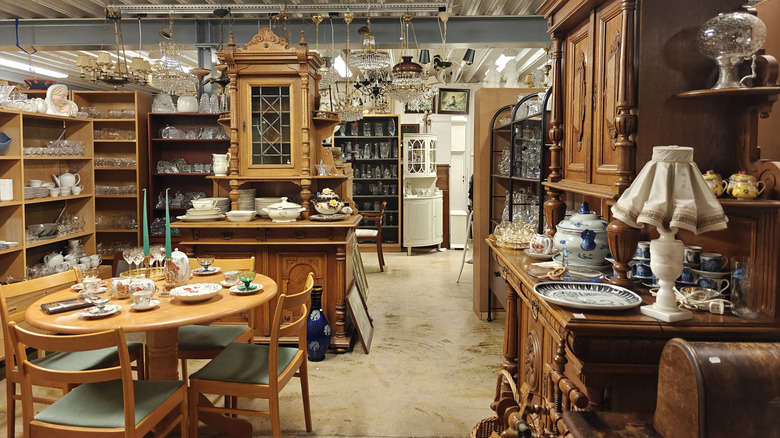
Vintage decor is having a big moment in interior design, as folks seek more unique pieces. One retro trend that deserves a comeback is atomic decor. This design embodied the optimism and innovation of the 1950s as post-WWII America shook off wartime austerity and turned to the future. Vivid colors, like the bright orange of the original Howard Johnson's restaurants or the futuristic neon signs of roadside motels, signaled a fascination with outer space and nuclear power. This drove a design style that designer Ray Eames described as futuristic and bold, with distinct graphic elements. Today, the designs are unmistakably retro, with valuable, authentic decor pieces bringing hundreds of dollars in shops and at auctions.
Technically, the Atomic Age began in the 1940s, after the 1945 detonation of the first nuclear bomb. Nuclear tourism became a thing, with people traveling to Las Vegas to pack "atomic lunch boxes" for their picnics near the Nevada Test Site. This passion for all things atomic began to exhibit itself in design, and the style lasted until the late 1970s when the novelty wore off, space exploration became a reality, and recognition of the dangers of the atomic age became more widespread. In the years between, atomic decor dominated architecture, interior design, marketing, and graphic design. It was an important element of mid-century modern decor, a style that emphasized clean lines, organic shapes, and natural materials.
Collecting atomic decor
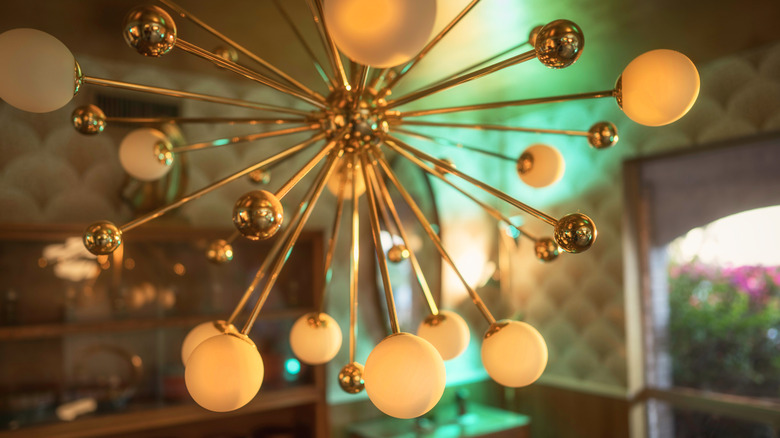
Elements of atomic age decor are common in manmade objects from the era. Streamlined and frequently playful, colorful, and futuristic, the pieces are easy to spot. Items like sunburst clocks incorporate elements of the atom's structure. The Keraclonic TV had a rounded shape that looked like an astronaut's helmet; today, these vintage televisions can sell for over $400. Ceiling lights featured clusters of balls that resembled an atom, or radiating arms in what was called Sputnik style. You can find Sputnik lights for between $500 and $600. Wallpapers, curtains, and dishware sported stylized stars or geometric shapes in vivid colors. Furniture was frequently made of fiberglass, metal, or brightly-colored plastic. In 1957, atomic age design started to morph into space age design, and even more futuristic representations like the television show "The Jetsons" took hold.
When you're looking for pieces to add to your retro atomic age design collection, keep space age influences like rockets, stylized, geometric designs, vivid colors, and asymmetry in mind. You'll find plenty of new merchandise with these features, usually marketed as atomic, space age, or mid-century modern. Look in the usual places for vintage pieces, like flea markets, estate and yard sales, and antique stores. Some of the atomic age decor produced by notable designers are collectable, and their work is pricier. George Nelson, working with Irving Harper, Buckminster Fuller, and Isamu Noguchi, designed the iconic Ball Wall Clock. It's still in production and retails for $535, while vintage Eero Saarinen Womb Chairs sell for thousands of dollars. Meanwhile, collectible Vintage Franciscan starburst dishware brings retro charm to the table.