

Telltale Signs That Your Favorite Dishes May Have Lead In Them

Lead contamination is a serious issue when it comes to vintage cookware. Safety standards have changed a lot over the years, and many old brands used paint with unsafe levels of lead. And with so many people looking out for vintage kitchen dishware at the thrift store, it's vital that you know how to tell if using a particular dish may be harmful to your health. While the age of a dish can tell you a lot, because many restrictions came into being after 1992, it's necessary to know how to tell if there's lead in your dishes if you do not know when they were made. Plus, items from outside the U.S. may also contain higher levels of lead than officially allowed.
If you are always on the lookout for vintage dishware brands to bring retro charm to your kitchen, it's best if you know the signs of lead contamination. One of the most common signs that kitchenware may contain lead is the presence of brightly colored decorations. In vintage dishes and cookware, bright paints like red and orange are often used with lead to bring out the pigment. If you notice any of these common signs, make sure to promptly test for lead. The only conclusive way to know if you have a dish with lead contamination is to conduct a lead test. Paying attention, however, to little details can make it easier to know when you do need to test a dish.
More ways to predict if your dishes are contaminated with lead
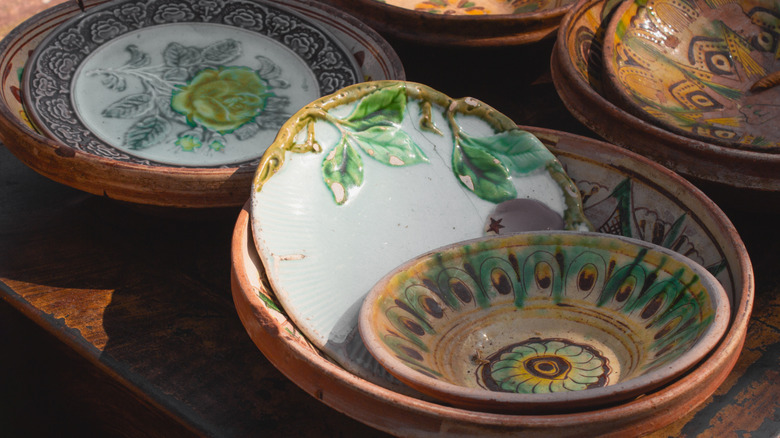
Pay attention to more than the colors of your dishes. If you look closely at a piece, you can tell if the design painted on it was finished before or after the glaze was added. If the decorations are clearly added on top of the glaze, you may want to test for lead. This potential hazard could be hiding in your favorite mug collection or simple dishware, especially if you are not sure of their origins, so avoid items with paint on top of the glaze. Be aware, however, that the glaze could contain lead, too. Heating ceramic dishes usually makes them safe, but not always.
Another indication of lead is the durability of the glaze or painted design. Over time, glazes or paints with lead in them break down. The result is visible signs of wear or corrosion. In general, avoid purchasing damaged dishes from secondhand shops or flea markets. The risk of lead exposure is greater with visibly worn ceramics. But the dish might not look very worn right away. For example, if you notice a residue on your dishes after washing them, you could also have a problem. This residue, which can be chalky or dusty, is a clear sign that something is wrong with the glaze on your dishes. If you notice these signs too late and suspect that you have been exposed to lead, make sure to visit a doctor as soon as possible.