

The Sneaky Reason Your Basement Is So Cold In Winter (& The Easy Way To Fix It)
While it's easy to dismiss your basement as the coldest part of the house in the winter time, don't write off the temperature difference as a simple fact of the season. There may be a sneaky reason why your basement is so cold in the winter, and if this is the case, there's a way to easily fix it. The obvious causes of your basement mirroring the chilly outdoor weather are broken seals and gaps that allow cold air to leak into the space and hot air to seep out. This doesn't just mean windows and cracks — it also includes often-forgotten rim joints. Rim joists can be found along the border of the home's frame and the foundation, and in many cases, they're not seen as a top priority when it comes to weather sealing homes.
If you're in an area that doesn't deal with extreme cold, these spots are typically not very well insulated, meaning they could start to create space for cold air to seep in over time. As gaps and cracks occur from natural settling, rim joints can experience moisture issues, air leaks, and at times, mold. Though your HVAC systems can do its best to maintain the ideal temperatures of the basement and mitigate issues in the area, eventually it'll drive up your energy bill. Thankfully, there's an easy to way to remediate rim joist issues: insulation.
The easy and effective ways to fix your cold air problem
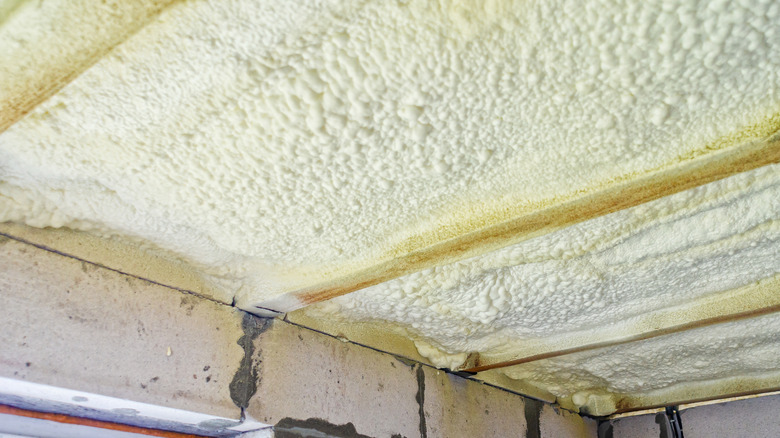
Knowing what can cause that chilly air, it's absolutely essential to insulate your basement. Sealing rim joints with insulation repairs those possible cracks and gaps, stopping cold air from being able to enter the basement. This should also prevent warm air from penetrating into the space during the summer as well. It's best to use spray form or foam board to seal the gaps, making this a fairly simple and inexpensive job.
Spray foam is likely the ideal choice of insulation since it can get into every nook and cranny around the rim joists, expanding into every gap. Essentially, spray foam isn't just an insulator, it's a sealant. If you live in a moisture-prone area, spray foam is also moisture resistant, so there's no danger of mold growing on the material, either. And as a durable, long lasting material, you don't have to worry about it sagging or shifting away from where you need it. Easy, effective, and a great way to save on energy bills, spray foam around the rim joists is the perfect way to keep your basement at an optimal temperature to ensure it's cozy and prevent other cold weather issues, like freezing pipes in the winter.