

Is Your Joshua Tree Blooming Early? Why That's A Bad Sign You Can't Ignore
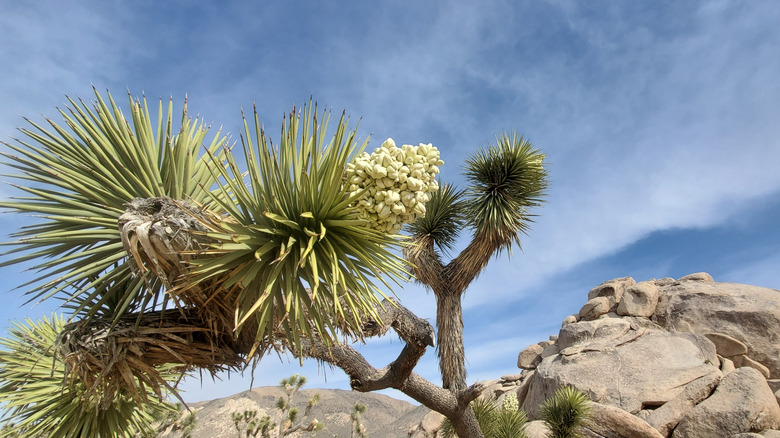
Iconic and hardy, Joshua trees are stunning symbols of the American Southwest. Known scientifically as Yucca brevifolia, these hardy plants are desert-dwelling specimens with a unique partnership. To flower and fruit successfully, Joshua trees rely on two species of native moths to pollinate their blooms. The moths know to pollinate the flowers beginning in early February, when Joshua trees normally bloom. They get confused when the blooms appear earlier or later than normal. If the insects are unable to pollinate the flowers, then there will be fewer fruits and seeds later in the year. Hand pollination won't save the day! Fewer seeds result in fewer seedlings, spelling disaster for future Joshua tree populations.
It's a bad sign if blooming occurs before February. You'll want to keep a close eye on your Joshua tree to ensure it behaves normally in the future. Though you can't fix the early or late blooming period, you can track when the flowers appear to help the horticultural community better study this odd phenomenon. Members of the Yoder Lab from California State University, Northridge are urging gardeners and community members to document the trees if they see them blooming. Use apps like iNaturalist to upload photos of the white flowers, marking the date and location you found them. Environmentalists will then use this data to study why the trees' flowers are appearing earlier than normal.
Why bloom timing is important to pollination
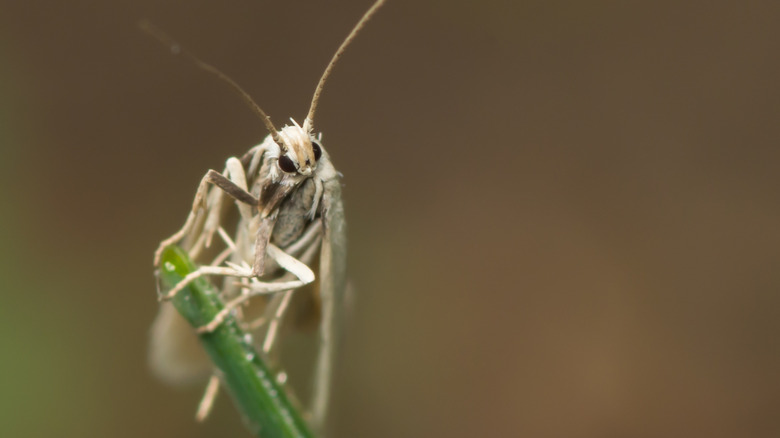
Unique partnerships like the one between the Yucca moths and Joshua trees are rare in nature. The moths need the trees just as much as the trees need the moths, so you should think twice about repelling moths for your garden. Without one or the other, the populations would begin to decline. Early and late blooms are bad signs because they harm both the moths and the trees in the long run.
Knowing how the pollination process works will help you understand why abnormal blooms spell disaster for the plants and moths. To start, adult moths pollinate the blooms. They plant pollen inside the flowers and lay their eggs. Once pollinated, the flowers begin morphing into fruits with seeds. The eggs remain inside, where the larvae hatch and begin eating the growing seeds. After consuming enough nutrients, the larvae emerge from the fruits and tunnel into the ground to remain dormant until the next blooming period. They'll then poke out of the soil to repeat the cycle.
Without blooms, the moths may not have enough food to sustain themselves. The adults won't have sufficient pollen, and the larvae won't have places to grow and develop. Similarly, the trees won't produce enough seeds to grow new specimens. Because these insects and plants only appear in the southern states of the U.S. and parts of Mexico, it's unlikely they'll be able to relocate to a new region. The only hope is to save the remaining moths and Joshua trees in their native range to boost future populations.
What you can do to help
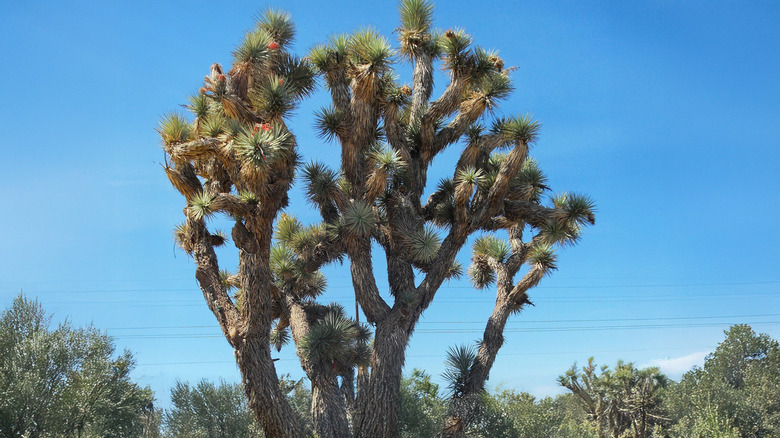
Aside from tracking the blooms with iNaturalist, there are some other easy ways to help both the plants and the insects. Never spray insecticides or herbicides onto open flowers or closed buds. The chemicals can harm the insects, leading to poor pollination and fewer offspring — one of the major downsides of using synthetic pest control insecticides in your yard. If you see aphids or other pests on the blooms, simply hose them off with water daily until they disappear.
Because this Yucca species is native to the lower regions of the U.S., it needs little help to thrive in gardens and home landscapes. Avoid watering it, and let natural rainfall irrigate the species naturally. Give it sandy, free-draining soil with little organic matter. You can't control the weather, but you can control the conditions of your garden so they match the natural environment as closely as possible.