

The Unique Ornamental Grass That Makes A Stunning Driveway Border
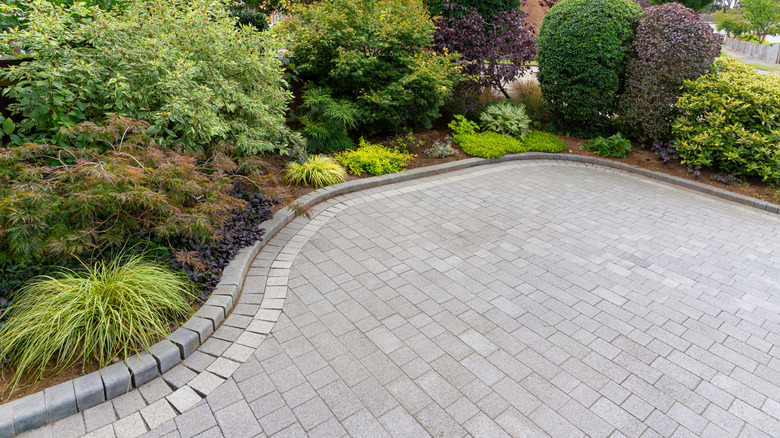
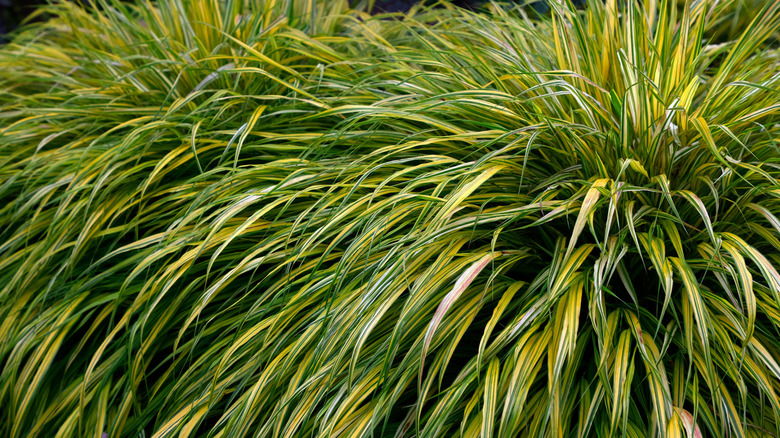
Plain driveways are boring. Why not add some color, texture, and motion to the space? With ornamental grasses, you can turn a normal driveway into an expertly designed one that will stand out in your neighborhood. Whether you have beds near the driveway or pots to line it, this special grass is perfect for the borders. Called Japanese forest grass (Hakonechloa macra), or Hakone grass, this perennial species hails from forested regions of Japan. It dances in the wind, creating a shimmer that shines under low light. Though there are many varieties of Japanese forest grass, none stand out like the 'Stripe It Rich' cultivar. This special type features white stripes on the inner leaf blades, with gold-yellow hues adorning the edges.
More compact than other Japanese forest grasses, 'Stripe It Rich' excels in borders on driveways because of its small stature. Mature specimens reach about 10 inches tall, and they stay under 20 inches wide. In summer, flowers arch from the clumps up to 18 inches above the ground. They're inconspicuous, and you can either remove them to promote leafy growth or leave them be if you like how they look. If you leave them, the blooms will turn brown and remain long after the plants enter dormancy in the winter. They'll provide ornamental interest when not much else is blooming in your garden.
Grow and care for Japanese forest grass
This vigorous grass spreads through underground rhizomes that sprout new clumps. Though the plant isn't native to the U.S., it isn't invasive either, making it a perfect choice for driveways near natural areas and landscapes. It's hardy in USDA Growing Zones 6 through 9, and it may survive in Zone 5 with extra winter mulch protection. After the clumps enter dormancy and the leaves die back, mound a mulch like compost or leaf mold around the base to warm and insulate the roots through the winter.
Some claim that this cultivar will grow in full sun, but the leaves may burn if they sit under direct sunlight for too long. This is especially true in warm regions of Zones 8 and 9. Too much shade is also undesirable, as it will lead to dim coloring on the leaves. Grant your specimens partial shade with between three and six hours of daily direct sunlight for the best growing results.
Soil quality is another important factor. 'Stripe It Rich' needs moist, well-drained soil with plenty of organic matter to thrive. It won't fare well in rocky, dry, or excessively soggy clay soils. If your driveway's borders have poor soil, consider amending them with compost ahead of planting, as early as October. Do so a month or more before the planting date to allow the compost to break down in the borders. If you don't have time to wait, use containers or planters instead. Simply fill them with rich, crumbly soil and plant the grasses inside.