

Can An Old Tree Stump Lead To A Termite Infestation? Here's What We Know
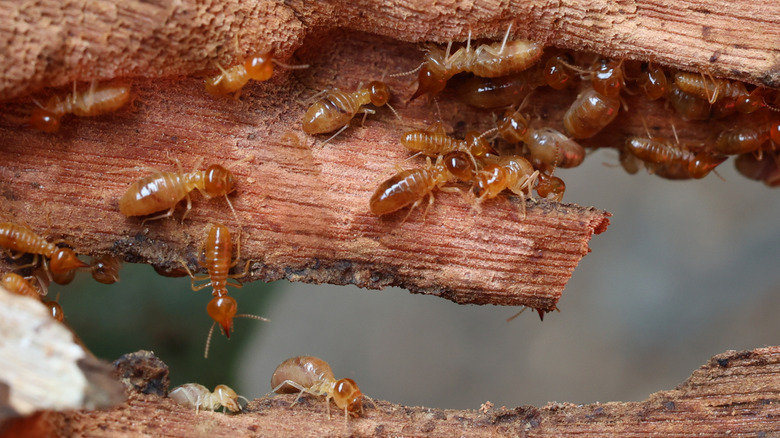
Have you ever wondered what you should do with the old tree stump that's taking up space in your yard? The idea of removal can be daunting for many homeowners — it can be pricey, not to mention the mess it might leave behind. Some may not give the stump a second thought, especially if it blends into the landscape. Others might be dying to figure out ways to hide the eyesore of a tree stump without removing it. However you feel, there is one issue that may present itself if left unaddressed: termites.
But can an old tree stump really lead to a termite infestation in your home? Unfortunately, as the wood rots, termites may see it as a perfect new home. Once they're in, they'll be there to stay, unless you do something about it first. Removing the stump is the most effective way to prevent termite damage to your yard and home. On average, it can cost between $150 to $300 for removal, which is much more affordable than the $700 to $2,000 it can cost to treat your lawn or house for a termite infestation. On the bright side, there are other creative ways to repurpose an old tree stump in your yard, while also preventing termites from taking over.
The truth about termites and your old tree stump
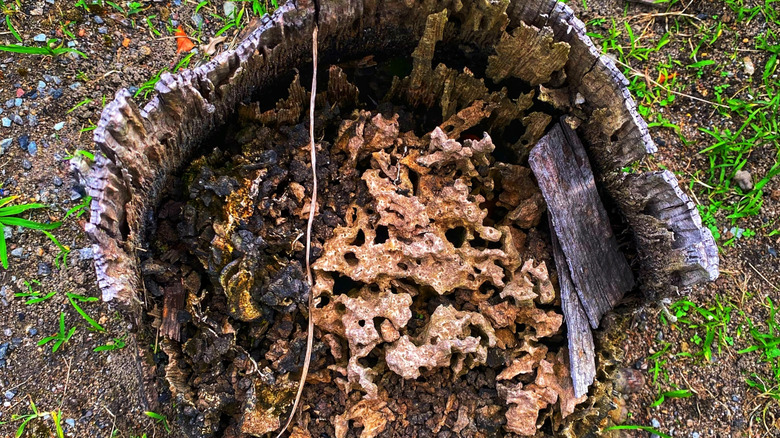
Termites are attracted to the decaying wood, which provides them with all the food, water, and shelter they could want — at least for a little while. Termites act fast, depending on the size of the original colony and the level of decay in the tree stump. Once they invade, they could work their way through the stump in a matter of months, though smaller colonies might take years to deplete the resources before they start seeking a new home. If you notice termites around your yard, they are likely still interested in outdoor resources. However, if they are getting close to your building foundations, chances are they are already looking to expand their dwelling, and your house or other yard structures might be their next target.
Termite swarmers are winged termites that can reproduce to start their own colonies. It may be time to worry if you see swarmers emerging from the stump. Experts recommend addressing the issue before termites become a threat. Removal through stump grinding or burning is the most effective method. When you hire a professional to perform the removal, they can also inspect the stump to determine if there are already termites infesting it. If termites are already present, you may need to get the surrounding area treated to stop them from spreading to other nearby structures.
How to prevent a termite infestation without removing your old tree stump
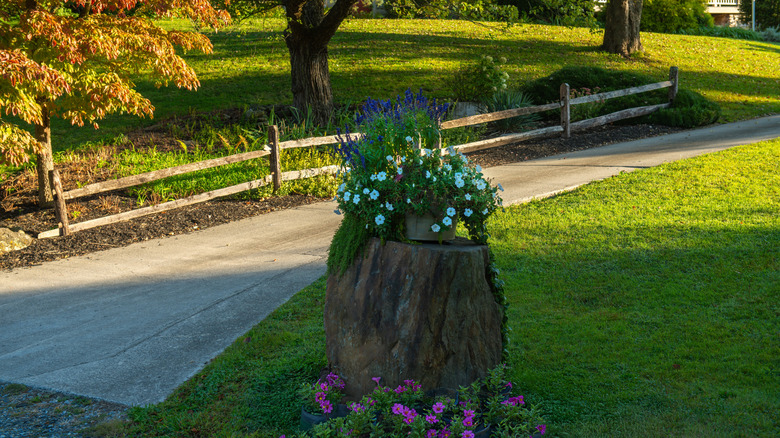
If you know how to encourage healthy decay, you may find that removing an old tree stump from your yard is easier than you think. Removal isn't the best option for everyone, but that doesn't mean you shouldn't address the risk of termites. With some fun and creative DIY projects, you can make the stump work for your yard, not against it, all while making it less appealing to termites.
Experts suggest planting termite-repelling flowers and herbs, like catnip and geraniums. In addition, you can use landscaping features like mulch to create a physical barrier. Research shows that gravel and stone features encourage termites to feed underground because the soil becomes cooler and more hospitable. While this can slow the process down, it does not eliminate the issue. However, mulching with bark can distribute moisture and create a barrier around desirable structures. By combining mulching and purposeful planting, you can reduce termite activity and prevent colonies from spreading to other structures. Plus, you can repurpose your tree stump into a beautiful succulent garden to help control decay.